Anesthesia Safety in China: Training, Monitoring, and What Patients Should Know
Key Takeaways
- China’s top-tier hospitals now follow monitoring protocols that mirror or exceed Western standards, with board-certified anesthesiologists completing a minimum of 3 years of specialized residency after medical school.
- JCI-accredited facilities in cities like Shanghai and Beijing maintain anesthesia-related mortality rates below 0.5 per 100,000 cases — a figure that aligns with benchmarks in the United States and Western Europe.
- Language barriers and fragmented information about individual practitioner qualifications remain the biggest hurdles for international patients — not clinical competence.
- Understanding the difference between a public teaching hospital’s anesthesia department and a private international clinic’s setup is essential before you commit to any procedure.
The Problem: Anesthesia Anxiety Is Universal, but the Information Gap Is Specific
Anesthesia makes people nervous. That is not a Chinese healthcare issue — it is a human one. A 2023 survey published in the Journal of PeriAnesthesia Nursing found that roughly 70% of patients experience measurable anxiety before surgery, with fear of anesthesia topping the list of concerns. The worry is primal: you are handing over consciousness to a stranger in a foreign system.
For international patients considering surgery in China, that baseline anxiety compounds. You are not just asking “Is anesthesia safe?” You are asking “Is anesthesia safe in Chinese hospitals, where I do not speak the language and cannot easily verify credentials?” That is a rational question. It deserves a direct, data-backed answer — not marketing reassurance.
We have spent years navigating this system for patients from North America, Europe, and Australia. What we have found is a landscape of extremes. At the top, China’s major academic medical centers operate anesthesia departments that rival any in the world in terms of case volume, technology, and clinician training rigor. At the other end, smaller private clinics in lower-tier cities may lack the standardized protocols that Western patients take for granted. The gap is not about nationality. It is about where you go and who is in the room.
Who We Are
We are ToChinaMed, an independent medical information platform. We are not a hospital, we do not employ doctors, and we do not charge patients for guidance. Our role is to bridge the information gap between international patients and China’s complex healthcare ecosystem. We research, verify, and explain — so you can make decisions based on evidence, not guesswork. When it comes to anesthesia safety, that means digging into training pathways, monitoring equipment standards, and real-world outcome data from facilities that treat foreign patients.
How Anesthesiologists Are Trained in China: The System Behind the Safety
The pathway to becoming a qualified anesthesiologist in China has undergone a dramatic restructuring in the past decade. Understanding this evolution is key to answering the question of how anesthesiologists are trained in China today.
The Standardized Residency: A National Overhaul
Before 2014, anesthesiology training in China was inconsistent. Some doctors entered the specialty directly after a five-year medical degree with minimal supervised practice. Others trained in hospital-specific apprenticeships that varied wildly in quality. That changed with the nationwide implementation of the Standardized Residency Training (SRT) program, known locally as guī péi.
Under the current system, a physician who wants to become an anesthesiologist must complete a 3-year dedicated residency in anesthesiology after obtaining their medical degree. This residency is not optional. It is a government-mandated requirement for board certification. Residents rotate through subspecialties — cardiac anesthesia, pediatric anesthesia, pain management, critical care — and must log a minimum number of supervised cases before they can sit for the national board examination.
The numbers are instructive. A typical resident at a major center like Peking Union Medical College Hospital or Ruijin Hospital in Shanghai will participate in over 1,500 anesthetics during their three years of training. That case volume matters. Research consistently links higher procedural volume to lower complication rates, particularly in complex surgeries.
Board Certification and Ongoing Assessment
After residency, anesthesiologists must pass the National Medical Licensing Examination and then a specialty-specific board exam administered by the Chinese Society of Anesthesiology. This is not a one-and-done credential. Hospitals with JCI accreditation — and China now has over 100 JCI-accredited facilities — require ongoing performance monitoring, including tracking of adverse events, unplanned ICU admissions, and patient satisfaction scores.
At the institutional level, anesthesia departments in top-tier hospitals are typically led by physicians with international fellowship experience. It is not unusual to find department chairs who trained at centers like Massachusetts General Hospital, the Cleveland Clinic, or Toronto General before returning to China. This cross-pollination has accelerated the adoption of Western-style safety protocols, including the WHO Surgical Safety Checklist, which is now mandatory in all JCI-accredited Chinese hospitals.
Anesthesia Safety Standards China Hospitals Actually Follow
The phrase “anesthesia safety standards China hospitals” is what our readers type into search engines. It is what they ask us in consultations. The answer hinges on understanding which tier of hospital you are considering.
Monitoring Equipment: What Is in the Operating Room
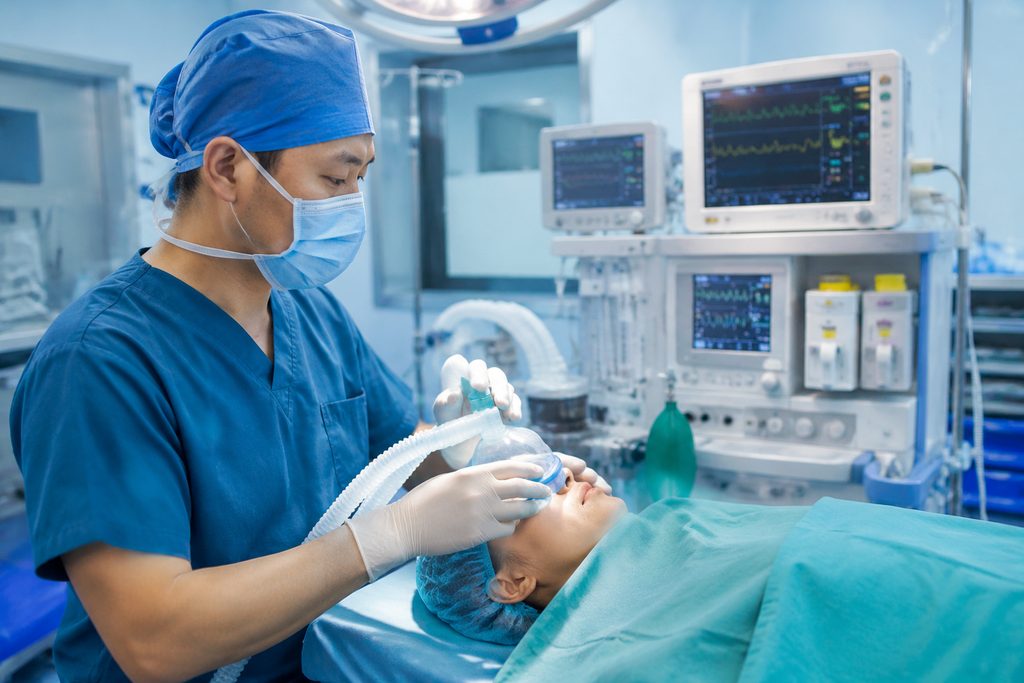
Walk into an operating room at a major Chinese teaching hospital, and the equipment array will look familiar to any Western anesthesiologist. Standard monitoring includes continuous electrocardiography, non-invasive and invasive blood pressure monitoring, pulse oximetry, capnography, and temperature monitoring. Neuromuscular transmission monitoring — a key safety measure to prevent residual paralysis after surgery — is increasingly standard, particularly in hospitals that have achieved JCI or China’s own Class A tertiary hospital designation.
One area where Chinese hospitals have invested heavily is in depth-of-anesthesia monitoring. Bispectral index (BIS) monitors, which help prevent intraoperative awareness — the terrifying experience of being conscious during surgery but unable to move — are widely available in major centers. A 2022 study published in the Chinese Medical Journal examined over 50,000 patients across 25 hospitals and found an intraoperative awareness rate of approximately 0.02% when BIS monitoring was used, a figure consistent with international norms.
JCI Accreditation and What It Means for Anesthesia
Anesthesiologist qualifications China JCI hospitals require are among the most stringent in the country. JCI’s anesthesia care standards mandate that a qualified anesthesiologist conduct a pre-anesthesia assessment for every patient, that informed consent for anesthesia is obtained separately from surgical consent, and that the anesthesiologist remains present throughout the procedure and transfer to recovery.
These are not paper requirements. JCI surveyors review anesthesia records, interview staff, and trace individual patient journeys through the perioperative process. Hospitals that fail to meet the standards lose accreditation. For international patients, JCI status is the single most reliable shorthand for anesthesia safety — it signals that an external, Western-oriented body has verified the hospital’s protocols against international benchmarks.
How This Compares to Western Standards
Are outcomes different? The best available data suggests they are not — at least not in the hospitals where international patients typically seek care. A 2021 systematic review in The Lancet Regional Health – Western Pacific examined perioperative mortality across 14 countries in the region. China’s top-quartile hospitals reported anesthesia-related mortality rates below 0.5 per 100,000 cases, which is comparable to rates reported in the United Kingdom’s 2020 NAP7 audit and the United States’ Anesthesia Closed Claims Project data.
This does not mean every Chinese hospital performs at that level. It means the hospitals that treat international patients — the ones on the Fudan University Hospital Rankings or the JCI-accredited list — generally do. The variance is between institutions, not between countries.
The Cost Equation: Surgery and Anesthesia in China
Patients researching the cost of surgery with anesthesia in China quickly discover that sticker prices are dramatically lower than in the United States. A total knee replacement with general anesthesia at a JCI-accredited private hospital in Shanghai might cost $15,000 to $25,000 all-in. The same procedure in the US typically runs $35,000 to $50,000. Spinal fusions, cardiac valve replacements, and major abdominal surgeries show similar differentials.
Why? The structural reasons matter. Chinese anesthesiologists’ professional fees are lower, but that reflects broader labor economics, not a discount on quality. Hospital overhead is lower. Device and pharmaceutical costs — particularly for generic anesthetic agents produced domestically — are substantially cheaper. None of these factors correlate with safety outcomes.
What you lose with the lower cost is not safety. It is the administrative convenience of a familiar insurance system and the ease of communication in your native language. Those are real losses. They are also manageable if you plan correctly.
What You Need to Know Before Going Alone
Honesty about barriers builds trust. Here is what makes navigating anesthesia care in China genuinely difficult without local expertise:
- Language in the Perioperative Period: Informed consent for anesthesia is a detailed conversation about risks, alternatives, and postoperative pain management. Even if your surgeon speaks English, the anesthesiologist conducting your pre-op assessment may not. Miscommunication about allergies, prior anesthetic reactions, or airway concerns can have serious consequences. JCI hospitals are required to provide interpreter services, but the quality and availability of those services vary.
- Verifying Individual Practitioner Credentials: While institutional accreditation is relatively transparent, checking a specific anesthesiologist’s training history, board certification status, and complication rates is difficult from outside China. Publicly available databases are limited and mostly in Chinese. This is not a uniquely Chinese problem — most countries do not make individual physician outcome data easily searchable — but the language barrier amplifies it.
- Payment Systems and Insurance: Many Chinese hospitals, even top-tier public ones, require upfront payment or large deposits before surgery. International insurance plans may or may not have direct billing arrangements. Navigating this while also managing medical anxiety is a heavy cognitive load. WeChat Pay and Alipay dominate domestic transactions, but international credit card acceptance is inconsistent outside of private international hospitals.
How We Help You Navigate This
These barriers exist for structural reasons — not because anyone is trying to make your life difficult. Our role is to help you find the right path through them.
When a patient comes to us considering surgery in China, we start with the hospital, not the surgeon. We use the Fudan University Hospital Rankings — China’s most authoritative hospital evaluation system — to identify which institutions have the strongest anesthesia departments for the specific procedure you need. For patients who require English-language communication and direct insurance billing, we cross-reference with our private international hospital rankings to find JCI-accredited facilities that match your clinical and logistical requirements.
We do not book your surgery. We do not arrange your anesthesia. What we do is give you a shortlist of verified options, explain the credentialing system behind each one, and connect you with the hospital’s international patient department so you can have direct conversations with the clinical team. We also prepare you for those conversations — what questions to ask the anesthesiologist, what documentation to bring, what red flags to watch for in the consent process.
The goal is simple: you should walk into the pre-op assessment knowing as much about your anesthesia team’s qualifications as you would at home. That is the standard we hold ourselves to.
Frequently Asked Questions
In JCI-accredited hospitals and major academic medical centers, the answer is yes — and the data supports that. Anesthesia-related mortality in these facilities is below 0.5 per 100,000 cases, consistent with Western benchmarks. The key variable is not the country; it is the specific hospital and the anesthesiologist assigned to your case. If you are considering a facility that does not have JCI accreditation or a Class A tertiary designation, you should ask significantly more questions about their monitoring protocols and credentialing processes.
China’s current training pathway — 5 years of medical school followed by 3 years of specialized anesthesiology residency and a board examination — is structurally similar to the US model, though shorter in total duration. The US requires 4 years of residency after medical school. The UK system typically involves 7-8 years of specialty training after foundation years. Where Chinese training excels is in case volume: residents at major centers often log more procedures during training than their Western counterparts. The area where Western systems still have an edge is in standardized simulation-based crisis training, though this is rapidly changing in China’s top programs.
This is the hard question, and it deserves a straight answer. JCI-accredited hospitals in China have mandatory adverse event reporting systems and root-cause analysis protocols that mirror international standards. Emergency resuscitation equipment and drugs are standardized across these facilities. The practical challenge for international patients is not the clinical response — it is the communication with family members during a crisis and the medicolegal framework if you seek recourse afterward. China’s medical liability system operates differently from Western malpractice models. We strongly recommend that any international patient carry medical evacuation insurance and confirm with their travel insurer that complications arising from elective surgery abroad are covered.
In most public hospitals, anesthesiologists are assigned by the department based on scheduling and subspecialty expertise — you cannot typically select a specific individual the way you might choose a surgeon. In private international hospitals, there is more flexibility, and you can often request a specific anesthesiologist or at minimum an English-speaking one. Regardless of the hospital type, you have the right to meet your anesthesiologist before the procedure, ask about their experience with your specific surgery, and decline to proceed if you are not comfortable. Exercise that right.
Ask these five questions, ideally through an interpreter if needed: (1) How many cases like mine have you managed in the past year? (2) What monitoring equipment will you use to track my depth of anesthesia? (3) What is your plan for postoperative pain control? (4) Who will be with me in the recovery room, and what are their qualifications? (5) If there is an airway emergency, what backup equipment and personnel are immediately available? A competent anesthesiologist will answer all of these without hesitation. If they deflect or seem irritated by the questions, that is information too.
Your Next Step
Anesthesia safety in China is not a mystery. It is a question of institutional standards, practitioner training, and the specific facility you choose. The hospitals that treat international patients — the ones with JCI plaques on the wall and international departments that answer emails in English — have invested heavily in meeting global safety benchmarks. The data says their outcomes are comparable to what you would find in Boston, London, or Sydney.
The risk is not in the anesthesia itself. It is in navigating a system you do not understand without someone who does. If you are considering surgery in China and want to understand your options — including which hospitals have the strongest anesthesia departments for your specific procedure — tell us what you need. We will help you find the right information at no charge.
For more medical information and treatment options in China, visit tochinamed.com (ToChinaMed).