Health Check-Up Add-Ons in China: Which Extra Tests Are Worth Your Money
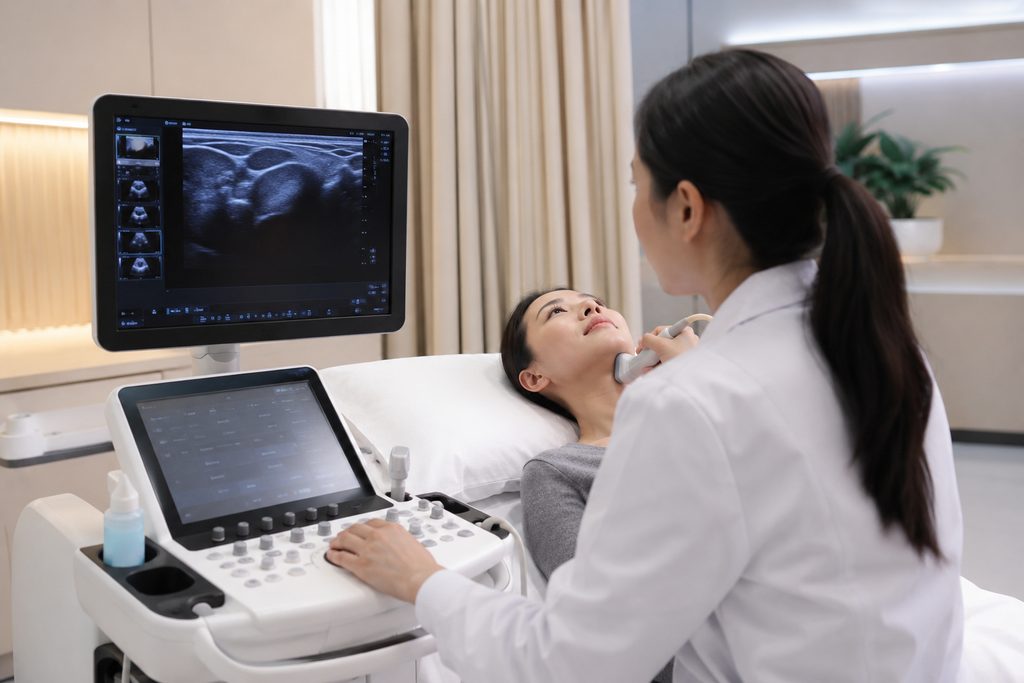
Have you ever stared at a menu of medical add-ons and felt a knot of anxiety, uncertain whether you are buying life-saving insight or just an expensive illusion of safety? That moment of hesitation is more common than you think. A 2023 study published in *BMC Health Services Research* found that nearly 40% of asymptomatic adults who opted for extensive, unguided screening packages experienced at least one false-positive result, leading to a cascade of unnecessary biopsies, sleepless nights, and financial drain. The core question is not whether you should care about your health. It is whether the specific “health check up add on packages China price” you are considering actually delivers clinical value, or just marketing comfort.
Key Takeaways
- Executive health screening packages in China can cost 60-80% less than equivalent US programs, but the price gap does not automatically mean better value if you select non-evidence-based add-ons.
- Low-dose CT lung screening and specific cancer biomarkers (like PSA for men over 50) are high-yield; whole-body MRI scans for asymptomatic patients often create more diagnostic noise than clinical clarity.
- Public hospitals in Shanghai and Beijing offer advanced imaging add-ons at transparent government-capped rates, but the language barrier and registration friction can turn a simple scan into a logistical nightmare if you go alone.
- You should never pay for an add-on that lacks a clear, guideline-backed protocol for what happens next if the result is abnormal.
The Problem: The Anxiety Tax in Preventive Screening
Walking into a sleek international medical center in Shanghai, you are handed a tablet with a dizzying list of options. Cardiac calcium scoring. Tumor marker panels. Whole-body diffusion-weighted MRI. Genetic cancer risk profiling. The baseline “health check up add on packages China price” already seems reasonable—often starting around 3,000 to 8,000 RMB for a comprehensive executive physical. But then the upselling begins. A voice in your head whispers: “What if the basic package misses something?”
This is the anxiety tax. Globally, the private health screening market is projected to reach over $85 billion by 2030, fueled largely by the fear of silent killers like pancreatic cancer or early-stage lung tumors. The problem is structural. In many Western systems, screening is rationed by strict age and risk-factor guidelines. In China’s private sector, almost everything is available on demand—if you pay. That freedom is a double-edged sword. Without a gatekeeper who understands both the local pricing landscape and international clinical guidelines, you risk paying 15,000 RMB for a full-body scan that the UK’s Royal College of Radiologists would explicitly advise against for a healthy 35-year-old.
We have seen the receipts. A patient recently showed us a quote for a “Diamond Health Check” at a private hospital in Beijing: 68,000 RMB. It included 12 tumor markers, a coronary CT angiogram, and a virtual colonoscopy. The patient was 28, asymptomatic, with no family history. The radiation dose alone was a bigger health risk than the statistical probability of finding a curable cancer in that demographic.
Who We Are
We are ToChinaMed, an independent medical information platform. We do not sell check-up packages, we do not take commissions from hospitals, and we do not wear white coats. We are the bridge between you and China’s complex medical ecosystem. Our team analyzes the real cost structures, the evidence behind screening add-ons, and the operational hurdles of navigating a Chinese hospital. We tell you what is worth paying for, and what is just expensive reassurance.
Decoding the “Health Check Up Add On Packages China Price” Puzzle
Why the Price Gap Exists Without Sacrificing Quality
Let us talk numbers. A standard executive health screening at a top-tier US academic center, including advanced cardiac imaging and a full lab panel, can easily exceed $4,500. In China, a comparable “health check up add on packages China price” at a public Grade A hospital like Ruijin Hospital in Shanghai or Peking Union Medical College Hospital in Beijing typically ranges from $600 to $1,200. That is a 70-80% reduction. The reason is not inferior equipment. It is labor economics and volume. A radiologist in a major Chinese center reads triple the volume of a Western counterpart daily. The MRI machines are the same Siemens Skyra or GE Signa models you find in London or Los Angeles.
But you must look at the line items. The base price usually covers a physician consultation, standard blood work (CBC, liver and kidney function, lipids, fasting glucose), a chest X-ray, and an abdominal ultrasound. The “add-ons” are where the value diverges. A low-dose CT lung scan (LDCT) added to a package in Shanghai often costs an extra 800 to 1,200 RMB ($110-$165). That is a high-value add-on if you have a 20-pack-year smoking history. It is low-value if you are a 25-year-old non-smoker.
Executive Health Screening China Cost: The Real Line Items
When international patients search for “executive health screening China cost,” they are often looking for the all-inclusive VIP experience. These programs exist, primarily in the international departments of public hospitals and in private chains like United Family Healthcare or Jiahui Health. The “executive” label usually buys you a private suite, a dedicated nurse navigator, and a lunch break between scans. The cost for these executive packages runs from 15,000 RMB to 50,000 RMB ($2,000-$7,000).
But here is the unspoken truth: the expensive mahogany-paneled suite does not improve the diagnostic accuracy of the CT scanner. You are paying for the service layer, not the clinical layer. If your goal is purely clinical accuracy at the lowest possible cost, the VIP wing of a public hospital like Zhongshan Hospital offers the same imaging hardware for a fraction of the private hospital fee. The trade-off is English-speaking support and wait times. We map these trade-offs for you.
What Extra Tests Should I Add to My Health Check Up in China?
This is the million-dollar question. Or, more accurately, the $500 question. The answer depends entirely on your age, sex, and risk profile. But there are universal principles. A good add-on changes your clinical management. A bad add-on just adds noise.
The High-Yield Add-Ons (Where the Evidence Sits)
If you are a man aged 50 to 70, adding a Prostate-Specific Antigen (PSA) test is a standard conversation. In China, adding a PSA to a standard panel costs roughly 100-200 RMB ($14-$28). The debate about overdiagnosis is real, but the cost of entry is low. For women, adding an HPV co-test or a DEXA bone density scan if you are post-menopausal is high-yield. A DEXA scan in a Chinese hospital is remarkably affordable—often 300-500 RMB ($40-$70)—compared to $250-$400 in the US.
Cardiac calcium scoring is another example. For a 45-year-old with borderline cholesterol, a coronary calcium scan can reclassify risk and justify statin therapy. The scan is fast, low-radiation, and costs about 1,000-1,500 RMB ($140-$210) in Shanghai. That is a concrete number. That is actionable data.
The Low-Yield Traps
Beware of the “tumor marker panel” sold as a blanket cancer screen. Tests like CA-125 for ovarian cancer or CA19-9 for pancreatic cancer have notoriously poor specificity in asymptomatic populations. A 2021 review in *The BMJ* highlighted that screening low-risk women with CA-125 leads to high false-positive rates and unnecessary oophorectomies. In China, a panel of 12 markers might be offered for 2,000 RMB. For most people, this is money spent to buy anxiety.
Another trap: the “full body scan add on Shanghai hospital price” search often leads to whole-body diffusion MRI. These scans cost 8,000-15,000 RMB. They find incidentalomas—benign liver hemangiomas, thyroid nodules, tiny lung scars—in up to 30% of patients. Almost none of these findings save lives, but almost all of them trigger follow-up scans and biopsies. You are not buying peace of mind. You are buying a Pandora’s box.
Is Cancer Screening Add On Worth It China Medical Check Up?
The short answer: it depends on the cancer. Lung cancer? Yes, if you smoked. Colorectal cancer? Yes, if you are over 45. A colonoscopy in China at an international hospital runs about 4,000-6,000 RMB ($550-$830), which is a bargain compared to the $2,500-$4,000 bill in the US. But the “worth” comes from the fact that colonoscopy actually prevents cancer by removing polyps. It is not just detection; it is prevention.
What about the “liquid biopsy” add-ons? Some clinics in China now market multi-cancer early detection (MCED) tests that claim to screen for 50 cancers with a single blood draw. The science is fascinating. The price tag is steep—often 5,000-10,000 RMB out-of-pocket. But as of now, no major global health authority recommends these for routine screening. The false-positive rate can be 1-2%, which sounds low until you realize that a positive result sends you on a wild goose chase of whole-body imaging to find a tumor that may not exist. For high-risk individuals, it is a conversation. For the average 40-year-old, the “health check up add on packages China price” for this test is not yet justified by outcome data.
Navigating the “Book Comprehensive Health Check Up Package Beijing” Landscape
If you type “book comprehensive health check up package Beijing” into a search engine, you will see a mix of glossy private clinics and massive public hospital portals. The private clinics offer instant English booking. The public hospitals offer superior clinical depth but a labyrinthine registration system. The Beijing hospitals often require a Chinese ID or a local health card just to log into the appointment app. We help you bypass that friction.
Consider the physical logistics. A comprehensive check-up in a Chinese public hospital is not a spa day. It is efficient, sometimes brutally so. You move from station to station. The ultrasound gel is cold. The phlebotomists are fast. You might be done in three hours. At a private international clinic, you pay triple the “health check up add on packages China price” for a softer experience, a lounge, and a cappuccino. Both models deliver the same blood results. The choice is about your comfort level with a non-English environment.
What You Need to Know Before Swiping Your Card
The barriers to accessing these add-ons are not clinical; they are logistical. You can walk into a hospital with cash, but getting the report interpreted correctly is the hard part.
- Payment Fragmentation: International credit cards are accepted at private VIP wings, but public hospital cashiers often only accept WeChat Pay, Alipay, UnionPay, or cash. You might have a $2,000 credit limit on your Visa but find yourself unable to pay a 5,000 RMB scan unless you have a local payment app set up. We guide you through setting up these tools before you arrive.
- Report Interpretation: You will likely receive a raw, un-translated PDF of your results. A CT report might say “ground-glass opacity, 6mm.” That is terrifying to read alone. Without a follow-up plan, you are stranded. We connect you with the context: is this a Fleischner Society guideline nodule that needs a 12-month follow-up, or something urgent? The data is useless without the narrative.
- Radiation Accumulation: No one tracking your total radiation dose. A coronary CT angiogram is about 5-10 mSv. A standard chest CT is about 7 mSv. Adding a virtual colonoscopy tacks on another 8 mSv. You can easily accumulate 20-25 mSv in a single “comprehensive” morning. That is roughly 8-10 years of background radiation. We help you audit the radiation burden of your proposed add-ons.
How We Help You Navigate This
We do not order the tests. We make sure you do not order the wrong ones. Our team maintains a dynamic map of screening costs across Shanghai, Beijing, and Guangzhou. If you are considering a “full body scan add on Shanghai hospital price,” we can show you the exact line-item cost at three different hospital tiers—public, public VIP, and private—within 24 hours.
We also act as your clinical logic check. Before you pay 12,000 RMB for a whole-body MRI, we will ask you the hard questions. What is your pre-test probability? What is the false-positive rate? If the scan finds an indeterminate 4mm lung nodule, what is the protocol? If the answer is not clear, the add-on is not worth it. We are the skeptical friend you need in a foreign medical system.
Our process covers the full journey. Before travel, we help you compare “executive health screening China cost” across institutions so you do not overpay. During your visit, we ensure your results are translated and explained in plain English. After you leave, we help you build a timeline for follow-up scans, so you are not starting from zero next year.
Frequently Asked Questions
The clinical safety is identical to the VIP wing. The same radiologist reads the scans. The difference is the service wrapper. If you can handle a non-English environment and fast-paced queues, a public hospital add-on is absolutely safe and diagnostically accurate. The equipment is modern and calibrated to international standards.
Ask one question: “If this marker comes back elevated, what is the next step?” If the answer is vague—”we will just monitor it”—or involves a cascade of scans with no clear endpoint, it is likely low-value. Tumor markers like PSA or AFP have clear, guideline-driven algorithms. Markers like CA-125 in a low-risk woman generally do not. If the pathway is not defined, save your money.
This happens in up to a third of scans. Most findings are benign. But you must be mentally prepared for the follow-up. A thyroid nodule might need an ultrasound and a biopsy. That is an extra 2,000-5,000 RMB and weeks of anxiety. We always advise patients to assume an incidental finding will occur and to plan for the psychological and financial cost of the follow-up before agreeing to the initial scan.
You can try. The official hospital apps are almost entirely in Chinese. They require a Chinese phone number for SMS verification. International private clinics like Beijing United Family have English portals, but you will pay a premium. If you want to access the top-tier public hospital scanners directly, you usually need a local fixer or a navigation platform to secure the slot without a local ID.
Often, the baseline package is priced as a loss leader. The hospital expects to make margin on the add-ons. If you only need one specific high-value add-on, like a cardiac calcium score, it is often cheaper to book that scan à la carte in a public hospital radiology department for 1,000 RMB rather than buying a 6,000 RMB “Heart Health Package” that bundles it with low-value stress tests you do not need.
Your Next Step
The Chinese health check-up market offers something rare: high-end imaging at a price point that makes proactive health management affordable. The trap is buying too much of it. Your goal is not to scan every organ. Your goal is to find the few tests that actually change the trajectory of your health. If you are ready to cut through the noise and understand exactly what the “health check up add on packages China price” should look like for your specific risk profile, we are here to provide the evidence, not the sales pitch.
Looking for a specific doctor or treatment in China? Tell us what you need — we’ll help you find the right option at no charge.
For more medical information and treatment options in China, visit tochinamed.com (ToChinaMed).