Spinal Fusion Surgery Cost in China: Implant, Surgeon, Room and Rehab Itemized
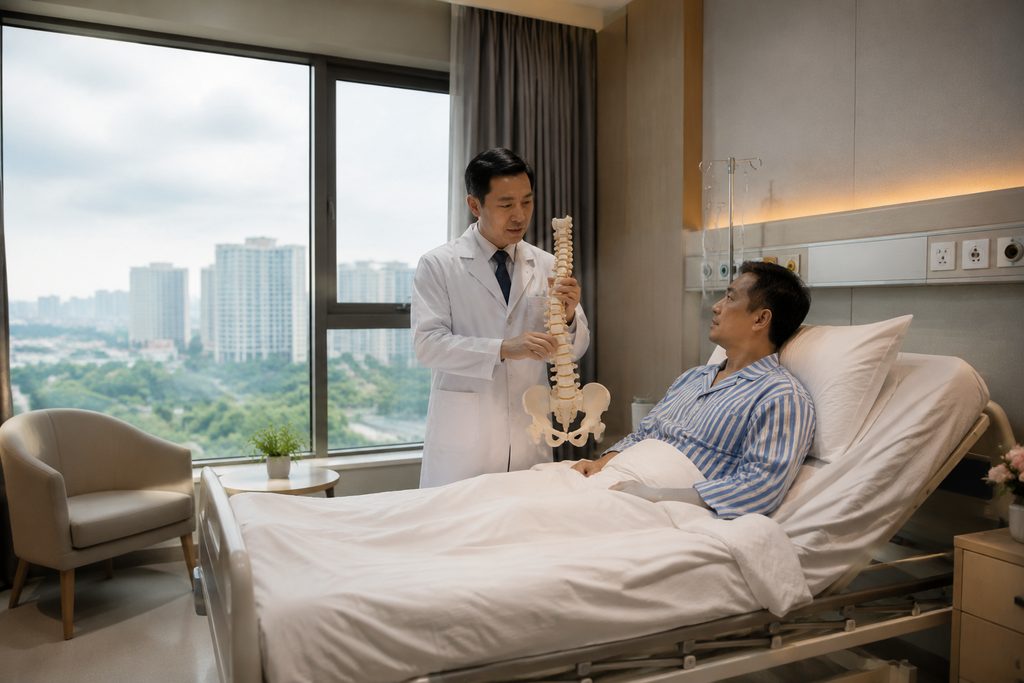
A spinal fusion sounds intimidating. In plain terms, it is a surgical procedure that permanently connects two or more vertebrae in your spine, eliminating motion between them. The goal is to stop the pain caused by movement of damaged or degenerated discs. For many patients with severe back pain, spondylolisthesis, or scoliosis, this is the definitive answer when conservative treatments fail.
But the cost of that answer can be staggering. In the United States, a single-level lumbar fusion averages between $80,000 and $150,000, depending on the hospital and implant brand. In Western Europe, it is not much cheaper. We have seen patients mortgage homes and drain retirement funds. Others simply suffer in silence because the price tag makes treatment impossible. That is where a precise, itemized understanding of spinal fusion surgery cost China becomes not just helpful, but life-changing.
Key Takeaways
- A single-level spinal fusion in China costs approximately $18,000–$35,000 all-in, roughly 70–80% less than the US average, driven by structural economic differences rather than quality compromises.
- Top-tier Chinese orthopedic centers perform case volumes that dwarf most Western hospitals; a surgeon at a major Shanghai spine center may complete 400+ fusions annually, compared to roughly 50–80 for a typical US peer.
- International patients face genuine barriers: language gaps in public hospitals, cash-based payment expectations, and visa logistics that demand careful advance planning.
- Itemizing every component—implants, surgeon fees, operating room time, and inpatient rehab—is essential to avoid surprise billing and to compare quotes accurately.
The Problem: Back Pain Is Debilitating, and Surgery at Home Is Often Out of Reach
Chronic lower back pain affects approximately 8% of all adults globally at any given time, and it is the single leading cause of disability worldwide. For a subset of those patients, spinal fusion is the medically indicated solution. Yet in high-income countries, the financial barrier is brutal. A 2022 analysis in the Journal of Spine Surgery pegged the average hospital charge for a posterior lumbar interbody fusion in the US at $110,000 before insurance negotiation. Even insured patients routinely face out-of-pocket maximums exceeding $8,000, plus lost income during recovery.
And the wait. In Canada and the UK, publicly funded systems may keep a patient waiting six to twelve months for a fusion. That is a year of lost mobility, lost wages, and progressive physical decline. We speak with patients every week who are trapped between a price they cannot pay and a timeline they cannot endure. They start searching for alternatives. They ask a very specific question: how much does lumbar fusion surgery cost abroad—and can they actually trust the answer?
Who We Are
We are ToChinaMed, an independent medical information platform. We are not a hospital. We do not provide medical treatment, clinical diagnoses, or surgical referrals. Our team builds the bridge between international patients and the factual, objective data they need to evaluate China’s top-tier medical resources. We maintain the Fudan University Hospital Rankings database and a curated directory of private international hospitals in China. If you need a starting point to find the right surgeon or facility, we help you identify options—at no charge, with no financial ties to any hospital.
Why China Delivers Results for Complex Spine Surgery
Clinical Volume Drives Surgical Precision
There is a well-documented relationship between surgical volume and patient outcomes in spinal fusion. A study published in Spine (2019) found that surgeons performing more than 100 fusions annually had significantly lower complication rates than low-volume peers. In China’s largest orthopedic centers, that threshold is routinely exceeded. At a top-ranked public hospital in Shanghai, a single spine team may complete 300 to 500 instrumented fusions per year. The repetition is relentless. That matters when a screw must be placed within millimeters of the spinal cord.
Compare this to a community hospital in the US, where an orthopedic surgeon might perform 30 lumbar fusions in a year. The difference is not about innate skill. It is about concentrated exposure. High-volume Chinese surgeons see rare anatomical variants, complex revision cases, and geriatric patients with comorbidities as a matter of routine. For international patients, that translates to a lower probability of surgical error and a smoother recovery trajectory.
Implant Technology: Same Brands, Different Economics
A persistent worry we hear: “Will they use inferior hardware?” The answer is no. The same multinational implant manufacturers—Medtronic, DePuy Synthes, Stryker, NuVasive—supply Chinese hospitals. A pedicle screw system used in a Shanghai operating room is identical to one used in New York or London. The cost difference comes from the supply chain and hospital pricing structures, not from substituting generic knock-offs. In fact, some Chinese hospitals are early adopters of domestically developed 3D-printed titanium cages that are not yet widely available elsewhere. The itemized implant cost within a spinal fusion surgery cost China quote typically runs $6,000 to $12,000 for a single-level construct, versus $20,000 to $40,000 in the US.
Cost Advantage Without Quality Compromise
Lower cost does not signal lower quality. It signals a fundamentally different economic model. Chinese public hospitals operate on high volume and thin margins. Surgeon compensation is salaried rather than fee-for-service. Hospital overhead per square foot is a fraction of what it is in Boston or San Francisco. Medical device pricing is subject to government volume-based procurement negotiations that slash list prices by 50% or more. These structural factors combine to produce a single-level fusion price of $18,000 to $35,000—including implant, surgeon, anesthesia, operating room, a private recovery room, and inpatient rehabilitation. That is what patients mean when they ask what is the cost of spinal fusion in China with implant. It is the all-in figure, not a stripped-down teaser rate.
Clinical outcomes reinforce the value proposition. A 2021 retrospective study in the Chinese Medical Journal examined 1,200 lumbar fusion patients across three major centers and reported a 92% fusion rate at 12 months, with a major complication rate of 2.1%. Those numbers sit squarely within the range of published Western benchmarks. The surgery is not “cheaper” in the sense of being cut-rate. It is less expensive because the system is built differently.
What You Need to Know Before Going Alone
The cost advantage is real. So are the logistical hurdles. We do not sugarcoat this. International patients who attempt to arrange surgery independently often hit walls that waste time and money.
- Language and Communication: Top public hospital surgeons in China are clinically brilliant, but their English fluency varies widely. Informed consent discussions, implant selection, and post-operative instructions require precise communication. Without a fluent medical interpreter, critical details get lost. We have seen cases where a patient arrived assuming a certain implant brand was included, only to discover a misunderstanding during pre-op. That is avoidable.
- Payment Systems: Chinese public hospitals do not bill Western insurance directly. They expect payment in full before discharge, typically via cash, UnionPay card, or domestic bank transfer. International credit cards are sometimes accepted at private hospitals, but the daily transaction limit on a foreign card can be as low as $3,000—useless against a $25,000 hospital bill. You need a local payment strategy before you arrive.
- Visa and Medical Records: A standard tourist visa does not cover major surgery. You need a medical visa (M visa or S2 visa, depending on the specifics), which requires an invitation letter from the admitting hospital and notarized medical records translated into Mandarin. Obtaining these documents independently, without an existing relationship at the hospital, can take months of back-and-forth.
How We Help You Navigate This
These barriers are structural, not malicious. They exist because the Chinese healthcare system was built for Chinese citizens, and the international patient pathway is still being formalized. Our role is to close that gap.
When you contact us, we start by understanding your clinical situation and your priorities—cost, surgeon specialization, recovery environment. We then cross-reference your needs against the Fudan University Hospital Rankings and our private hospital database. If you need a Shanghai-based surgeon who specializes in minimally invasive transforaminal lumbar interbody fusion (MIS-TLIF) and has published research on your specific condition, we can identify those names. We provide you with a shortlist of options, explain the trade-offs between public and private facilities, and outline exactly what documentation each hospital requires for a medical visa invitation letter. We do not book surgeries, and we do not collect fees. We give you the information to move forward with confidence.
For patients who want a turnkey experience—a pre-negotiated book spinal fusion surgery package China that bundles implant, surgeon, room, and rehab into one transparent price—the private international hospital sector is often the best fit. These facilities offer English-speaking staff, direct insurance billing for the insurers that do provide international coverage, and recovery wards designed to Western comfort standards. The cost runs higher than a public hospital, typically $35,000 to $55,000 for a single-level fusion, but the logistical friction drops dramatically. We help you compare both paths.
The question is spine surgery in China safe for international patients is the one that keeps people awake at night. Our answer, based on published clinical data and years of observing patient journeys, is yes—provided you select a high-volume, accredited center and have professional communication support. The surgical teams are skilled. The implants are globally sourced. The infection control protocols at Joint Commission International (JCI)-accredited private hospitals in China meet the same standards as any Western facility. The risk is not in the operating room. It is in the planning. Poor planning causes more harm than poor surgery ever does.
For patients specifically searching for the best spine surgery hospitals in Shanghai for foreigners, the landscape splits into two tiers. The public giants—Huashan Hospital, Shanghai Ninth People’s Hospital, Changzheng Hospital—offer unparalleled surgical volume and academic expertise. The private international hospitals—Shanghai United Family Hospital, Jiahui International Hospital—offer language accessibility, insurance coordination, and a recovery experience that feels familiar to a Western patient. Neither is universally “better.” The right choice depends on your clinical complexity and your tolerance for logistical effort. We help you weigh that decision with clear, comparative data.
Frequently Asked Questions
A complete quote should break down into at least five line items: the implant system (specify brand and number of levels), surgeon’s professional fee, anesthesiologist fee, operating room and equipment charges, and inpatient room cost per night including nursing care. Post-operative rehabilitation—physiotherapy sessions during the hospital stay—should be listed separately. If a quote bundles everything into one number without detail, ask for the breakdown. Legitimate hospitals will provide it. If they refuse, walk away.
Rarely at public hospitals. Most public Chinese hospitals operate on a cash-before-discharge model and will not interact with foreign insurers. Some private international hospitals in China have direct billing agreements with major global insurers like Cigna, Aetna International, and Bupa. Even then, you must confirm coverage for a pre-planned surgery abroad—many policies exclude it. Always obtain a written pre-authorization from your insurer before booking travel. We cannot adjudicate insurance claims, but we can point you to hospitals that have existing relationships with international payers.
This is the hardest question, and it deserves a straight answer. Surgical complications—infection, implant failure, nerve injury—occur at a low but real rate everywhere, including China. The published major complication rate for lumbar fusion in high-volume Chinese centers is approximately 2–3%, consistent with international norms. If a complication occurs, you will be managed by the same surgical team that performed the procedure, at the same hospital. The critical variable is whether you have planned for an extended stay. We advise all international patients to budget for at least two extra weeks in-country beyond the planned discharge date, and to secure travel insurance that covers medical complications and extended lodging. Do not arrive on a tight itinerary. Complications are rare, but a tight timeline turns a manageable problem into a crisis.
Trust is built on verifiable data, not marketing. We guide patients to look at three things. First, case volume: how many fusions of your specific type does this surgeon perform annually? Second, published research: has this surgeon authored peer-reviewed papers on your condition? Third, departmental ranking: where does their spine department fall in the Fudan University Hospital Rankings for orthopedics? If a surgeon is doing 300 fusions a year, publishing regularly, and working in a top-10 ranked department, the odds are in your favor. We help you gather that data. We never tell you whom to choose.
Your Next Step
Spinal fusion is a serious decision. The cost should not be the only factor, but it also should not be the barrier that keeps you from a pain-free life. China offers a structural cost advantage that makes surgery accessible without sacrificing the quality of implants or surgical expertise. The key is to itemize every component, choose a center with proven volume and outcomes, and plan the logistics thoroughly before you get on a plane.
If you are ready to explore your options, tell us what you need. We will help you identify the right hospitals and surgeons—at no charge, with no obligation. Your next step is information, not commitment.
For more medical information and treatment options in China, visit tochinamed.com (ToChinaMed).