Cervical Cancer Screening in China: HPV DNA Test and Pap Smear Costs Explained
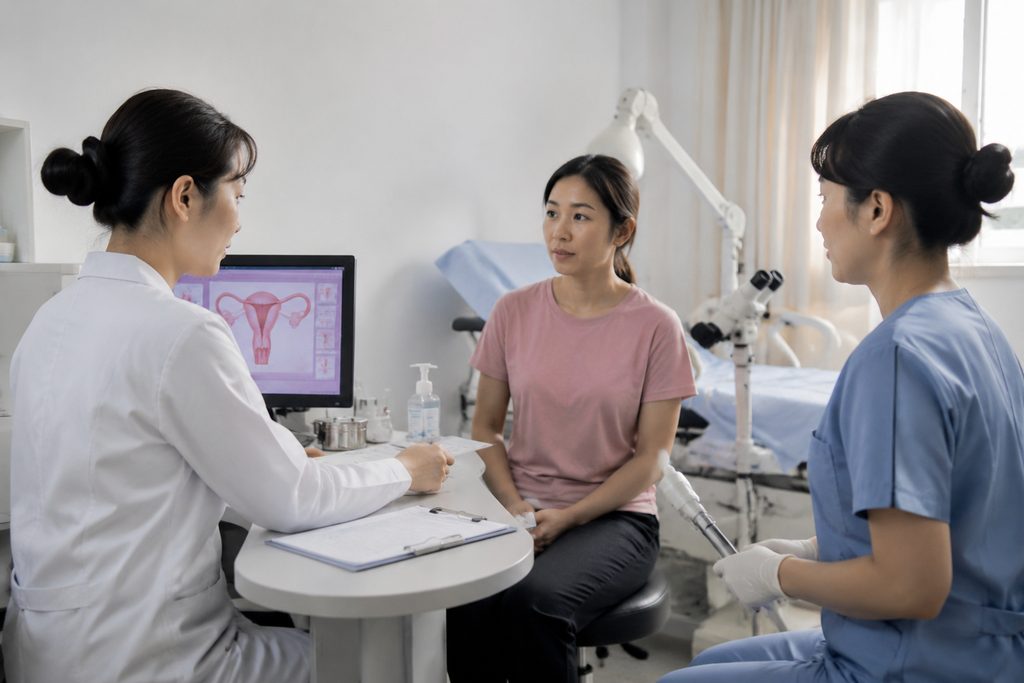
When 34-year-old Sarah, an English teacher in Shanghai, needed her routine cervical screening, she froze. Her international insurance had lapsed. The private expat clinic quoted her over $400 USD for an HPV DNA test and Pap smear combination. She knew, from friends back home in the UK, that the NHS provided this for free. She felt stuck. She didn’t know where to go, what a fair price looked like, or whether she could trust a local Chinese hospital without Mandarin fluency. Her story isn’t unique. It’s a silent, monthly panic for thousands of women living in China.
The fear is real. But the reality is far more manageable than most assume. China has built one of the world’s most efficient and technologically advanced cervical cancer screening infrastructures. The cervical cancer screening cost China offers is, frankly, a fraction of what you’d pay in the US or at private international clinics in Asia. A standard liquid-based Pap smear in a top-tier Chinese public hospital often costs between ¥200 and ¥400 ($28-$56 USD). A high-risk HPV DNA test ranges from ¥350 to ¥600 ($49-$84 USD). Combined packages? You’re looking at ¥500 to ¥900 ($70-$126 USD). No insurance required. Results in English. Same-day appointments.
Key Takeaways
- Cervical cancer screening in China costs 70-90% less than in the US, with HPV DNA tests starting around $49 USD and Pap smears at $28 USD in public hospitals.
- China’s national cervical cancer screening program has screened over 100 million women since 2009, creating a massive efficiency scale that drives down costs for everyone, including foreigners.
- The biggest barrier isn’t quality — it’s navigation: language, hospital registration systems, and understanding which test combination (HPV primary vs. co-testing) is appropriate for your age and risk profile.
- You cannot simply walk into a public hospital and expect English service. But with proper guidance, you can access the same top OB/GYN departments that Chinese women trust, at the same transparent public pricing.
The Problem: You’re Probably Overpaying — Or Avoiding Screening Entirely
Cervical cancer is a slow, preventable disease. We know the cause: persistent infection with high-risk HPV types. We have the tools: HPV DNA testing and cytology. Yet globally, a woman dies of cervical cancer every two minutes. In many cases, she simply never got screened. For expat women in China, the barriers are specific and maddening. Private international clinics charge “expat packages” that bundle unnecessary extras. A routine Pap smear and HPV test that should cost $100 becomes $500 or $600. Some women fly to Singapore or Bangkok. Many just delay. A 2023 survey by an international women’s health group in Shanghai found that 41% of expat respondents had missed at least one recommended screening interval due to cost or confusion about local options.
That delay has consequences. Cervical cancer has a well-defined precancerous phase. It takes 10 to 15 years, on average, for persistent HPV infection to progress to invasive cancer. This is an enormous window. The WHO’s 90-70-90 targets aim to eliminate cervical cancer as a public health problem. The first 90? Ninety percent of girls fully vaccinated with the HPV vaccine by age 15. The second? Seventy percent of women screened with a high-performance test by age 35, and again by 45. China is aggressively pursuing these targets. The screening infrastructure is already built. The challenge for foreign residents is simply knowing how to access it.
Who We Are
We are ToChinaMed — an independent medical information platform. We are not a hospital. We do not provide medical treatment or clinical diagnoses. We don’t charge patients for consultations, and we don’t take referral fees from hospitals. Our team researches, verifies, and publishes clear, data-backed guides that help international patients understand their options in China’s healthcare system. We maintain the most current English-language database of China’s top-ranked hospitals, including OB/GYN departments, and we track pricing data across public and private institutions. Think of us as your research arm. We do the legwork so you can make informed decisions.
Why China’s Cervical Cancer Screening System Delivers Results
The value proposition isn’t just about price. It’s about the intersection of volume, technology, and a national public health mandate that has pushed screening into every tier of the hospital system. Let’s break that down.
National Screening Scale Drives Down Costs and Sharpens Expertise
China launched its National Cervical Cancer Screening Program in 2009. By 2022, the program had provided over 130 million free screenings to women in rural areas. This isn’t a boutique service. It’s an industrial-scale public health operation. The downstream effect is that OB/GYN departments in major cities — the same ones accessible to foreign patients — handle screening volumes that would be unimaginable in a Western clinic. A cytopathologist at a top-tier hospital like Peking Union Medical College Hospital or Fudan University’s Obstetrics and Gynecology Hospital reviews thousands of slides per month. That volume builds diagnostic accuracy. When you pay for a Pap smear at one of these institutions, you’re not just buying a test. You’re buying the interpretive skill of a specialist who has seen more cervical cytology in a year than many Western pathologists see in a decade.
And the cervical cancer screening cost China reflects this public health orientation. Public hospital pricing is regulated by provincial health bureaus. A liquid-based cytology test (LBC) — the modern replacement for the conventional Pap smear — is typically capped around ¥300-¥400. An HPV DNA genotyping test, which identifies specific high-risk strains like HPV 16 and 18, usually runs ¥350-¥500. These are the prices Chinese women pay. Foreigners pay the same. There is no dual pricing system in public hospitals.
Technology Adoption: HPV Primary Screening Is Already Standard
In 2020, the American Cancer Society updated its guidelines to recommend HPV primary testing as the preferred screening method for women aged 25-65, every five years. The reasoning is clear: HPV DNA tests are more sensitive than cytology for detecting high-grade precancerous lesions. A negative HPV test provides longer reassurance than a negative Pap smear. China has been ahead of this curve in practice, if not always in official guidelines. Many major Chinese hospitals have offered HPV DNA testing with partial genotyping (separately identifying HPV 16, 18, and a pooled result for 12 other high-risk types) for over a decade. Domestic test manufacturers like Hybribio and BGI produce FDA-approved-equivalent kits at a fraction of the cost of the Roche Cobas or Hologic Aptima assays used in the West.
This matters for cost. The HPV DNA test price Shanghai expats encounter at a public hospital — around ¥350-¥500 — is for the same PCR-based technology that costs $150-$250 in the US. The difference is the supply chain. Chinese hospitals use domestically manufactured, nationally approved test kits. Clinical performance is comparable. A 2022 head-to-head study published in the Chinese Medical Journal found that domestic HPV tests showed 97.1% sensitivity for CIN2+ detection, matching international benchmarks. You’re not getting a budget test. You’re getting an efficient market.
Cost Transparency Without Quality Compromise
Let’s address the elephant in the room. Low cost makes people nervous. We’ve been conditioned to equate price with quality in healthcare. But the structural reasons for China’s lower screening costs have nothing to do with cutting corners. Labor costs are lower. A senior OB/GYN’s consultation fee at a public hospital is ¥100-¥300 ($14-$42 USD). Malpractice insurance and administrative overhead are a fraction of US levels. Hospital infrastructure is state-subsidized. The test kits themselves are manufactured locally. These factors compound. The result is that a combined HPV DNA test and Pap smear package — what clinicians call co-testing — can be obtained for ¥500-¥900 out of pocket. The same co-testing panel at a US hospital, billed to insurance or self-pay, routinely exceeds $400-$600.
| Screening Component | China Public Hospital (Self-Pay) | US Average (Self-Pay) | Private Clinic Shanghai (Self-Pay) |
|---|---|---|---|
| Liquid-Based Pap Smear | ¥200-¥400 ($28-$56) | $80-$150 | $180-$280 |
| HPV DNA Test (High-Risk Genotyping) | ¥350-¥600 ($49-$84) | $150-$250 | $250-$400 |
| Combined Co-Testing Package | ¥500-¥900 ($70-$126) | $230-$400+ | $400-$600+ |
| Specialist Consultation | ¥100-¥300 ($14-$42) | $150-$300 (without insurance) | $200-$400 |
These numbers aren’t estimates from a brochure. They’re verified by our team against publicly posted price lists at major OB/GYN hospitals in Beijing, Shanghai, and Guangzhou, as of early 2025. Individual hospital pricing varies slightly by province, but not dramatically.
What You Need to Know Before Going Alone
Honesty is essential here. The price is attractive. The clinical quality is real. But walking into a Chinese public hospital as a non-Mandarin-speaking foreigner and navigating a cervical screening appointment independently is genuinely difficult. We’ve seen it go wrong. Here are the barriers you’ll face.
- Hospital Registration Systems: Most public hospitals require a hospital-issued patient card, linked to a Chinese phone number and passport. Registration is increasingly digital — through WeChat mini-programs or hospital apps that are Mandarin-only. Walk-in registration desks exist, but staff rarely speak English. Without a card, you cannot pay, and without payment, you cannot get tested.
- Test Selection Confusion: You’ll be offered a menu of options: conventional Pap, liquid-based cytology, HPV DNA with genotyping, HPV E6/E7 mRNA testing. The doctor may recommend based on your age and history, but the conversation will happen in Mandarin. Choosing the wrong test — or misunderstanding the result — can lead to unnecessary anxiety or false reassurance. For instance, a positive high-risk HPV test in a woman under 30 often clears spontaneously. Without proper counseling, that result can trigger panic.
- Result Retrieval and Interpretation: Results are typically available within 3-7 days. They’re often delivered via a hospital app notification — in Chinese. A Pap smear report uses the Bethesda System terminology, which is standardized, but the accompanying comments and recommendations will be in Chinese. An HPV report will list genotypes numerically. You need someone who can translate not just the words, but the clinical implications.
- Payment Systems: International credit cards are not universally accepted at public hospital cashiers. You’ll need WeChat Pay, Alipay, or UnionPay. Some hospitals accept cash, but that’s increasingly rare. The Pap smear packages for foreigners China offers through private clinics solve this payment problem, but at triple the cost. There is a middle path.
How We Help You Navigate This
These barriers exist for structural reasons, not because anyone is trying to exclude you. Chinese public hospitals serve 1.4 billion people. Their systems are optimized for that population. They don’t have a “foreigner track.” That’s where we come in. Our platform is built to bridge this specific gap.
We maintain an up-to-date directory of OB/GYN departments at hospitals ranked in the Fudan University Hospital Rankings, including dedicated gynecologic oncology centers. We can tell you which hospitals in Shanghai, Beijing, or Guangzhou offer English-language report options, which have international patient departments, and which are most accessible for self-pay foreign patients. We track current pricing. We don’t book appointments for you — we’re not a concierge service — but we provide the exact information you need to book them yourself, or through a trusted local contact. We’ve published guides on using China’s digital health card system, understanding hospital registration, and interpreting your screening results. We’ve also documented real patient experiences, so you know what to expect at each step.
If you’re comparing options, we can point you toward the best gynecology clinic Beijing for HPV test needs, or help you understand why a particular Shanghai hospital’s OB/GYN department consistently ranks in the national top five. We don’t push one hospital. We give you the data and context to choose. For women who want a complete package — consultation, co-testing, English report, and follow-up guidance — we can outline which hospitals offer this seamlessly and which require more navigation effort. The goal is to help you make a decision you feel solid about, not a decision you make because you’re out of options.
Many women ask us how to book cervical screening medical tourism China. The answer depends on your timeline. If you’re traveling specifically for screening, private international hospitals offer the smoothest experience with online booking and English-speaking staff, at a higher price point. If you’re already living in China or visiting for an extended period, public hospital screening offers the best value, provided you have navigation support. We can help you assess both paths.
Frequently Asked Questions
For a combined HPV DNA test and liquid-based Pap smear at a top-tier public hospital, expect to pay ¥500-¥900 ($70-$126 USD) out of pocket. This includes the lab processing fees. It does not include the initial consultation fee (¥100-¥300). At a private international clinic, the same co-testing package typically runs ¥2,000-¥4,000 ($280-$560 USD). The public hospital price is the same for Chinese citizens and foreigners. No dual pricing. The private clinic price reflects English service, appointment convenience, and insurance billing capability.
Yes. Domestic Chinese HPV test kits from manufacturers like Hybribio, BGI, and Sansure are approved by China’s National Medical Products Administration (NMPA) and have been validated in large-scale clinical trials. A 2022 meta-analysis in the Chinese Medical Journal found pooled sensitivity of 97.1% for CIN2+ detection, comparable to internationally approved assays. Many Chinese hospitals also offer the Roche Cobas HPV test if you specifically request it, though at a higher cost (around ¥800-¥1,000). The key variable isn’t the test kit — it’s whether the lab follows quality control protocols. Hospitals ranked in the Fudan Top 100 maintain rigorous lab standards.
At most major public hospitals in Beijing, Shanghai, and Guangzhou, the answer is yes — but you have to ask. Some hospitals, like Peking Union Medical College Hospital’s International Medical Service, provide English reports as standard. Others require you to request an English translation at the time of sample collection. The report format will typically use standardized Bethesda System terminology for cytology and numerical genotype results for HPV. The doctor’s interpretive comments, however, are often in Chinese. We recommend having a Mandarin-speaking contact review the full report with you, or using a hospital with a dedicated international department. Private international clinics provide full English reports and consultation by default.
A positive high-risk HPV result does not mean you have cancer. It means you need further evaluation. In China, the standard follow-up is a colposcopy with directed biopsy if indicated. This is widely available at the same hospitals that perform screening. A colposcopy at a public hospital costs approximately ¥500-¥1,000 ($70-$140 USD). If a biopsy is taken, pathology adds another ¥200-¥500. The entire diagnostic workup — from screening to definitive diagnosis — can be completed for under $500 USD in most cases. If treatment is needed (such as a LEEP procedure for precancerous lesions), that is also available at a fraction of Western costs. The continuity of care is there. You just need to know which hospitals have dedicated colposcopy clinics and gynecologic oncology departments. We cover this in our hospital directory.
Safety, in the clinical sense, is not the concern. Chinese OB/GYN departments at top-ranked hospitals follow international clinical protocols. Speculum exams and sample collection are performed by experienced gynecologists. Infection control standards are rigorous. The real challenges are communication and comfort. The experience may feel more clinical and less “spa-like” than a private Western clinic. The doctor may not explain each step in English. The exam room may have less privacy than you’re accustomed to. These are cultural and systemic differences, not safety issues. If you prioritize a familiar bedside manner and English communication, a private international clinic is worth the premium. If you prioritize clinical accuracy and cost-effectiveness, a public hospital delivers. We help you understand the trade-offs so you can choose what matters most to you.
Your Next Step
Cervical cancer screening shouldn’t be a luxury. It shouldn’t be something you skip because you’re
For more medical information and treatment options in China, visit tochinamed.com (ToChinaMed).