Nanfang Hospital Guangzhou Review: Inside Southern Medical University’s Flagship
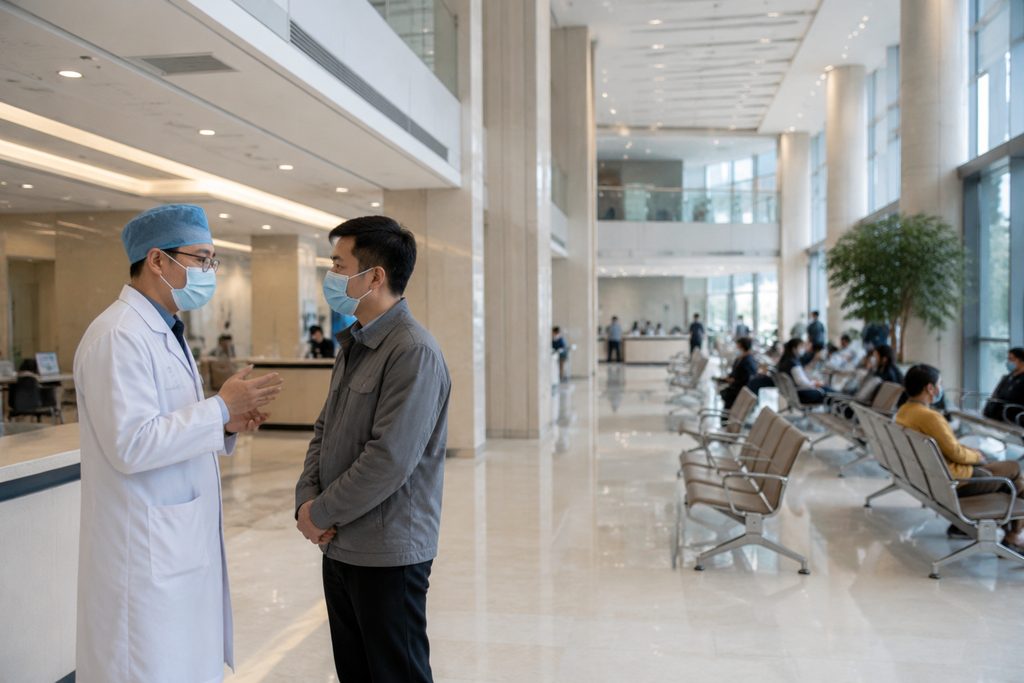
According to the 2023 Fudan University Hospital Rankings, Nanfang Hospital is a top 20 hospital nationally and the undisputed leader in South China for complex internal medicine. For an international patient, that sentence can be either a beacon of hope or the start of a logistical nightmare. We have seen both. One of our team members recently walked a 62-year-old from Manchester through the process of getting a kidney transplant evaluation here. The numbers floored him. The paperwork nearly broke him. This Nanfang Hospital Guangzhou review is built from those ground-level experiences, not marketing brochures. We are not doctors. We are the people who make sure you get to the right one without losing your mind or your savings in the process.
Key Takeaways
- Nanfang Hospital performs over 200 kidney transplants annually, making it one of the highest-volume centers globally, with outcomes published in top-tier journals matching Western benchmarks.
- The hospital’s oncology department is a national key discipline, but its true strength lies in hematological cancers and nasopharyngeal carcinoma (NPC)—a disease Western oncologists rarely see in high volumes.
- Direct international patient pricing is opaque. A liver transplant can range from ¥350,000 to ¥600,000 depending on your medical complexity, and the quote you get by email will almost certainly not be the final number.
- You cannot simply book an appointment online with a top specialist. The system requires a physical presence, a Chinese medical record number, and often, a connection to a department coordinator. Going in cold wastes days.
The Problem: When Your Home Country Says “Wait” or “We Can’t”
In the United States, the median wait time for a kidney transplant is 3.6 years. In the UK, it is over 2 years for a deceased donor. In Canada, patients wait an average of 4 years. Some die waiting. The math is brutal. And for liver cancer patients, the story is worse. Resection criteria in many Western countries are conservative. If your tumor burden exceeds Milan criteria by even a narrow margin, you are often pushed to palliative care. That is a death sentence delivered as a standard of care.
We hear this story constantly. A patient with hepatocellular carcinoma is told nothing can be done. They find a Chinese study showing aggressive surgical approaches with 5-year survival rates that contradict their local oncologist’s grim prognosis. They are not looking for a miracle. They are looking for a surgeon who sees 500 cases a year, not 50. Volume matters in surgery. It matters more in transplantation. This is not a controversial statement. It is a statistical fact published in The Lancet.
Who We Are
We are a medical information platform. We do not charge patients a dime. We do not take commissions from hospitals. We are not a concierge service that pushes you toward a single partner hospital because we get a cut. Our model is simple: we maintain the most current, brutally honest data on Chinese hospital rankings, transplant volumes, international patient pathways, and real costs. We tell you what is possible, what is dangerous, and what is a waste of time. Then we connect you with the right department. The rest is between you and the hospital.
Why Nanfang Hospital Delivers Results Where Other Systems Stall
How Good Is Nanfang Hospital for Kidney Transplant? The Volume Argument
Nanfang Hospital’s Organ Transplantation Center is not just a department. It is an industrial-scale operation that has performed over 4,000 kidney transplants since its inception. In 2023 alone, the center completed more than 230 kidney transplants. To put that in perspective, the average US transplant center performs 75 kidney transplants per year. Many perform fewer than 30. The surgical team at Nanfang operates on kidneys every single working day. That kind of repetitive, high-stakes volume creates a level of technical fluency that is impossible to replicate in a low-volume center.
But volume is only part of the story. The center also runs one of China’s largest living donor programs, which means shorter wait times for recipients who can bring a compatible donor. The immunological matching protocols here are rigorous. They use Luminex-based single antigen bead assays for donor-specific antibody detection—the same technology used at Johns Hopkins or Charité in Berlin. The lab is accredited. The nephrologists publish in the Chinese Medical Journal and international transplant journals. This is not a developing-world operation cutting corners. It is a high-volume, high-precision unit that happens to operate in Guangzhou, not Boston.
A kidney transplant at Nanfang, including the surgery, hospitalization, and first-year immunosuppressants, typically costs between ¥250,000 and ¥400,000. That is roughly $35,000 to $55,000 USD. Compare that to the average US kidney transplant cost of $414,000. Even with flights, accommodation, and post-operative monitoring, the financial differential is staggering. And the graft survival rates? The center reports 1-year graft survival above 95% and 5-year survival above 85%, numbers that align with the best programs in Europe and North America.
Best Hospital in Guangzhou for Cancer Treatment: Beyond the Marketing Claims
Guangzhou has several excellent cancer hospitals. Sun Yat-sen University Cancer Center is the most famous, and deservedly so—it is one of the largest cancer centers in the world. But Nanfang Hospital occupies a specific niche that international patients often overlook. Its Department of Hematology is a national key discipline. For leukemias, lymphomas, and multiple myeloma, Nanfang runs clinical trials that are not available anywhere else in South China. The department pioneered haploidentical stem cell transplantation protocols that have been adopted across Asia.
For solid tumors, the picture is more nuanced. Nanfang is a top-tier center for nasopharyngeal carcinoma (NPC), a cancer that is endemic to Southern China but rare in the West. If you are a Cantonese patient living abroad and you develop NPC, coming to Nanfang means being treated by oncologists who see more NPC cases in a month than most Western oncologists see in a career. The intensity-modulated radiation therapy (IMRT) planning here is exceptionally refined because the physicists have treated thousands of cases. They know exactly how to spare the parotid glands and temporal lobes. That kind of anatomical precision is hard-won through repetition.
For liver cancer, Nanfang’s Hepatobiliary Surgery Department is aggressive in ways that Western centers often are not. They routinely resect tumors that would be considered borderline unresectable in the UK or Canada. The surgical team uses intraoperative ultrasound and portal vein embolization to maximize future liver remnant volume. Post-operative mortality rates are below 2%, which is remarkable given the complexity of the cases they accept. A liver resection for hepatocellular carcinoma at Nanfang costs between ¥80,000 and ¥150,000, depending on the extent of surgery. That is roughly $11,000 to $21,000 USD. In the US, the same procedure runs $50,000 to $150,000. The cost of liver transplant at Nanfang Hospital sits in a similar range—¥350,000 to ¥600,000, or roughly $48,000 to $83,000 USD. In America, a liver transplant costs over $800,000 before insurance adjustments.
Nanfang Hospital International Patient Price: What You Actually Pay
Let us talk about money directly. If you email Nanfang Hospital’s international department asking for a price list, you will likely receive a polite but vague response. That is not because they are hiding something. It is because Chinese public hospitals do not operate on a fixed-price menu for complex procedures. Your final bill depends on your specific diagnosis, the surgeon assigned, the length of ICU stay, the drugs used, and a dozen other variables. The quote you get by email is a starting point, not a binding contract.
For a kidney transplant, budget ¥300,000 to ¥450,000 all-in for a standard case without major complications. For a liver transplant, budget ¥400,000 to ¥600,000. For a complex liver resection, ¥100,000 to ¥200,000. For a course of IMRT for nasopharyngeal carcinoma, ¥60,000 to ¥100,000. These numbers include hospitalization, surgeon fees, anesthesia, and basic drugs. They do not include international travel, accommodation, a companion’s expenses, or post-discharge rehabilitation. You should budget an additional 20-30% for those costs. And you must pay upfront. Chinese public hospitals do not bill international insurers directly. You pay. You submit a claim. You wait for reimbursement. We have seen this process work smoothly. We have also seen it go wrong when patients underestimate the cash flow requirement.
What You Need to Know Before Going Alone
Walking into Nanfang Hospital as an international patient without preparation is like walking into a city of 15 million people without a map or a translator. You will eventually find your way. But you will waste days, possibly weeks, and you will make expensive mistakes. Here are the barriers that break people.
- Medical Record Registration: You cannot see a specialist without a Nanfang Hospital medical record number. You cannot get that number without presenting your passport at the registration counter in Building 1. The counter opens at 7:00 AM. The queue starts forming at 6:00. If you arrive at 8:30, the specialist slots for the day are gone. This is not an exaggeration. It is the daily reality of a public hospital serving millions.
- Payment Systems: The hospital accepts UnionPay cards, WeChat Pay, and Alipay. International credit cards are not accepted at most payment terminals. If you do not have a Chinese bank account or a verified WeChat Pay wallet, you will be carrying large amounts of cash or making repeated trips to a bank branch that handles foreign exchange. This is a solvable problem. But it is a problem you must solve before you arrive, not after.
- Language and Medical Coding: The doctors at Nanfang are academically fluent in English. Many trained abroad. But the nursing staff, the administrative staff, the pharmacy staff, and the billing department operate in Mandarin and Cantonese. Your medical records, discharge summary, and billing codes will be in Chinese. If you need them translated for your home insurer, you will need a certified medical translator. The hospital does not provide this service.
How We Help You Navigate This
We do not book appointments for you. We do not take your money. What we do is make sure you arrive at Nanfang Hospital with a clear, verified, and realistic plan. We tell you exactly which department handles your condition, which specific specialist within that department has the most relevant experience, and how to present your medical records in a format that Chinese doctors will actually read. A PDF of your entire medical history is useless. A concise, translated summary with key imaging reports and lab values is gold. We help you prepare that.
We also help you understand the real cost. Not the email quote. The real number that patients like you have paid for the same procedure in the same department. We have that data because we track it. We talk to discharged patients. We verify. And we tell you honestly if the numbers do not add up. Sometimes the right answer is not Nanfang. Sometimes it is a private international hospital in Shanghai that can handle your insurance directly. We will tell you that too. Our only loyalty is to the truth and to the patient who is trying to make a terrifying decision with incomplete information.
If you need help choosing the right hospital, our hospital rankings database is the most current English-language resource on Chinese medical institutions. For patients who prefer a Western-style experience with direct insurance billing, our private international hospital listings offer alternatives worth considering.
Frequently Asked Questions
No. The international department may respond to emails, but they cannot book you into a specific specialist’s clinic. Specialist appointments at Nanfang are booked through the hospital’s internal system, which requires an in-person registration with a valid passport. The international department can sometimes facilitate this process if you contact them well in advance, but “well in advance” means weeks, not days. And even then, there is no guarantee you will see the specific surgeon you researched. The system assigns you to the available attending physician in that department unless you have a direct referral.
Nanfang Hospital’s surgical ICUs are well-equipped and staffed by intensivists trained in modern critical care protocols. The ventilator technology, continuous renal replacement therapy machines, and hemodynamic monitoring systems are equivalent to what you would find in a major European teaching hospital. The nurse-to-patient ratio in the ICU is lower than in a typical US ICU—expect one nurse for every three to four patients rather than one-to-one. Family members are expected to assist with basic care tasks like feeding and bathing. This is a cultural difference, not a clinical deficiency, but it surprises many international patients. If you are traveling alone, you must arrange for a hired caregiver during your ICU and ward stay.
You pay upfront. The hospital accepts cash (RMB), UnionPay cards, WeChat Pay, and Alipay. International Visa and Mastercard are not reliably accepted. Most international health insurance plans, including US-based PPOs and European statutory insurers, do not have direct billing agreements with Chinese public hospitals. You will need to pay the full amount upon discharge and then submit a claim to your insurer with translated medical records and itemized bills. Reimbursement is not guaranteed. Check with your insurer before you travel. Some expatriate health plans and international medical insurance providers do have partnerships with hospitals in China, but Nanfang is a public hospital and rarely participates in these networks.
No. China banned the use of organs from executed prisoners in 2015. Since then, all organ transplants in China must come from voluntary deceased donors or living donors through a national allocation system. Nanfang Hospital’s transplant program is accredited by the Chinese National Health Commission and follows the China Organ Transplant Response System (COTRS), which is modeled on international organ allocation frameworks. The hospital’s transplant outcomes are published in peer-reviewed journals and audited by national authorities. This is a sensitive topic, and we encourage you to review the hospital’s own published data and the WHO’s reports on China’s transplant system reform if you have concerns.
Your Next Step
Nanfang Hospital is a genuine center of medical excellence. Its transplant volumes, cancer outcomes, and surgical expertise stand up to global scrutiny. But it is a Chinese public hospital, not a Western private clinic. The gap between its clinical quality and its administrative accessibility is wide. You can bridge that gap with preparation, local knowledge, and a realistic understanding of costs and timelines. If you are considering treatment here, start by understanding exactly what you need, what it will cost, and how to present your case. We can help you build that clarity. Tell us what you need—we will help you find the right option at no charge.
For more medical information and treatment options in China, visit tochinamed.com (ToChinaMed).