Beijing Jishuitan Hospital Review: Orthopedic and Burn Surgery Destination
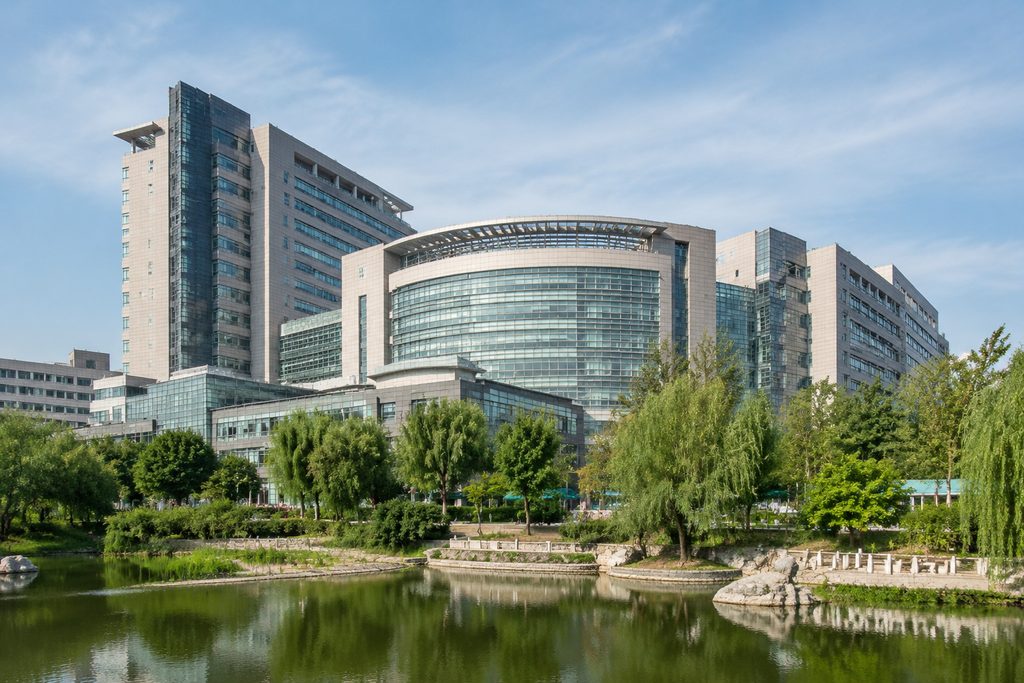
While patients in Canada wait a median 28.6 weeks for orthopedic surgery, surgeons at Beijing Jishuitan Hospital routinely perform over 300 joint replacements per month. The hospital’s burn unit treats more than 3,000 inpatients annually. That volume gap is not marginal. It is structural.
This is not a sales pitch. We are not a hospital. We do not provide medical treatment or clinical diagnoses. Our team functions as your logistical architects — we bridge the gap between you and China’s top-tier medical expertise. When a patient from Sydney or Seattle asks us whether Beijing Jishuitan Hospital is worth the journey, we walk them through the data. The decision is always theirs.
Key Takeaways
- Beijing Jishuitan Hospital performs over 50,000 orthopedic surgeries annually — a surgical volume that exceeds most Western trauma centers by a factor of three to five.
- The hospital’s burn department is the national burn treatment center for China, handling complex cases referred from across the country with survival rates above 98% for patients with burns covering less than 80% of total body surface area.
- International patients face real barriers: language, payment systems that do not accept foreign cards, and a complete absence of Western-style medical coding for insurance reimbursement.
- Understanding the Beijing Jishuitan Hospital orthopedic surgery price structure — and how it compares to US or European quotes — is essential before making any commitment.
The Problem: Joint Pain and Burns Do Not Wait for Bureaucracy
In the United Kingdom, the NHS reported in 2023 that over 370,000 patients were waiting for trauma and orthopedic treatment, with some waiting more than 18 months for hip replacements. In Canada, the median wait time from general practitioner referral to orthopedic surgery reached 28.6 weeks in 2023, according to the Fraser Institute. The United States solves this differently — with cost. A total knee replacement averages $35,000 to $45,000 without complications. For the uninsured or underinsured, that number is not theoretical. It is a locked door.
Burn injuries are worse. Severe burns require immediate, specialized intervention. A delay of 48 hours can mean the difference between a graft that takes and a systemic infection. Most general hospitals are not equipped for major burn resuscitation. They lack the dedicated isolation units, the trained nursing teams, and the surgical volume to manage a patient with 60% total body surface area burns. If you live in a country with one burn center serving a population of 20 million, geography is your prognosis.
Who We Are
We are an independent medical information platform. We do not charge patients fees, we do not accept commissions from hospitals, and we do not push anyone toward a specific institution. Our team researches Chinese hospitals, verifies clinical data, and publishes what we find. When a patient asks “is Beijing Jishuitan Hospital good for joint replacement,” we answer with published outcome data and volume statistics — not marketing language. We also help international patients understand the practical logistics: what documents you need, how payments work, and what recovery looks like on the ground in Beijing. You can explore hospital rankings across all specialties on our hospital rankings page.
Why Beijing Jishuitan Hospital Delivers Results
Surgical Volume That Reshapes Surgeon Skill
The orthopedic department at Beijing Jishuitan Hospital handles over 50,000 surgeries per year. That is roughly 1,000 procedures per week. A typical joint replacement surgeon here completes 300 to 500 hip or knee replacements annually. Compare this to the average US orthopedic surgeon, who performs approximately 65 joint replacements per year, according to a 2022 study in the Journal of Arthroplasty. Volume is not an abstract metric. Multiple large-scale studies — including a widely cited 2019 analysis in The Lancet covering over 580,000 patients — have demonstrated a direct, inverse relationship between surgeon volume and complication rates in total joint arthroplasty. Surgeons who do more of a procedure have lower infection rates, fewer revisions, and shorter operative times.
This is not a reflection on individual talent. It is a reflection of system design. Beijing Jishuitan Hospital operates as a dedicated musculoskeletal and trauma center. Orthopedics is not one department among many. It is the hospital’s core identity.
The Burn Center: A National Resource
The burn department at Beijing Jishuitan Hospital was established in 1958. It is the National Burn Treatment Center of China. When a factory explosion or mass casualty fire occurs anywhere in the country, the most severe cases are transferred here. The unit treats over 3,000 inpatients and 80,000 outpatients annually. These are not minor scalds. The center specializes in extensive deep burns, electrical burns, chemical burns, and inhalation injuries. Survival rates for patients with burns covering 50% to 80% of total body surface area consistently exceed 95% — outcomes that match or surpass those reported by major burn centers in the United States and Europe.
One reason is sheer repetition. Another is technique. The hospital pioneered several approaches now used nationally, including early eschar excision and microskin grafting for patients with limited donor sites. For international patients researching the best burn surgery hospital in China cost and clinical capability, this is the institution that sets the national standard.
Cost Structure: Why the Numbers Are Different
The Beijing Jishuitan Hospital orthopedic surgery price for a total hip or knee replacement typically ranges from ¥80,000 to ¥150,000 — roughly $11,000 to $21,000 USD. That includes the implant, surgeon fees, hospital stay, and standard postoperative care. In the United States, the same procedure costs $35,000 to $45,000. In Australia, $20,000 to $30,000 AUD for private surgery. The gap is real. But it is not magic.
Chinese hospital pricing reflects structural economic differences: lower labor costs for nursing and support staff, high patient throughput that spreads fixed costs across more cases, and a public hospital system that operates on nonprofit principles. Implant costs are comparable — the same multinational orthopedic device companies supply Chinese hospitals — but the service layers wrapped around them cost less. Lower cost does not automatically mean lower quality. It means the inputs are priced differently. Patients considering medical tourism Beijing Jishuitan Hospital packages should understand this distinction clearly before comparing quotes.
What You Need to Know Before Going Alone
We tell every patient the same thing: the clinical data is strong. The logistical friction is real. Here is what you will face if you attempt to navigate this independently.
- Language Barrier: English-speaking staff are rare in Chinese public hospitals. Medical records, consent forms, surgical schedules, and discharge instructions are in Mandarin. A mistranslated medication instruction or allergy notation carries clinical risk.
- Payment Systems: Chinese public hospitals do not accept foreign credit cards. Payment is typically required upfront, in Chinese yuan, through domestic bank transfers or WeChat Pay. International wire transfers can take days to clear. If your surgery is scheduled for Monday and the funds have not settled, the slot is released to the next patient on the waitlist.
- Medical Records and Insurance: Chinese hospitals do not produce documentation in formats recognized by Western insurers. There are no ICD-10 codes on your discharge summary, no itemized bills in English, and no dedicated international billing department. If you plan to seek reimbursement from a US or European insurer, you will need to manage the translation and coding yourself — or work with someone who can.
How We Help You Navigate This
These barriers exist for structural reasons. Chinese public hospitals were built to serve a domestic population of 1.4 billion people. They were not designed with international patient intake in mind. We fill that gap.
Before you travel, our team helps you gather and translate your medical records, imaging studies, and referral letters into formats that Chinese specialists can review. We confirm which department and surgeon are appropriate for your case — not based on marketing materials, but on published surgical volumes and subspecialty focus. We walk you through the payment process so funds are in place before you arrive. During your treatment, we coordinate communication between you and your care team. After discharge, we help arrange follow-up imaging, rehabilitation guidance, and documentation translation for your home-country physician. You can also compare private international hospitals that offer English-language services and direct insurance billing on our private hospital rankings page.
Our goal is simple. You focus on your recovery. We handle the logistics. If you are still researching how long to recover from burn surgery in China, the answer depends heavily on the procedure. A small skin graft may heal in two to three weeks. Major contracture release with full-thickness grafting can require six to twelve months of rehabilitation and multiple staged procedures. We help you plan for the realistic timeline, not the optimistic one.
Frequently Asked Questions
The data supports it. Surgeon volume at Jishuitan far exceeds Western averages, and published studies consistently link higher surgical volume to lower complication rates in arthroplasty. The hospital uses the same implant systems — Zimmer Biomet, Stryker, DePuy Synthes — found in US and European operating rooms. What differs is the care model: less individual attention per patient, more standardized protocols, and no concierge-level service unless arranged through a third party.
Expect ¥80,000 to ¥150,000 ($11,000–$21,000 USD) for a standard total hip or knee replacement, including implant and hospital stay. Complex revisions or bilateral procedures cost more. This is the hospital’s standard pricing — there is no separate “international patient rate.” However, international patients typically pay out-of-pocket and upfront. If a medical tourism Beijing Jishuitan Hospital package quotes you significantly less than this range, ask what is excluded. Anesthesia fees, postoperative medications, and rehabilitation are sometimes quoted separately.
Recovery depends entirely on the procedure. Small scar revisions may require a two-week stay in Beijing for suture removal and initial healing assessment. Major contracture releases — common after severe burns — often need staged surgeries spaced three to six months apart, with ongoing physical therapy between procedures. Plan for the long term. A single trip is rarely sufficient for complex burn reconstruction.
Technically, yes. In practice, it is extremely difficult. The hospital’s international patient office has limited English capacity. Scheduling requires in-person registration with a Chinese ID or passport, and consultation slots fill quickly. Most international patients work with a medical concierge or facilitation service — not because it is required, but because the alternative involves weeks of back-and-forth communication in Mandarin with no guarantee of a confirmed surgical date.
Volume and experience with extreme cases. The burn center at Jishuitan sees more extensive burns in a single month than many Western burn units see in a year. The clinical protocols — early excision, microskin grafting, integrated rehabilitation starting in the ICU — were developed here and adopted nationally. If you need complex reconstructive burn surgery and the best burn surgery hospital in China cost is a factor in your decision, this institution belongs on your shortlist.
Your Next Step
Beijing Jishuitan Hospital is not the right choice for every patient. If you need a high-volume joint replacement surgeon with outcomes backed by published data — and you are prepared to navigate the logistical complexity — it deserves serious consideration. If you need complex burn reconstruction and your home-country waitlist is measured in years, the math changes.
We do not make recommendations. We provide information. If you want to understand whether this hospital fits your specific situation, tell us what you need. We will help you find the right option at no charge.
For more medical information and treatment options in China, visit tochinamed.com (ToChinaMed).