Showering in Chinese Hospitals: What International Patients Must Know About Bathroom Facilities
Key Takeaways
- Private ensuite bathrooms in Chinese public hospitals are typically restricted to VIP or international wards, with standard multi-bed rooms using shared facilities that may differ significantly from Western expectations.
- The cost for a VIP ward with an ensuite bathroom in a top-tier Shanghai or Beijing hospital can range from approximately 1,500 to 4,000 RMB ($200–$550 USD) per night, a fraction of comparable private room rates in the United States.
- Hot water for showering is not always available 24/7 in standard wards; it is often supplied during scheduled hours, usually in the morning and evening, which can be a genuine challenge for post-operative patients.
- Before booking any treatment, you should secure written confirmation of the specific ward class and a photograph of the actual bathroom, as the term “private room” does not always guarantee a private shower in the Chinese hospital classification system.
The Problem: Navigating a Completely Different Definition of “Private”
A patient recovering from a spinal fusion does not want to walk 40 meters down a hallway to use a shared squat toilet. That is not an exaggeration. It is a daily reality in many standard wards across the world’s most populous nation. When we process intake forms from Western patients, the question of bathroom access ranks third, right behind surgeon credentials and total cost. The anxiety is specific. “Will I have to share a bathroom? Will there be a shower in my room? Can I shower alone after my procedure?” These are not luxuries. They are dignity and infection control issues baked into the recovery process.
China’s public hospital system is vast and tiered. The top-tier Grade 3A hospitals in Beijing, Shanghai, and Guangzhou deliver clinical outcomes that rival Mayo Clinic or Charité. But the physical infrastructure of a standard multi-bed room has not been designed with the North American or European patient’s privacy expectations in mind. A 2023 report by the China National Health Commission noted that over 60% of public hospital beds are still in three-person or six-person rooms. The bathrooms there are shared. Hot water is often centralized and time-restricted. The showerhead might be a handheld fixture over a floor drain without a curtain. This is not a cleanliness issue. It is a structural design philosophy that prioritizes clinical throughput over individual comfort. If you do not know this before you arrive, the shock can be destabilizing during a vulnerable moment.
Who We Are
We are not a hospital. We do not provide medical treatment or clinical diagnoses. We are your logistical architects. Our team maps the specific hospital infrastructure in China against your recovery needs. We verify whether a “VIP suite” at a specific hospital in Shanghai actually includes a private shower with a glass enclosure, or if it is simply a larger room with a private toilet but still relies on a shared shower down the hall. We do not book procedures. We give you the verified ground truth so you can make an informed choice. We are the bridge between you and China’s top-tier medical expertise.
Why China’s International Wards Deliver a Different Experience
The gap between expectation and reality narrows sharply once you move into the international or VIP ward ecosystem. These units were built specifically to meet the private bathroom cost in Chinese hospitals that aligns with what medical travelers from the Middle East, Europe, and North America are willing to pay. The price tag is higher than a standard bed. But the structural difference is not just cosmetic.
Clinical Volume Drives Investment in Premium Infrastructure
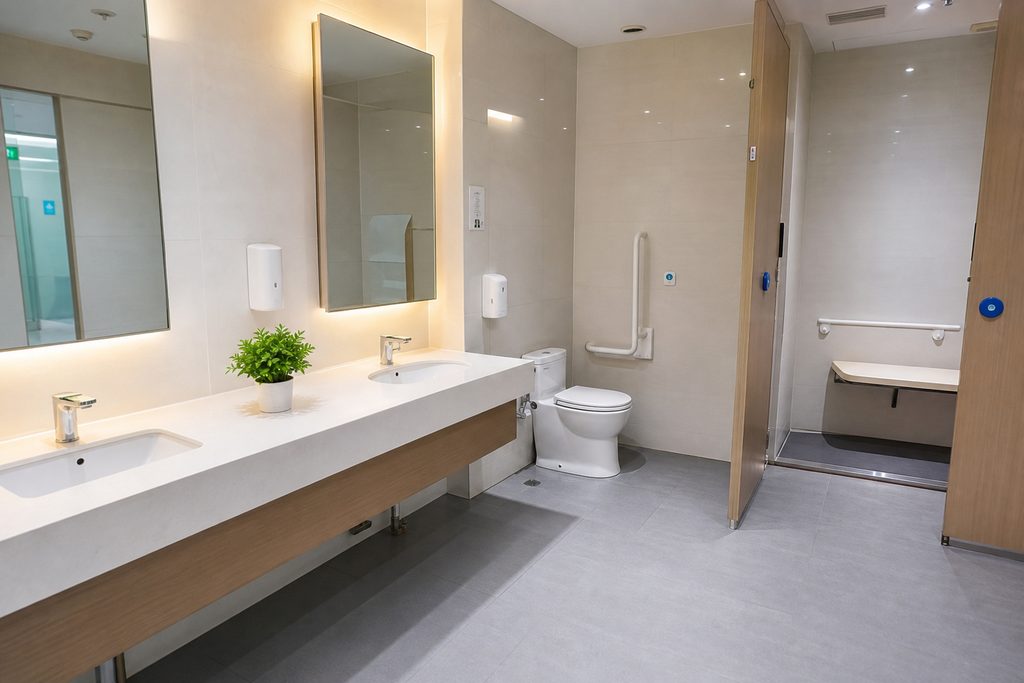
A top-tier orthopaedic surgeon at a Shanghai public hospital might perform 400 joint replacements annually. That volume generates revenue that has been partially reinvested into dedicated international wings. These are often physically separate from the main patient towers. You will find them on the top floors or in adjacent buildings. The standard here is not just a private toilet. It is a full ensuite bathroom with a glass-enclosed shower, a Western-style toilet, and grab bars. The materials are hotel-grade. The hot water is on demand, not scheduled. This exists because the hospital understands that an infection in a post-operative knee replacement patient who slips in a shared wet room is a catastrophic outcome that erases the clinical win. The infrastructure is a patient safety tool, not a luxury perk.
The Reality of “VIP Ward with Ensuite Bathroom Shanghai Hospital Price”
Let us look at the actual numbers. In a public Grade 3A hospital in Shanghai’s international medical center, a standard multi-bed room might cost 80–200 RMB ($11–$28 USD) per night. A single room with a private bathroom in the VIP ward typically starts at 1,500 RMB and can reach 3,800 RMB ($200–$525 USD) for a large suite. This is not cheap by local standards. It is, however, a fraction of what a private room costs in a US hospital, where the daily rate can easily exceed $2,000 before any treatment is factored in. The cost differential is structural. Labor costs and operational overhead in China allow for a premium physical environment at a price point that still slots into a reasonable medical tourism budget. You are paying for verified privacy and a recovery environment that matches your baseline expectation.
Private international hospitals in China push this even further. Facilities in the top 50 private international hospitals often design patient suites that resemble five-star hotel rooms. The bathroom will have marble countertops, rainfall showerheads, and emergency pull cords. The question “do Chinese hospital rooms have showers” is answered emphatically here with a yes. But you must verify. Not all private hospitals are created equal. Some older facilities branded as “international” still operate with infrastructure from the early 2000s.
What You Need to Know Before Going Alone
Securing a private bathroom is not as simple as selecting an option on a booking form. The Chinese hospital system has specific friction points that can derail your expectations if you navigate them without local knowledge.
- Visa Documentation and Ward Confirmation: For medical travel, the S2 visa is the applicable short-stay category used for private affairs, including medical treatment. The invitation letter from the hospital must match the treatment plan you present to the embassy. If the hospital issues a letter that does not specify your ward class, you might arrive assuming a private suite and find yourself assigned to a shared room. The visa itself does not guarantee a specific room type. Only direct communication with the hospital’s international patient center, confirmed in writing, can lock this down.
- The “Private Room” Definition Gap: In some older public hospitals, a “private room” means a single-occupancy room. It does not automatically mean a private bathroom. We have seen cases where the private room had a sink and a toilet, but the shower was still a shared facility at the end of the hall. This is the most common misunderstanding we help patients avoid. You must ask for a photograph of the bathroom. Not a rendering. A real photo taken by the international patient coordinator.
- Post-Surgical Showering Protocols: The question “can I shower after surgery in Chinese hospital” has a two-part answer. The clinical part is universal: your surgeon will clear you based on wound healing, usually 48–72 hours post-op with waterproof dressings. The logistical part is China-specific. If you are in a standard room, the shared shower might only have hot water from 6:00 AM to 8:00 AM and 6:00 PM to 9:00 PM. A nurse or family member is expected to assist. If you are alone and unsteady, this becomes a genuine safety risk. The VIP and international wards remove this variable completely.
How We Help You Navigate This
These barriers exist for structural reasons. The hospital’s core mission is clinical excellence, not hospitality logistics. That is where our team operates. When a patient tells us, “I need a private bathroom with a walk-in shower in a Beijing hospital that specializes in minimally invasive spine surgery,” we do not guess.
We cross-reference the clinical requirement against the Fudan University Hospital Rankings for orthopaedics. We identify the top three hospitals that meet the clinical bar. Then we contact their international patient centers directly. We ask for the current private bathroom cost in Chinese hospitals for their specific VIP ward, the room availability for your treatment window, and a photo of the bathroom. We confirm the hot water system. We ask about grab bar placement and whether a shower chair is available. This is not concierge fluff. It is pre-operative risk reduction. A patient who is afraid to shower is a patient who delays hygiene, increases infection risk, and compromises recovery. We remove that fear before you pack your bags.
After your procedure, we remain your back-channel. If the hot water fails in your suite, you call us. We escalate directly to the international patient coordinator. We do not replace the nurse call button. We make sure that when you press it, the response is immediate and informed. Our role is to be the logistical memory of your case, so you can focus entirely on healing.
Frequently Asked Questions
No. The majority of standard multi-bed rooms in public hospitals do not have private showers. Shared bathroom facilities are the norm. Private ensuite bathrooms are standard only in VIP wards, international medical centers, and private international hospitals. You should never assume a private room includes a private shower. Always verify with a photograph before confirming your admission.
For a VIP single room with a private ensuite bathroom in a top-tier public hospital in Beijing or Shanghai, expect to pay between 1,500 and 4,000 RMB per night. In a private international hospital, suite rates can range from 3,000 to 8,000 RMB per night. These are room charges only and do not include treatment costs. The price is significantly lower than comparable private rooms in the US or Europe, but it is a premium within the Chinese system and must be budgeted for separately from your procedure.
In a VIP or international ward, you can shower alone if your surgeon has cleared you and you feel steady. The bathrooms are designed for single occupancy with emergency call buttons. In a standard ward with shared facilities, a family member or a hired caregiver is typically expected to assist, as the wet floor and lack of dedicated support rails can be hazardous. We strongly recommend that patients traveling alone for major surgery book a VIP room specifically for this reason.
This happens. The top cardiology center in the country might have a six-month wait for its international wing. In these cases, we help you evaluate alternatives that do not force you into a shared bathroom. This might mean selecting another Grade 3A hospital with slightly lower rankings but verified VIP availability. It might mean staying in a nearby serviced apartment with nursing support after the minimum required inpatient stay. We lay out the trade-offs clearly. Clinical outcome always comes first. But dignity and safety are not negotiable. We find the path that preserves both.
Not always. In standard wards, hot water is frequently supplied on a fixed schedule, typically early morning and evening. In VIP and international wards, 24-hour on-demand hot water is standard. We confirm this detail for every patient before they travel. If you are in a standard room, we will tell you the exact hot water schedule and recommend a bathing plan that fits your post-operative restrictions.
Your Next Step
The clinical outcomes at China’s top hospitals are world-class. The infrastructure in a standard ward can be jarring if you are not prepared for it. The gap is real, but it is also entirely navigable with the right information. You do not need to accept a shared bathroom as the price of accessing elite surgical care. You just need to know which ward to book and how to confirm what that ward actually contains.
If you are evaluating treatment in China and the bathroom situation is a dealbreaker for you, let us help you map the options. Tell us what you need — we will help you find the right hospital with the right facilities at no charge.
For more medical information and treatment options in China, visit tochinamed.com (ToChinaMed).