Where to Stay Near Shanghai Top Hospitals: Serviced Apartments and Hotels for Medical Patients
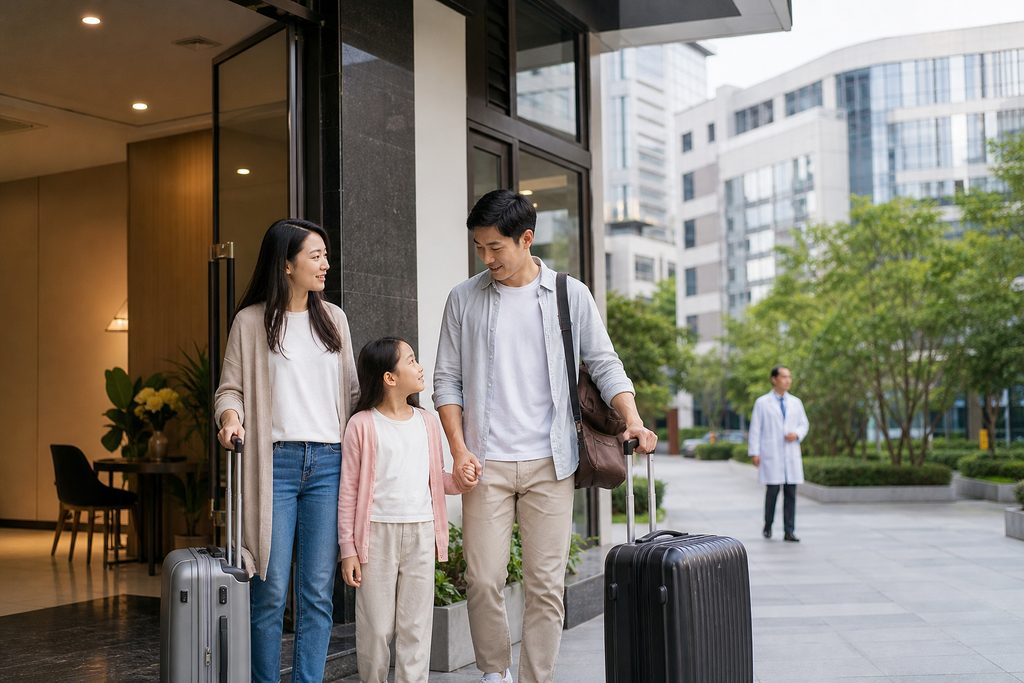
You have finally secured an appointment with a leading specialist in Shanghai. The relief is immediate. But then, a new anxiety creeps in. You are staring at a map of a megacity of 25 million people, wondering where you can stay that is clean, quiet, and close enough to the hospital for daily treatments or in case of an emergency. Finding a sterile, expensive hotel room is easy. Finding a true home base for recovery is where it gets complicated.
Key Takeaways
- Rates for high-quality serviced apartments near Shanghai hospitals start around $80–$150/night for monthly stays, often 40–60% less than equivalent hotel suites.
- Proximity is not just about distance; a 1km walk can be harder than a 5km taxi ride. Prioritize barrier-free routes and kitchen access over pure location.
- The S2 visa category is typically used for private medical treatment stays, requiring specific invitation documentation from the treating hospital.
- Never book long-term accommodation before your hospital confirms the exact treatment protocol and daily schedule. Flexibility saves thousands in wasted rent.
The Problem: The Hidden Logistics of a Medical Stay
Medical travel is not a vacation. You are not looking for a rooftop pool or a bustling bar district. You need a sterile environment to avoid infection, a proper refrigerator for specific dietary requirements, and a washing machine because you packed light for a three-week stay that might stretch to six. The standard hotel model fails here. A study on medical tourism logistics published in the journal *Tourism Management* found that accommodation-related stress was the second-highest reported concern for international patients, trailing only the anxiety of the procedure itself.
Shanghai’s top-tier hospitals, like Zhongshan or Huashan, sit in dense, central districts. Noise is constant. Sidewalks are crowded. If you book a random Airbnb, you might face a fifth-floor walkup. After a procedure, that staircase becomes an impassable wall. We have seen patients book beautiful, renovated lane houses only to realize the narrow alleyway prevents a car from reaching the door. The bed might be a rock-hard traditional wooden frame. These are not comfort issues; they are clinical safety risks.
Who We Are
We are ToChinaMed, an independent information platform. We are not a booking agent, and we do not take commissions from landlords or hotel chains. We exist because the logistical gap between a world-class surgeon and a safe place to sleep is vast. We map the terrain, verify the walkability, and translate the fine print so you can make an evidence-based decision without a sales pitch. We connect you with the data; you remain in complete control of your wallet and your recovery.
Why Shanghai’s Medical Accommodation Model Delivers Results
The city has matured rapidly in its understanding of medical tourism infrastructure. Unlike destinations that offer only luxury hotel packages, Shanghai provides a layered housing ecosystem. This range is critical for patients on strict budgets. You can spend $500 a night on a suite, or you can spend $60 a night on a functional studio. The quality of the medical care you receive does not change based on your address. That is the key differentiator.
Clinical Volume Creates a “Second Home” Market
Shanghai’s major public hospitals handle an immense outpatient volume. Fudan University’s affiliated hospitals alone report millions of outpatient visits annually. This concentration of domestic and international patients has spawned a micro-economy of serviced apartments within a 2km radius. These are not typical tourist rentals. Landlords in this niche understand medical needs. They stock extra disinfectant. They are unfazed by late-night check-ins after a delayed discharge. They know the difference between a short tourist visa and a medical stay. This specialized inventory simply doesn’t exist in cities without Shanghai’s clinical density.
Structural Cost Advantage of Long-Stay Hotels for Medical Patients Shanghai
There is a specific reason why long stay hotels for medical patients Shanghai offer better value than standard hotels. It comes down to operational cost models. A five-star hotel charges a premium for daily linen changes, turn-down service, and a full breakfast buffet. A serviced apartment operates on a leaner model, typically cleaning once or twice a week. You are paying for square footage and a kitchen, not labor. Over a 30-day stay, the savings compound aggressively. You can secure a 50-square-meter apartment with a separate living area for the price of a cramped 25-square-meter hotel room. That space matters for a traveling caregiver who needs a real bed, not a pull-out sofa.
Cheap Extended Stay Near Shanghai Cancer Hospital: Proximity Without the Premium
The area around the Shanghai Cancer Center in Xuhui presents a unique challenge. It is an expensive, central district. Yet, there is a robust supply of cheap extended stay near Shanghai cancer hospital options if you adjust your expectations. We often guide patients to look 1.5km east, towards the Dong’an Road corridor. This is a 10-minute taxi ride but a world apart in price. You trade a window view of the hospital for a quieter residential compound. For a patient undergoing a six-week radiotherapy schedule, the daily commute is negligible compared to the 30% reduction in monthly rent. The structural reason for this price drop is simple: the land immediately adjacent to the hospital is zoned for commercial and high-end residential use. A short distance away, older residential stock converts into affordable, functional long-stay units.
What You Need to Know Before Booking Alone
Booking direct is possible. It is also full of traps that can collapse a tight medical budget. We want you to see the potholes before you step into them.
- Visa Compliance and Registration: The S2 visa is typically the applicable short-stay category for medical treatment and private affairs. However, your landlord must register your accommodation with the local police station within 24 hours of arrival. A hotel does this automatically. A private serviced apartment owner might not. If you fail to register, you risk fines and visa cancellation. Always ask for the specific registration procedure before sending a deposit.
- The “Barrier-Free” Illusion: A listing might say “elevator building.” It does not say the elevator requires navigating three steps to reach. It does not say the elevator is a tiny, old model that cannot fit a wheelchair. Post-surgery, these details trap you inside. We always verify the actual ground-floor route to the elevator door.
- Payment Systems and the Great Firewall: Chinese landlords often prefer local payment methods. Your Visa card is useless for WeChat Pay transfers. If you arrive without a functioning local payment setup, you might find yourself unable to pay the rent or the utility bill. This is a solvable problem, but it requires setting up your digital wallet before you leave home.
How to Find Accommodation Near Chinese Hospitals: A Practical Roadmap
When we guide a patient on how to find accommodation near Chinese hospitals, we break it down into a three-stage filter. This is the process we use ourselves, and it works regardless of your budget.
First, define your clinical radius. Do not rely on Google Maps, which can be outdated in China. Use a local map app to check the real-time traffic between the apartment and the hospital entrance at 8:00 AM on a Monday. That 15-minute walk might be a 45-minute crawl in a taxi during peak hours. Second, filter strictly for kitchens. A microwave is not a kitchen. You need a two-burner stove and a decent-sized fridge. Third, test the landlord’s responsiveness. Send a message asking about the water pressure and the firmness of the mattress. A vague reply is a red flag. A landlord who says, “The mattress is a firm Chinese style, but I can buy a Western topper before you arrive,” is the one you want.
We also look at the building’s secondary use. Is it a block full of short-term vacation renters? Avoid it. You need a quiet, residential atmosphere. The best medical tourism housing packages Shanghai offers are often in mixed-use buildings where elderly locals live. These are the quietest, best-maintained buildings because the permanent residents care deeply about the upkeep.
The Best Area to Stay for Treatment in Shanghai: It’s Not What You Think
The best area to stay for treatment in Shanghai is rarely the famous names. It is not the Bund. It is not Lujiazui. It is the unglamorous, leafy residential pocket 1-2km from your specific hospital. For Ruijin Hospital, the quiet streets south of Jianguo Road work well. For Huashan Hospital, the old diplomatic lanes near Wukang Road offer peace but at a premium. The real trick is to look for the “hospital service belt” — the streets where medical supply stores and small pharmacies cluster. These streets are flat, well-lit, and always have accessible taxis. That is the infrastructure you actually need, more than a nice view.
Sometimes, the “best” area is a 20-minute drive away. If your treatment requires only weekly check-ins, choosing a modern compound in the former French Concession might be better for your mental health than staring at a hospital wall. The psychological aspect of recovery is undervalued. A quiet, tree-lined street where you can take a gentle walk is a therapeutic asset. We weigh that heavily in our recommendations.
Frequently Asked Questions
Be skeptical of this term. True medical tourism housing packages Shanghai are rare and usually tied to the private international hospitals. They often bundle a hospital liaison, airport pickup, and a furnished apartment. In the public hospital system, you are typically stitching these services together yourself. Our role is to help you audit these packages. We look at the square meter price, the included utilities, and the Wi-Fi speed. Often, you can assemble the same package for 20% less on your own, but you lose the single point of contact. It is a trade-off between cost and convenience.
Absolutely. The listed price is a starting point. For stays longer than 28 days, you enter a different legal category that gives you more negotiating power. We see discounts of 15-25% off the nightly rate when you book a full month. The key is to ask for the “monthly rate” specifically. Do not haggle on the nightly price. Also, clarify the utility cap. Some apartments cap electricity at a low threshold and charge a high fee for overages. If you are recovering from surgery and need the heating or AC on constantly, this can add $200 to your monthly bill.
This is one of the most common pain points. You must have a cancellation and extension clause in your agreement. Never accept a verbal promise. Shanghai’s rental market moves fast. Your apartment might be booked by another patient the day after your scheduled departure. We advise patients to ask for a 48-hour “first right of refusal” clause on extensions. This means the landlord has to offer you the extension before listing it publicly. It does not guarantee availability, but it gives you a critical time buffer to decide without panic.
You cannot rely on photos. We advise patients to request a video call where the host shows you the bathroom exhaust fan, the window seals for mold, and the back of the refrigerator. These are the microbial danger zones. Upon arrival, our team can arrange a pre-move-in deep cleaning and disinfection service. It is a small cost that buys immense peace of mind. You are not being difficult; you are protecting a compromised immune system.
Your Next Step
Your recovery space is not a backdrop to your treatment. It is an active participant in it. The wrong bed can cause a secondary injury. The wrong location can cause missed appointments. A bad kitchen can force you into unsafe street food. Getting this right is a medical decision, not just a travel one. We have mapped the neighborhoods, translated the contracts, and learned the hard lessons so you do not have to.
If you are planning a treatment journey and the housing search feels overwhelming, tell us what you need. We will help you filter the noise and find a safe, practical option that fits your clinical timeline. No booking fees. No kickbacks. Just the information you need to make the right call.
For more medical information and treatment options in China, visit tochinamed.com (ToChinaMed).