Post-Surgery Recovery in China: A Practical Guide to Daily Survival When You Can’t Move
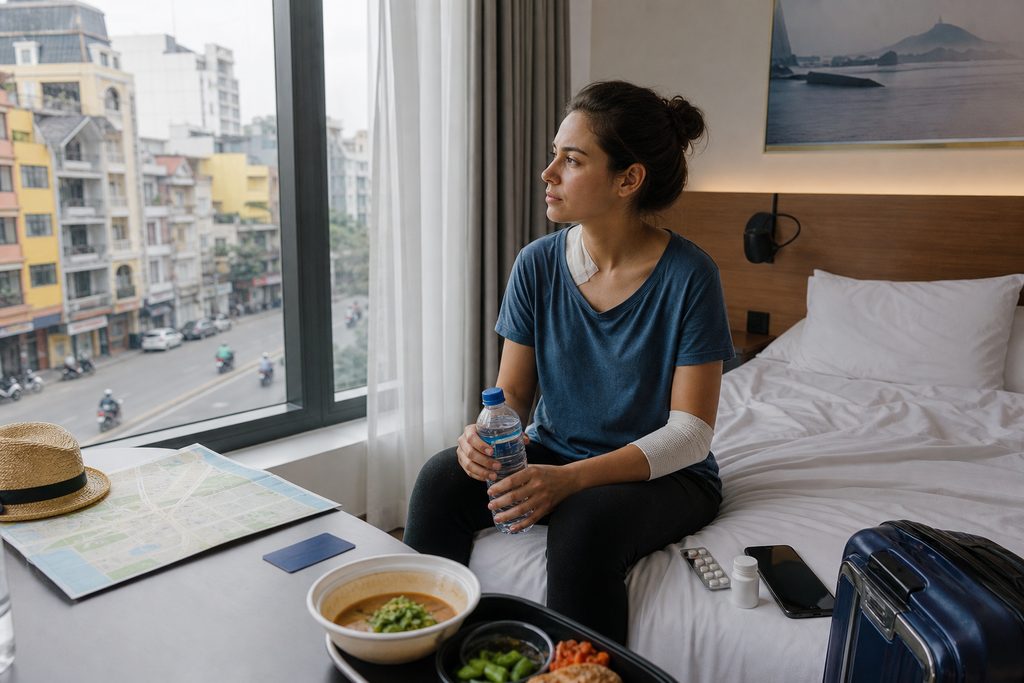
What do you do when the anesthesia fades and you realize you cannot reach the glass of water on the nightstand? That moment of raw vulnerability hits harder when you are 7,000 kilometers from home, the hospital discharge papers are in Mandarin, and the weight of managing every basic need alone settles onto your chest. A study in the *Journal of Travel Medicine* found that up to 22% of medical tourists experience significant anxiety related to post-procedure self-care in an unfamiliar environment. The physical pain of surgery is one battle. The logistical paralysis of being temporarily immobile in a foreign country is an entirely separate war, and you need a battle plan that does not depend on a family member flying in for a month. A well-structured post-surgery recovery care package China providers offer can bridge the gap between a sterile hospital room and a functional, safe recovery at your temporary residence. This is not about luxury. It is about survival, dignity, and the unglamorous mechanics of getting through the day when you cannot bend, lift, or cook.
Key Takeaways
- A dedicated recovery care package in major Chinese cities typically costs 60-80% less than equivalent private-duty nursing in the US or UK, with daily rates starting around ¥800-1,200.
- The most critical gap is the 48-72 hours immediately following hospital discharge; professional aftercare services in Shanghai and Beijing now offer “transitional care” that begins at the hospital bedside.
- Language barriers turn minor complications into major crises; any viable recovery plan must include a 24/7 bilingual coordinator, not just a translator app.
- You are not a burden for needing help. Orthopedic and abdominal surgeries physically prevent you from performing basic activities of daily living (ADLs), and attempting them solo risks readmission.
The Problem: The 72-Hour Danger Zone After Discharge
The fantasy of medical tourism often ends at the operating room door. You research the surgeon’s credentials, the hospital’s international accreditation, and the implant’s failure rate. Rarely does anyone research how they will get socks onto their feet after a spinal fusion. The reality is stark. If you cannot move safely, a hotel room becomes a hazard. Room service does not help you to the toilet. A concierge does not monitor surgical drains. A 2019 analysis published in the *International Journal for Quality in Health Care* highlighted that unplanned readmissions for international patients frequently stem not from surgical failure but from preventable complications during the domestic recovery phase—dehydration, missed medication doses, and falls.
Think about the mechanics of a simple meal. You need to shop for ingredients. You need to stand at a counter to prep. You need to lift a pot. None of this is possible with a sternotomy incision or a freshly reconstructed knee. And in a foreign country, the friction multiplies. Food delivery apps are in Chinese characters. The local pharmacy does not stock the exact wound care supplies your surgeon recommended. A fever at 2 a.m. triggers a cascade of questions: Is this normal? Who do I call? How do I describe “purulent drainage” in Mandarin to a taxi driver? The isolation is not just emotional. It is a practical, physical barrier to healing. You need a system that replaces the default family caregiver role, and you need it to activate the moment you leave the hospital’s care bubble.
Why a Structured Recovery Package in China Delivers Results
When you book a private nurse for post-surgery recovery in China, you are accessing a labor market with a fundamentally different cost structure. In the United States, a licensed practical nurse (LPN) for private home care can cost $35–$50 per hour. For 12 hours of coverage, you are looking at $420–$600 daily. A comparable, fully credentialed bilingual nurse in Shanghai or Beijing, sourced through a reputable medical concierge, typically costs between ¥800 and ¥1,200 (approximately $110–$165) for a 12-hour shift. That is a 60-75% reduction. For a two-week recovery period, the savings alone can cover the cost of a business-class flight home with a medical escort. This cost advantage allows patients to afford continuous care—a dedicated professional who manages wound dressings, administers anticoagulant injections, monitors vital signs, and communicates directly with your surgeon—rather than relying on a patchwork of brief hotel check-ins.
A translation app cannot read a situation. It cannot see that you are wincing in a way that suggests pain management is failing, and proactively call your doctor to adjust the prescription. High-quality medical tourism aftercare services in Shanghai have evolved beyond simple interpretation. The model now is a “clinical liaison.” These are often nurses with international experience who bridge the cultural and linguistic gap between a Western patient and a Chinese surgical team. They understand the discharge instructions because they speak the clinical language. They know that “take this medicine three times a day after meals” means the pharmacy has dispensed a specific brand that might interact with your existing medications from home. They manage the logistics of short-term assisted living after surgery in China, which often involves coordinating with serviced apartments that have wheelchair access, Western-standard bathrooms, and proximity to the hospital for rapid readmission if a complication arises. The cost of short-term assisted living after surgery in China, when bundled with this care coordination, becomes a predictable line item rather than a cascade of surprise invoices.
Building Your Survival System: Daily Tasks and Environmental Control
So, how to manage daily tasks after surgery in China alone? The honest answer is: you do not. Not for the first critical week. The goal is to pre-arrange a system so you never have to face the terrifying question, “what if I can’t move after surgery abroad?” The system has three layers: the clinical layer (nurse), the environmental layer (accommodation), and the nutritional layer (food). If any one of these layers collapses, your recovery stalls.
Start with the physical space. A standard hotel room is a dangerous place for a post-op patient. The beds are often too high or too soft, making transfers excruciating. Bathrooms have no grab bars. Floors are slick marble. A proper recovery setup requires a serviced apartment or a hotel suite that has been pre-vetted for medical stays. You need a walk-in shower with a seat, a raised toilet seat, and a firm mattress. Your care coordinator should have photos and measurements of the space before you ever leave the hospital. This is the unsexy reality of recovery—it hinges on the height of a toilet seat and the non-slip texture of a bathroom floor.
Then, the daily rhythm. A competent private nurse manages the clinical checklist: vitals, wound inspection, medication schedule. But the survival-level tasks are equally important. Laundry. Hydration. Assisted ambulation to prevent deep vein thrombosis. A good recovery care package explicitly lists these non-clinical duties. It includes the nurse preparing a thermos of warm water (a Chinese post-surgical staple, as cold water is believed to shock the system) and placing it within arm’s reach. It includes setting up a “command center” at your bedside with your phone charger, call button, medications, and a spill-proof cup. These micro-systems prevent the macro-disasters—the fall when you try to reach for your phone, the missed dose because the pills were in another room.
What a Real Recovery Care Package Should Include
When evaluating a post-surgery recovery care package in China, avoid vague promises of “support” and demand a line-item breakdown. The market ranges from informal “ayi” (aunty) domestic helpers with no clinical training to fully licensed registered nurses operating under a medical concierge. The price difference is significant, but so is the risk profile. An ayi can mop the floor and cook congee. She cannot recognize the early signs of a deep surgical site infection.
| Service Component | Basic Package (Ayi + Coordinator) | Clinical Package (RN + Coordinator) |
|---|---|---|
| Daily Rate (12 hrs) | ¥500 – ¥700 | ¥900 – ¥1,200 |
| Wound Care & Drain Mgmt | Not included | Included |
| Medication Administration | Reminders only | Full management, injections |
| Vital Signs Monitoring | Not included | Twice daily, logged |
| Meal Preparation | Basic Chinese home cooking | Diet-specific (anti-inflammatory, soft diet) |
| Hospital Liaison | Via phone coordinator | Direct nurse-to-surgeon communication |
| Language Support | Coordinator on-call | Bilingual nurse + 24/7 coordinator |
A genuine clinical package also handles the invisible labor. It means the nurse takes a photo of your wound with your consent, sends it to the surgeon via WeChat, and receives a direct reply within minutes—a common practice in the Chinese healthcare system that can prevent an unnecessary and painful trip back to the outpatient clinic. It means she has the pharmacy’s contact saved and can verify that the generic medication dispensed is the exact molecule prescribed, not a substitute.
What if you cannot afford round-the-clock private nursing? A hybrid model works for many patients. You book a clinical nurse for the first 4-6 hours post-discharge and again for the evening medication and bedtime routine. During the midday gap, a non-clinical coordinator or a vetted bilingual assistant handles the environmental and nutritional tasks. The key is that you are never truly alone without a communication lifeline. The question of how to manage daily tasks after surgery in China alone becomes manageable only when “alone” is a temporary state between scheduled professional visits, not a permanent condition.
Practical Considerations: Visas, Payments, and the Paper Trail
The logistical backbone of a recovery stay requires as much attention as the clinical care. Ignore it, and you risk administrative paralysis at the worst possible moment.
Your visa status is the first domino. For medical treatment and the subsequent recovery period, the S2 short-stay private affairs visa is the category typically used, as it covers private matters including medical treatment. This requires an invitation letter from the hospital or the entity coordinating your care, along with proof of accommodation and a clear treatment plan. Visa policies shift without much notice, so the current requirements must be verified with the Chinese embassy or consulate in your home country immediately before applying. Do not overstay. If your recovery takes longer than anticipated, your care coordinator must assist with an extension application through the local Exit-Entry Administration Bureau. A medical certificate from your surgeon confirming your inability to travel is essential for this process.
Payment methods are another friction point. While hospitals accept international credit cards, the day-to-day recovery economy often does not. Your nurse’s agency fee may be payable via wire transfer or Alipay. Groceries, local pharmacies, and transport often require WeChat Pay or Alipay. Setting up these digital wallets and linking a foreign card before you are immobile is a critical pre-op task. Your concierge should walk you through this, ensuring you have a functioning payment method for the small, urgent purchases—a special cushion, a different bandage, a food delivery—that define a comfortable recovery.
Finally, the medical records. Before you leave the hospital, your discharge summary, surgical notes, pathology report (if applicable), and a detailed medication list must be translated into English. Do not accept a verbal summary. Insist on a stamped, official translated document. This is your bridge back to your primary care physician at home. Without it, your home doctor is flying blind. A professional recovery package includes this translation service as a standard deliverable, not an add-on.
Frequently Asked Questions
Is it safe to recover in a hotel, or do I need a medical facility?
A standard hotel is not safe for immediate post-surgical recovery unless you have 24/7 private nursing. The risks of falls, infection, and inability to manage toileting are too high. A serviced apartment with accessibility features, combined with a clinical care package, is the minimum viable setup. Dedicated short-term assisted living facilities for post-surgery recovery exist in Shanghai and Beijing but must be booked well in advance.
What if I develop a complication in the middle of the night?
Your private nurse should have a direct line to your surgeon’s team. In China’s major private and public international medical departments, surgeons routinely provide their WeChat contact for post-op communication. Your care plan must include a written protocol for emergencies: which hospital ER to go to, what to say in Chinese to the triage nurse, and who will meet you there. Never rely on calling an ambulance and hoping for the best.
Can I hire someone just for a few hours a day instead of full-time?
Yes, a hybrid model is common. Patients often book a clinical nurse for the morning assessment and evening medication, with a non-clinical assistant handling meals and errands during the day. The non-negotiable element is a 24/7 bilingual emergency contact. You must be able to reach a human who can intervene on your behalf at any hour. The cost savings of going without this lifeline are not worth the risk.
How much does a full recovery care package cost for two weeks?
A clinical package with a private nurse for 12-hour daily shifts, a bilingual coordinator, and a vetted serviced apartment typically ranges from ¥25,000 to ¥40,000 (approximately $3,400–$5,500) for a two-week period, excluding the initial surgery cost. This compares favorably to the $10,000+ that private-duty nursing alone would cost in the US for the same duration.
Your Next Step
Recovering from surgery in a country where you do not speak the language, cannot read the labels, and cannot stand up unassisted is not an adventure. It is a carefully managed operation where the margin for error is thin. The difference between a smooth recovery and a crisis often comes down to the quality of the human bridge between you and the local system. Our team at ToChinaMed exists to help you understand what that bridge looks like—what questions to ask, what red flags to spot, and what a realistic care plan actually costs. We do not provide medical care or make diagnoses, and we are not a hospital. We are an independent information platform. If you are planning a procedure and the recovery logistics feel overwhelming, you can reach out to us to clarify your options at no charge. The goal is simple: you focus on healing. Everything else should be handled by someone you trust.
Looking for a specific doctor or treatment in China? Tell us what you need — we’ll help you find the right option at no charge.
For more medical information and treatment options in China, visit tochinamed.com (ToChinaMed).