Death and Serious Complications in China: Consular Support and Family Rights
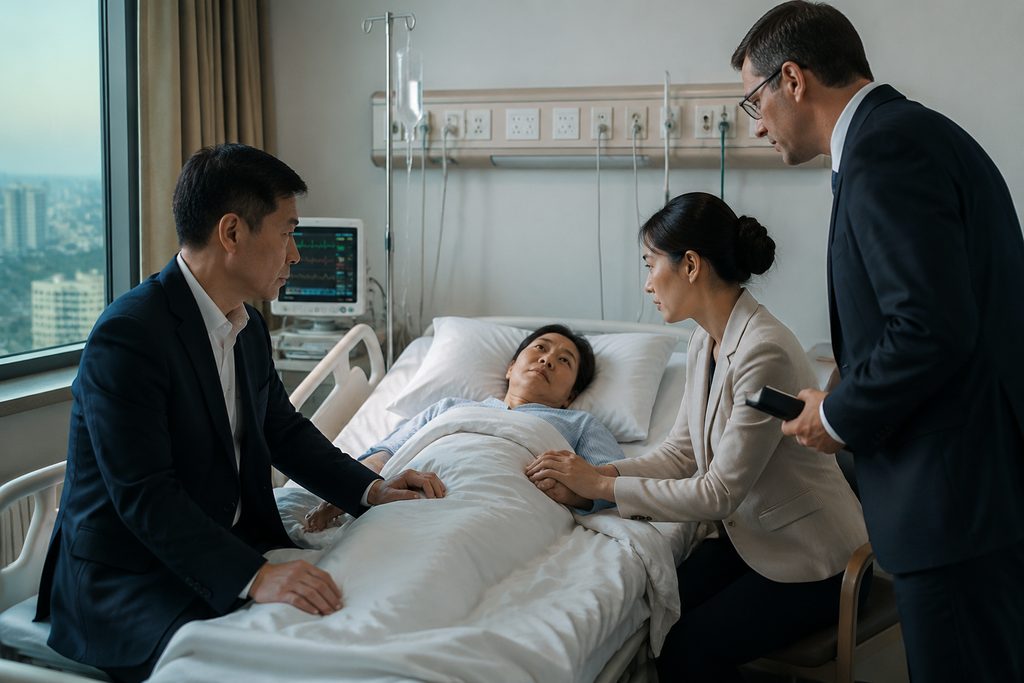
You probably assume that if the worst happens in a foreign country, your embassy simply steps in and handles everything. They repatriate the body. They investigate the hospital. They protect your rights. The reality is far more complicated. Embassies provide guidance. They do not pay medical bills. They do not conduct autopsies. And they absolutely do not sue hospitals on your behalf. When a family member dies or suffers a serious complication in a Chinese hospital, the weight falls squarely on the family. Understanding what consular support actually covers—and what it does not—is the first step toward protecting yourself in an unthinkable moment. We have guided families through this terrain. This article lays out exactly what you need to know, without sugarcoating the hard parts.
Key Takeaways
- Consular officers can notify next of kin and provide a list of local lawyers, but they cannot investigate a death, pay for repatriation, or file lawsuits on your behalf.
- Repatriation of remains from China costs between $4,000 and $20,000 USD depending on destination, embalming requirements, and whether cremation is chosen.
- Foreign families do have legal standing to pursue medical malpractice compensation in Chinese courts, and documented settlements for wrongful death have reached significant sums.
- Securing medical records, an independent autopsy, and local legal representation within the first 72 hours is critical—delays can permanently compromise a case.
The Problem: A Medical Crisis Abroad With No Clear Roadmap
Approximately 1 in 20 international patients traveling for medical care will experience a serious adverse event, according to a meta-analysis published in BMJ Quality & Safety. That includes treatment complications, hospital-acquired infections, and unexpected deaths. When a foreign national dies in a Chinese hospital, the family confronts a cascade of urgent questions with no centralized authority to answer them. Who issues the death certificate? How do you get the body home? Can you even get an honest explanation of what went wrong? The Chinese hospital system operates under legal frameworks that differ markedly from those in the US, UK, or Australia. Medical records are governed by different privacy statutes. The concept of medical malpractice follows a distinct evidentiary standard. And all of this unfolds while you are grieving, likely in a time zone 12 hours removed from your support network.
We have seen families spend weeks trying to navigate this alone. They call their embassy repeatedly, expecting an intervention that never comes. They accept hospital explanations at face value because they lack the language skills and local knowledge to push back. By the time they contact us, critical evidence has sometimes been lost. That is not a criticism of the families—it is a criticism of a system that leaves foreign patients uniquely vulnerable. The pathway exists to protect your rights. But you have to know where it begins.
What Happens If a Foreigner Dies in a Chinese Hospital: The Immediate Protocol
Yes. You have the right to request an independent forensic autopsy. The request must be made quickly — ideally within 48 hours of death. The hospital may resist or insist on performing its own autopsy. Your attorney can petition the local health authority or court to ensure an independent pathologist is present. If the body has already been embalmed or cremated, pathological evidence is permanently lost. Do not allow cremation or embalming to proceed until you have legal advice.
Chinese law entitles patients and their families to copies of the objective medical record. If the hospital refuses or delays, your attorney can file an urgent petition with the local court to preserve and release the records. This is a standard motion in medical malpractice cases. Hospitals that refuse a lawful records request risk adverse inferences if the case proceeds to trial. Document every request and every refusal in writing.
A case that settles during mediation can resolve in 2 to 4 months. A case that goes to trial typically takes 12 to 18 months from filing to judgment. Appeals add 6 to 12 months. The timeline depends heavily on the complexity of the medical issues, the availability of the appraisal institution, and the court’s docket in the relevant jurisdiction. Families should prepare for a process measured in months, not weeks.
Chinese courts apply the same Tort Liability Law provisions to foreign and domestic plaintiffs. Foreign families are not disadvantaged by their nationality in the legal process. The practical challenges — language, distance, unfamiliarity with procedures — are real but surmountable with competent local counsel. We have seen foreign families obtain substantial settlements and judgments. We have also seen cases fail for lack of evidence. Nationality does not determine outcomes. Evidence does.
Your Next Step
We have laid out the hardest truths we know about what happens if a foreigner dies in a Chinese hospital. The consular support is limited. The costs are high. The legal path exists but demands evidence, patience, and local expertise. None of this is easy to hear. We believe knowing it ahead of time is better than discovering it in crisis. If you are facing this situation now, the single most important action you can take is securing independent legal representation and preserving evidence immediately. Our team does not provide legal services and we are not a law firm. We help families understand the landscape, find qualified professionals, and navigate the institutional terrain that can feel impenetrable from the outside. That help is available at no charge.
Looking for guidance on navigating a medical crisis in China? Tell us what you need — we will help you find the right resources at no charge.
Frequently Asked Questions
Yes. We work with JCI-accredited and major Grade 3A tertiary hospitals that follow international safety standards comparable to top hospitals in the US and Europe. Surgical teams perform high volumes of procedures — often more than their Western counterparts — which studies show leads to better outcomes.
Costs vary by procedure and hospital, but international patients typically save 40-80% compared to US prices — even when factoring in travel and accommodation. A consultation with our team will give you an exact, all-inclusive quote with no hidden fees.
Send us your existing medical reports. The relevant specialty reviews them and gives you a written opinion, including treatment direction and options, before you commit to any travel. From there you can add a video consultation with the doctor, or have us attend an appointment on your behalf.
For more medical information and treatment options in China, visit tochinamed.com (ToChinaMed).