Best City in China for Heart Bypass Surgery: Where CABG Volume Meets Outcomes
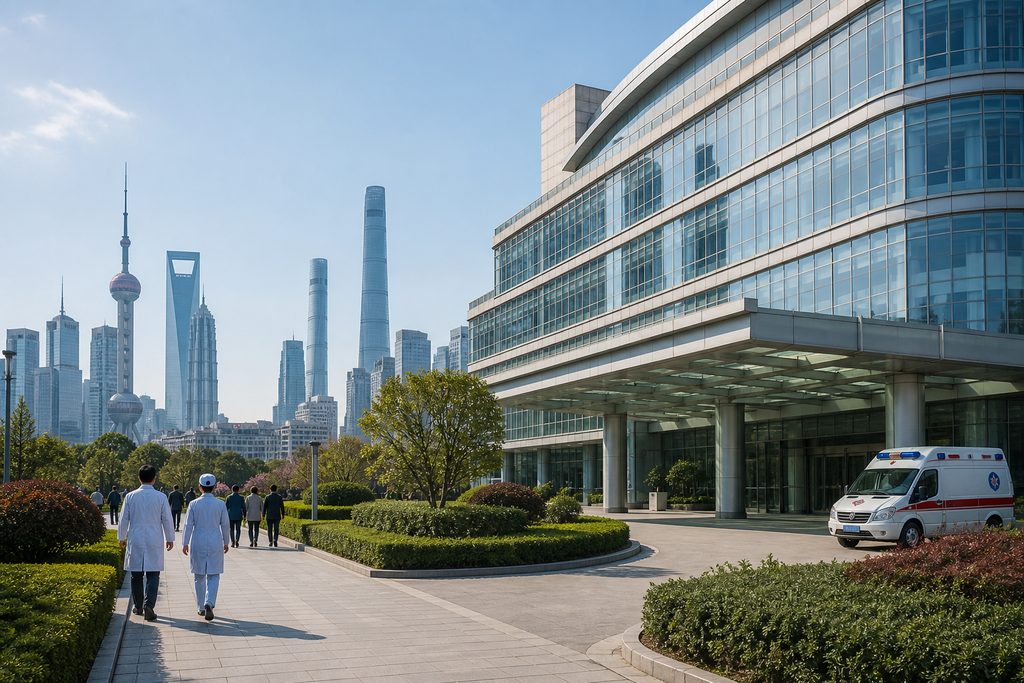
You have probably heard that traveling for surgery means rolling the dice on quality. That the savings come with hidden risks. For coronary artery bypass grafting, the data tells a different story. China’s top cardiac centers now report 30-day mortality rates below 1% for isolated CABG—a figure that matches or beats the best registries in North America and Europe. But the question is not whether China *can* do it. The question is *where*. China is a continent-sized country. Picking the right city matters more than picking the country.
Best City for Heart Bypass Surgery: The Short Answer
For sheer surgical volume and published outcomes, Beijing and Shanghai lead. No contest. Beijing’s Fuwai Hospital performs over 17,000 cardiac surgeries annually, making it the highest-volume cardiovascular center on the planet. Shanghai’s Zhongshan Hospital isn’t far behind, with a CABG program that has tracked hospital mortality consistently under 1.5% for years. But volume isn’t everything. If you need a JCI-accredited facility with full English-language care coordination, Shanghai’s private international hospitals offer something Beijing’s public giants rarely provide: zero language friction. The real answer splits based on your priority—raw surgical firepower versus integrated international patient services.
Who This Is Right For — and Who It Isn’t
Traveling internationally for heart surgery isn’t for everyone. The patients who benefit most share a specific profile.
Good candidates typically:
– Have been formally diagnosed with multivessel coronary artery disease and CABG has been recommended over PCI
– Are stable enough to tolerate a long-haul flight (NYHA Class I or II, no unstable angina)
– Face prohibitive out-of-pocket costs or excessive wait times in their home country
– Have a support person who can travel with them and stay for at least 10-14 days post-discharge
Who should not pursue this path:
– Patients with active heart failure decompensation or cardiogenic shock. You need stabilization first, then travel.
– Anyone requiring emergency or urgent CABG within days. International medical travel demands planning and a buffer.
– Patients with complex congenital heart defects requiring highly niche pediatric surgical expertise. The top centers do handle these, but coordination is exponentially harder from abroad.
– Those without a clear, translated medical record summarizing their cardiac catheterization, echocardiogram, and medication list. Without these, no credible surgeon will give you a surgical plan.
Being explicit about exclusions isn’t gatekeeping. It’s what keeps the conversation honest.
The Options, Compared: Beijing vs Shanghai vs Other Cities
Most international patients narrow their search to two cities. Here is how they stack up.
| Factor | Beijing (Fuwai, Anzhen) | Shanghai (Zhongshan, Ruijin, Jiahui) | Other Notable Centers (Guangzhou, Hangzhou) |
|---|---|---|---|
| Annual CABG Volume | Fuwai: ~8,000+ CABG/year; Anzhen: ~4,000+ | Zhongshan: ~3,000+ CABG/year; combined city volume >5,000 | Guangdong General: ~1,500+; Sir Run Run Shaw (Hangzhou): growing program |
| Reported 30-Day Mortality | Fuwai: 0.6-0.8% (published data); Anzhen: ~1.0% | Zhongshan: 0.8-1.2%; Ruijin: ~1.5% | Varies; top-tier centers under 2%, smaller hospitals lack published English data |
| JCI Accreditation | Limited. Public giants are not JCI-accredited; one or two private hospitals have it | Multiple: Jiahui International, Shanghai United Family, ParkwayHealth | Guangzhou United Family (JCI); Sir Run Run Shaw (JCI) |
| English-Speaking Staff | Surgeons often speak some English; nursing and admin rarely do. Interpreters needed. | International hospitals: full English service. Public hospitals: mixed, better than Beijing on average. | International hospitals: excellent. Public hospitals: limited English outside academic hubs. |
| Heart Bypass Surgery Cost China (USD, All-In) | $18,000–$28,000 (public); $35,000–$50,000 (private) | $20,000–$30,000 (public); $38,000–$55,000 (private international) | $15,000–$25,000 (public); $30,000–$45,000 (private) |
| International Patient Infrastructure | Fuwai has a dedicated international ward. Process is functional but bureaucratic. | More developed. Dedicated international medical centers with visa support teams. | Patchy. Some excellent individual programs but less systematic support. |
If your priority is the absolute highest CABG volume by hospital—Beijing vs Shanghai, Fuwai wins. If you need a smoother experience with fewer logistical headaches, Shanghai’s international hospital ecosystem is hard to beat. Guangzhou offers a middle path but with fewer top-tier cardiac surgery centers to choose from.
Why CABG Volume Matters More Than City Rankings
You asked which city has the highest heart bypass success rate. The honest answer is that city-level comparisons are misleading. Success follows the surgeon and the team, not the skyline.
A 2018 analysis of China’s national cardiac surgery registry, covering over 700 hospitals, found that centers performing fewer than 50 CABG procedures annually had significantly higher mortality than those above 500. The relationship is dose-dependent. Fuwai Hospital’s team does more bypasses in a month than many hospitals do in a year. That repetition isn’t just about technical skill. It is about the perfusionists, the ICU nurses, the physiotherapists who mobilize patients on day one—an entire ecosystem that gets sharper with every case.
This is where the “best city” framing breaks down. A high-volume center in a second-tier city can outperform a low-volume center in Beijing. When you evaluate options, ask for the specific surgeon’s annual CABG volume and the unit’s mortality data. Not the city’s reputation. The city matters for logistics. The team matters for survival.
Also, do not overlook off-pump CABG expertise. Many Chinese centers perform a high proportion of off-pump procedures—avoiding the heart-lung machine reduces stroke risk and recovery time for certain patients. Fuwai and Zhongshan both report off-pump rates above 60% for eligible patients, a skillset less common in many Western centers today.
Heart Bypass Surgery Cost China: What the Numbers Actually Include
The all-in cost for an uncomplicated CABG in a top Chinese public hospital runs between $18,000 and $30,000 USD. In a JCI-accredited private international hospital in Shanghai, expect $38,000 to $55,000. These numbers require unpacking.
What is typically included:
– Surgeon and anesthesiologist fees
– Hospital stay (usually 7-10 days for uncomplicated CABG, including 1-2 days in ICU)
– Operating room and perfusion charges
– Standard preoperative testing (repeat echo, labs, chest X-ray)
– Basic postoperative medications during the inpatient stay
What is often not included and must be budgeted separately:
– Preoperative cardiac catheterization if yours is outdated or incomplete ($1,500–$3,000)
– Blood products beyond a standard threshold
– Extended ICU stay beyond 48 hours (each additional day: $800–$1,500)
– Post-discharge rehabilitation or nursing care
– International patient coordination fees ($500–$2,000 depending on the hospital)
– Air ambulance or medical escort if needed for the return flight (can exceed $20,000)
For comparison, the same procedure in the United States averages $40,000 to $80,000 for uninsured patients, and often exceeds $100,000 with complications. In the UK, private-pay CABG runs £20,000–£30,000. The savings are real, but they narrow when you factor in travel, accommodation for a companion, and the opportunity cost of a month away from work.
Practical Considerations: Records, Visas, and Follow-Up
Getting on a plane for heart surgery is not like booking a dental implant. The logistics are specific and unforgiving.
Medical records are the gatekeeper. Without a recent cardiac catheterization film (DICOM format, not just the report), a translatable echo report, and a clear medication list, no surgeon will give you a surgical indication. Gather these first. Have them translated into Chinese by a medical translator—not Google Translate. Terms like “left anterior descending artery stenosis” need precision.
Visa category matters. The S2 short-stay visa is the applicable category for private medical treatment in China, subject to the latest embassy requirements and supporting hospital documentation. You will need an invitation letter from the hospital confirming your admission. Processing times vary by country; plan for four to six weeks minimum.
Payment is upfront and specific. Most Chinese hospitals require a deposit covering the full estimated cost before admission. International credit cards are accepted at private international hospitals but often not at public ones, where wire transfer or UnionPay may be required. Confirm the method before you travel.
Language in public hospitals is a friction point. Even at Fuwai, where surgeons often speak functional English, the nursing staff, dietitians, and administrative personnel rarely do. You will need an interpreter or a family member who speaks Mandarin. International hospitals in Shanghai eliminate this problem entirely but at a higher price.
Follow-up after returning home is non-negotiable. You need a cardiologist at home who agrees in advance to take over your postoperative care. Chinese surgeons will provide a discharge summary and operative note in English upon request. Schedule that first local cardiology appointment before you leave China. Sternal wound checks, medication titration, and cardiac rehab happen on home soil.
Frequently Asked Questions
Which city in China has the highest heart bypass success rate?
No city publishes a unified CABG success rate that allows direct comparison. Individual hospitals do. Fuwai Hospital in Beijing reports a 30-day mortality of 0.6–0.8% for isolated CABG, which is among the lowest published figures globally. Zhongshan Hospital in Shanghai reports similar numbers. The difference between these top centers is statistically negligible. The gap between a top center and an average one is not.
What is the real heart bypass surgery cost China compared to the US?
For an uncomplicated CABG, $18,000–$30,000 in a top Chinese public hospital versus $40,000–$80,000 in a US hospital for uninsured patients. The multiplier narrows when you add travel, lodging, and the cost of a companion’s time. A realistic all-in budget, including flights and accommodation for two people for three weeks, lands around $30,000–$45,000. That is still substantially below US self-pay prices.
Are Chinese heart surgeons trained to Western standards?
Many senior surgeons at Fuwai, Zhongshan, and Anzhen completed fellowships at Cleveland Clinic, Mayo Clinic, or leading European centers. They publish in the same journals—*The Annals of Thoracic Surgery*, *JACC*, *Circulation*. The difference is not training quality but system infrastructure. Nursing ratios, ICU protocols, and postoperative rehabilitation pathways can differ. In JCI-accredited international hospitals, these systems are designed to align with Western expectations.
What happens if something goes wrong after I return home?
Your home cardiologist manages complications. Chinese surgeons are generally responsive to email inquiries from former patients, but they cannot prescribe across borders or intervene directly. This is why the pre-arranged local follow-up is essential. Sternal wound infections, pleural effusions, and arrhythmias can appear weeks after surgery. They are manageable, but only if someone is already lined up to manage them.
Can I get a top cardiac surgery center in China that is JCI accredited?
Yes, but your options narrow. Jiahui International Hospital in Shanghai and Shanghai United Family Hospital are JCI-accredited and have cardiac surgery programs. Beijing’s public giants—Fuwai and Anzhen—are not JCI-accredited, though their outcomes are extensively published. JCI accreditation signals systems and processes, not necessarily surgical skill. If the accreditation gives you peace of mind, Shanghai’s international hospitals are your answer. If you prioritize raw volume and published mortality data, Beijing’s public centers are the stronger choice.
Your Next Step
Choosing a city for heart bypass surgery comes down to a trade-off between surgical volume and patient experience infrastructure. Beijing offers the highest-volume centers on the planet with mortality data that stands up to scrutiny. Shanghai offers strong outcomes with a far smoother journey for English-speaking patients. Both are defensible choices. The wrong choice is a low-volume center in any city.
Our team at ToChinaMed helps international patients navigate these decisions. We are not a hospital. We do not provide medical advice or diagnoses. What we do is connect you with the information and the institutions that match your clinical needs and logistical realities. If you are weighing options and need clarity on where to start, tell us what you need—we will help you find the right option at no charge.
For more medical information and treatment options in China, visit tochinamed.com (ToChinaMed).