Chinese Hospital Infection Control: How Standards Compare to Global Benchmarks
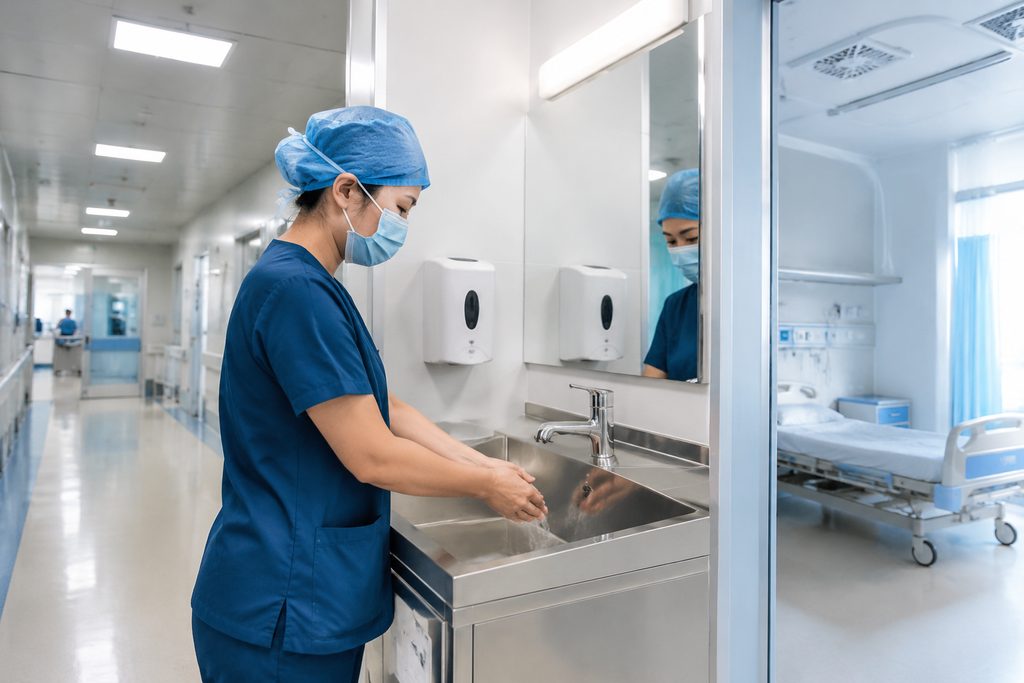
You have probably heard the warning: surgery abroad means gambling with infection. The assumption runs deep — lower cost must mean dirtier operating rooms, laxer protocols, higher risk. The data tells a messier, more interesting story. China hospital infection rates compared to global standards reveal a system split in two: world-class facilities posting outcomes that rival Germany or Singapore, and smaller hospitals where oversight still lags. For international patients, the question is not “Is China safe?” but “Which China are you walking into?”
Key Takeaways
- Top JCI-accredited Chinese hospitals report surgical site infection rates below 1% for clean procedures — comparable to US and UK benchmarks
- China’s hospital accreditation system now mandates infection control committees in all Grade III hospitals, covering over 3,000 facilities nationwide
- Infection control quality varies sharply between Tier 1 cities and smaller urban centers — hospital selection determines your actual risk exposure
- International patients should verify JCI accreditation status and request facility-specific infection rate data before committing to any procedure
The Problem: Infection Risk Perception Versus Reality in Chinese Hospitals
Roughly 1 in 10 patients in low- and middle-income countries acquires a healthcare-associated infection during hospital stays, according to WHO data. That number drops to 1 in 15 in high-income countries. Where does China fall on this spectrum? The answer depends entirely on which hospital you enter.
A 2023 study published in The Lancet Regional Health – Western Pacific analyzing surgical site infection rates across 42 Chinese tertiary hospitals found an overall rate of 1.8%. That is higher than the US benchmark of roughly 1.2% for comparable procedures. But here is the catch. When researchers isolated the subset of hospitals with full-time infection prevention staff and active surveillance programs, the rate dropped to 0.9%. Better than the American average.
This split defines the landscape. China’s healthcare system contains multitudes. A foreign patient walking into Peking Union Medical College Hospital or Jiahui International Hospital in Shanghai enters an environment where hand hygiene compliance is electronically monitored, where operating theater air quality is continuously tracked, where every central line insertion follows a checklist adapted from the same evidence base used at Johns Hopkins. Walk into an unaccredited county-level hospital in a third-tier city, and the protocols may exist on paper only.
The infection risk for medical tourism in China is not a single number. It is a distribution. The right tail of that distribution competes with any hospital in the world. The left tail does not. Your job — and ours — is to make sure you never touch the left tail.
Who We Are
We are not a hospital. We do not provide medical treatment, clinical diagnoses, or surgical care. ToChinaMed is an independent medical information platform — your logistical bridge to China’s top-tier healthcare system. We maintain the most comprehensive English-language database of Chinese hospital rankings, including the authoritative Fudan University Hospital Rankings and our own analysis of the top 50 private international hospitals in China. We help you identify facilities with verified infection control credentials, understand what those credentials actually mean, and navigate the practical barriers of cross-border medical travel. We charge patients nothing. We are not affiliated with any single hospital. Our guidance is built on data, not commissions.
Why China’s Best Hospitals Compete on Infection Control
JCI Accreditation: The International Benchmark Inside China
Joint Commission International accreditation is the closest thing global medical travelers have to a universal safety language. JCI standards for infection prevention run over 200 pages. They cover everything from hand hygiene auditing frequency to sterilization workflow documentation to the physical separation of clean and soiled supply corridors.
As of early 2025, China hosts over 100 JCI-accredited hospitals — the largest count of any country outside the United States. These facilities undergo unannounced triennial surveys. Surveyors interview frontline nurses, not just administrators. They trace individual patient journeys from admission through discharge, checking whether documented protocols were actually followed. A hospital that looks good on a PowerPoint but fails in practice gets flagged.
The best JCI accredited hospitals in China for infection safety include names that international patients consistently encounter: Beijing United Family Hospital, Shanghai Jiahui International Hospital, Guangzhou Clifford Hospital, and the international divisions of major public institutions like Huashan Hospital and Peking Union Medical College Hospital. These facilities post surgical site infection rates for clean orthopedic procedures below 0.5%. That number sits comfortably within the range reported by top German and Singaporean hospitals.
China’s Domestic Standards Are Tightening — And Enforced
JCI is voluntary. But China’s own regulatory framework has teeth now. The National Health Commission’s 2022 hospital accreditation standards mandate that every Grade III hospital — all 3,000-plus of them — maintain a dedicated infection control committee chaired by a vice president or higher. Hospitals must report healthcare-associated infection data to a national surveillance system. Outbreaks trigger mandatory investigation protocols with timelines measured in hours, not weeks.
These rules are not decorative. Hospital director performance evaluations now include infection control metrics. A cluster of surgical site infections in a cardiac surgery unit at a major Nanjing hospital in 2023 led to department-level suspension and a public rectification order within 10 days. The system is imperfect. Enforcement is uneven outside major cities. But the direction of travel is unmistakable.
Where China’s System Holds Advantages
When people compare Chinese hospital hygiene to Western hospitals, they often miss a structural factor: volume-driven protocol adherence. A busy Chinese orthopedic department may perform 40 joint replacements in a single day. That repetition breeds standardization. Nurses and surgeons execute the same sterile prep sequence hundreds of times monthly. Checklists become muscle memory.
Also relevant: China’s newer private international hospitals were built recently. Their physical plants — laminar airflow systems, isolation-capable negative pressure rooms, touchless surgical scrub stations — were designed after modern infection control evidence hardened into consensus. Retrofitting a 1960s-era British NHS hospital to meet 2025 airborne infection standards is expensive and incomplete. Building from scratch to those standards is easier. Many of China’s best international hospitals opened after 2010. Their architecture reflects current best practice because it was designed into the blueprints.
What You Need to Know Before Going Alone
The data is encouraging at the top end. But the barriers to accessing that top end as an independent international patient are real. They are not insurmountable. You just need to see them clearly.
- Verifying Accreditation Status Independently: JCI maintains a public directory of accredited organizations. But Chinese hospitals sometimes operate under names that differ from their international branding. A hospital marketed as “Shanghai Elite Medical Center” may appear in JCI’s database under its registered Chinese legal name. Cross-referencing requires reading Chinese. Most international patients cannot do this reliably.
- Infection Rate Transparency: Top Chinese hospitals track their surgical site infection rates meticulously. Few publish these numbers on English-language websites. You can request the data — JCI-accredited hospitals are required to share quality indicators with patients — but the request must reach the right department. Infection control offices rarely have English-speaking staff answering international inquiries.
- Payment Systems and Insurance Direct Billing: The cost of safe surgery in China with low infection rates is substantially lower than US prices — often 50-70% less for major procedures. But payment rails matter. Many top Chinese hospitals require upfront deposits. International insurance direct billing is available at private international hospitals but not at most public institutions, even their VIP wings. Navigating this without local knowledge means risking denied claims or cash shortfalls at admission.
- Post-Discharge Infection Surveillance: Surgical site infections often manifest after discharge. If you return to your home country 10 days after a knee replacement and develop wound erythema, who tracks that outcome? Chinese hospitals participating in international accreditation programs have protocols for post-discharge follow-up, but the logistics of cross-border communication complicate everything. You need a plan for this before you leave.
How We Help You Navigate This
These barriers exist for structural reasons, not because anyone is trying to hide anything. A hospital serving 10,000 inpatients annually cannot staff an English-language infection control hotline for international inquiries. The economics do not work. But you are not trying to access the average Chinese hospital. You are trying to access the handful of facilities where international patient services are built into the operating model.
We help you identify those facilities. Our Fudan University hospital rankings database lets you filter by specialty and cross-reference with JCI accreditation status. We maintain current information on which hospitals offer English-language patient navigation, which accept international insurance directly, and which have dedicated international wings with infection control protocols documented in English.
Before you travel, we help you request and interpret the infection rate data that matters for your specific procedure. A cardiac surgery patient needs different metrics than a spine surgery patient. We know which numbers to ask for and which departments to contact. During treatment, we help you understand the infection prevention protocols you will encounter — what is normal, what should raise concern, and who to speak with if something feels wrong. After discharge, we help you establish a follow-up communication channel so that post-surgical concerns do not fall into a black hole between two health systems.
We do not arrange surgeries. We do not collect referral fees. We provide information that lets you make decisions based on evidence rather than marketing brochures.
Frequently Asked Questions
For clean surgical procedures — joint replacements, spinal fusions, hernia repairs — the best Chinese JCI hospitals report surgical site infection rates between 0.3% and 0.8%. The US national average for comparable procedures runs approximately 1.0% to 1.2%, according to CDC National Healthcare Safety Network data. The top Chinese facilities are not just matching Western benchmarks. In some procedure categories, they are outperforming them. But this applies specifically to JCI-accredited or equivalent Grade III-A hospitals in major cities. It does not generalize to the entire Chinese hospital system.
Start with JCI accreditation status — it is the most reliable single indicator an international patient can verify independently. Then request the hospital’s surgical site infection rate for your specific procedure type. Ask whether they participate in any international infection surveillance networks, such as the International Nosocomial Infection Control Consortium. Observe hand hygiene compliance during your facility tour if possible — are alcohol-based hand rub dispensers accessible at every patient room entrance? Do staff use them visibly? Finally, ask about their antibiotic stewardship program. Hospitals with strong stewardship tend to have strong infection prevention overall, because both require the same institutional discipline.
Yes. A total hip replacement at a JCI-accredited international hospital in Shanghai typically costs between $15,000 and $25,000 all-inclusive, compared to $40,000 to $60,000 in the United States. The cost of safe surgery in China with low infection rates is lower for structural reasons: lower physician and nursing labor costs, higher surgical volumes that amortize fixed equipment costs, and hospital business models that do not carry the administrative overhead burden of the US insurance system. The quality of the implant, the sterility of the operating theater, and the infection control protocols are equivalent. You are not buying a cheaper prosthetic hip. You are buying the same prosthetic hip in a different economic environment.
This is the hardest question in cross-border surgical care, and the honest answer is that coordination becomes more difficult. JCI-accredited Chinese hospitals are required to track surgical outcomes including post-discharge infections, and they will typically provide remote consultation if a complication arises. But your local healthcare system will likely need to manage the acute treatment. Before undergoing surgery in China, establish a clear post-discharge communication plan: who is your point of contact at the Chinese hospital, what documentation will they provide for your home-country physician, and what follow-up imaging or lab work should be scheduled proactively. The risk is manageable with planning. It is not manageable with improvisation.
Some non-JCI Chinese hospitals maintain excellent infection control. Top-tier public hospitals like those in the Fudan University rankings often meet or exceed JCI standards in practice, even if they have not pursued the international accreditation — which is expensive and administratively demanding. But verifying their actual performance without JCI’s public reporting framework requires local knowledge and Chinese-language fluency. For an international patient without those resources, JCI accreditation provides the most reliable shortcut to identifying facilities with verifiable infection control quality. If a hospital lacks both JCI accreditation and a top position in the Fudan rankings, we would not recommend it for elective surgical care.
Your Next Step
Infection risk in Chinese hospitals is not a mystery. It is a measurable, auditable variable that varies predictably by facility. The hospitals that international patients should consider — JCI-accredited, Fudan-ranked, internationally staffed — operate at standards that meet or exceed what you would expect in London, Boston, or Singapore. The challenge is identifying those hospitals and navigating the practical logistics of accessing them.
If you are considering medical care in China and want to understand your options based on data rather than marketing, tell us what you need. We will help you find the right facility at no charge. No commissions, no hospital affiliations, no pressure. Just information that helps you make a clear-eyed decision about your own care.
For more medical information and treatment options in China, visit tochinamed.com (ToChinaMed).