Hospital Discharge in China: Paperwork, Medications, and Follow-Ups Step by Step
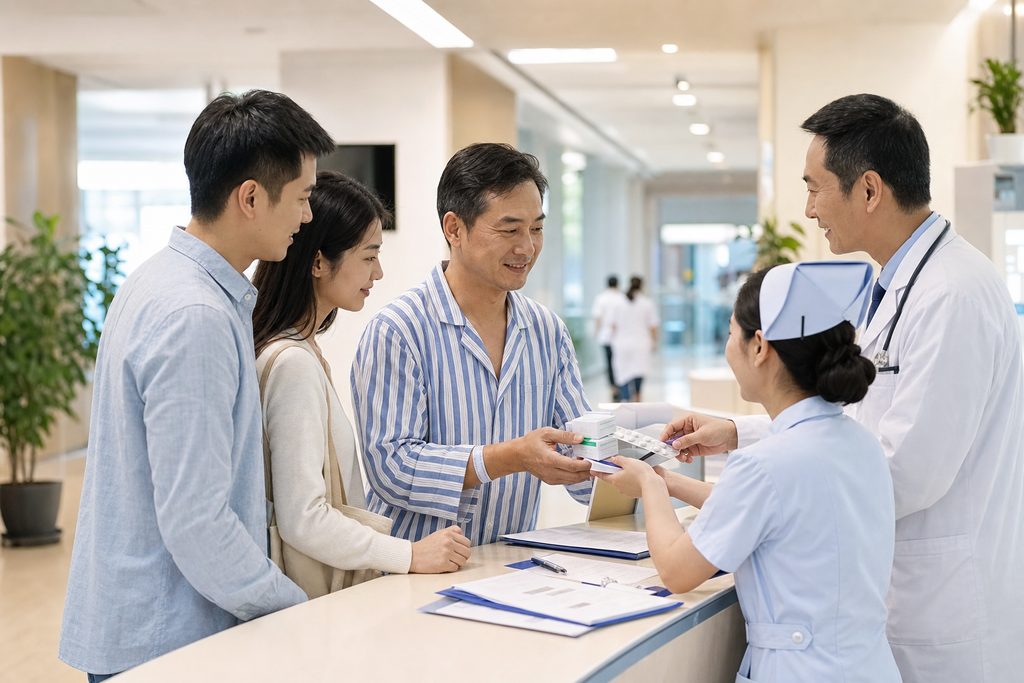
Patients in the United States often face a billing labyrinth that unfolds weeks after leaving the hospital, a slow drip of explanation-of-benefits forms and surprise line items. In China, the financial transaction is immediate and far more direct. Before you walk out the door, the bill must be settled in full. This cultural and procedural difference is just one of many that can catch international patients off guard. We have guided hundreds of families through this exact transition, and the single biggest mistake we see is not knowing what paperwork to demand before stepping into the elevator. A well-executed discharge is not just about leaving—it is about carrying a complete medical passport that ensures continuity of care when you return home.
Key Takeaways
- Chinese hospitals require full payment clearance before releasing discharge documents, a stark contrast to Western post-billing systems.
- Discharge medications must be collected at the hospital’s dedicated inpatient pharmacy; a typical post-surgical supply costs between 200 and 800 RMB on average.
- Securing a translated, stamped “出院小结” (discharge summary) is the most critical step for insurance claims and follow-up care with your home physician.
- Without a local contact to manage the pharmacy queue and payment counter, the process can take 3 to 5 hours on the day of departure.
The Problem: Leaving the Hospital Should Not Be a Test of Endurance
You have just undergone a major procedure. A knee replacement. A spinal fusion. Perhaps a minimally invasive tumor resection. The clinical outcome was excellent, but now you are facing a wall of bureaucracy in a language you do not speak. A 2023 survey by the Medical Tourism Association found that 67% of cross-border patients rated “post-operative administrative logistics” as the most stressful phase of their journey—ranking it even higher than the pre-surgery anxiety. This is not a minor inconvenience. It is a vulnerable moment where critical medical information can be lost in translation, literally.
We have seen patients leave a world-class Chinese hospital with nothing but a paper bag of loose tablets and a handwritten note they could not read. Their home physician later had no idea what surgical technique was used or what implant was placed. That is a dangerous data vacuum. The discharge process in China is highly efficient once you understand the sequential steps. But it is not forgiving. The windows are tight. The queues are real. And the responsibility for collecting the right documentation rests entirely on you, not on a case manager who will follow up next week.
Who We Are
We are ToChinaMed, an independent medical information platform. We do not provide medical treatment, nor do we refer patients to specific hospitals for a fee. We are your logistical guides. We map the terrain of Chinese healthcare so you can navigate it with clarity. Our team has spent years documenting the operational realities of public and private hospitals across China—from the top-ranked public institutions in the Fudan University hospital rankings to the private international hospitals that cater directly to English-speaking patients. We bridge the gap between you and the clinical excellence available in China by making the administrative path transparent.
Why Understanding the Discharge Workflow Delivers Peace of Mind
The anxiety surrounding what happens during hospital discharge in China for foreigners often stems from a simple lack of a visual roadmap. Western hospitals frequently employ discharge planners. In China, the primary nurse on the floor plays this role, but the language barrier can turn a standard handover into a confusing scramble. The process itself is logical. It follows a strict, cashless-payment-first logic that, once decoded, is reproducible every time.
The “Clearance First” Financial Model
In most Chinese public hospitals, the discharge sequence is triggered only after the final bill is paid. This is the opposite of the US model. You will not receive a bill in the mail. You must visit the inpatient billing counter—usually a separate window from the outpatient cashier—with your admission deposit receipt. They will print an itemized statement running to several pages. Every gauze pad, every unit of anesthetic, every lab test is listed. Our team always advises patients to request an English summary if the hospital’s international department can provide one. But you must ask. The default is a Chinese-language printout. This final invoice is the golden ticket. Without the red “PAID” stamp, the nursing station cannot legally release your discharge summary or medications.
The Inpatient Pharmacy Run
Once the bill is stamped, you are handed a prescription for discharge medications. This is where a frequent question arises: can I get my discharge medications at a Chinese hospital pharmacy? The answer is yes, and in fact, you must. Discharge medications are dispensed exclusively from the hospital’s own inpatient pharmacy, not a commercial drugstore. The pharmacy is often located on the ground floor, separate from the outpatient dispensary. You hand over the prescription, wait for your number to be called, and receive your medications in clearly labeled boxes. A note on costs: a medical tourism discharge package China price for medications can vary widely based on the specialty. A standard orthopedic case might see pharmacy charges between 200 and 800 RMB (approximately $28 to $112 USD). A cardiac or oncology discharge, involving novel anticoagulants or targeted therapies, can run higher. But the generic drug dispensing system in Chinese hospitals keeps these costs remarkably low compared to US hospital pharmacy markups.
Documentation: Your Medical Passport
The hospital discharge paperwork checklist for international patients China requires has four non-negotiable items. First, the “出院小结” or discharge summary. This document details your admitting diagnosis, procedures performed, hospital course, and discharge condition. Second, the detailed itemized invoice with the official hospital stamp. Third, any imaging reports and the actual imaging data on a CD-ROM—hospitals almost never release the physical films anymore. Fourth, a medication list with generic drug names. We strongly recommend you ask your nurse to write the generic names in English on the prescription label. The brand names in Chinese characters will be meaningless to your home pharmacist. Securing these four items turns a foreign hospital stay into a legible medical history.
What You Need to Know Before Going Alone
Honesty is essential here. A solo discharge is possible. But it is draining. Here are the barriers that routinely trip up independent travelers.
- Payment Infrastructure: International credit cards are accepted at international hospital wings, but standard public hospital counters often require a Chinese debit card or WeChat Pay linked to a Chinese bank account. A foreign Visa may be declined at the inpatient billing window. We have seen patients stuck for two hours trying to get a card to process while the billing window closed for the lunch break.
- Translation of the Discharge Summary: The nursing station provides a Chinese-language summary. An official English translation with a hospital stamp is not automatic. Even in hospitals with an international department, this service might take an extra day if not arranged in advance. Relying on a phone translation app for a complex surgical note is a clinical risk.
- Pharmacy Operating Hours: The inpatient pharmacy is not a 24-hour operation. It typically closes by 5:30 PM and is closed entirely on weekends in some smaller departments. If you finish your billing at 5:45 PM on a Friday, you might be forced to wait until Monday morning for your medications unless you have someone advocating for an emergency supply from the ward.
How We Help You Navigate This
These barriers exist for structural reasons, not because of a lack of care. The system was designed for domestic patients. We help you bridge that gap. Our team maintains updated operational profiles of major hospitals, so we know which billing counters accept foreign cards and which require a UnionPay setup. We provide you with a bilingual checklist before you even leave your home country. On the day of discharge, we can connect you with a local medical escort—not a doctor, but a logistics expert—who physically walks with you from the nursing station to the billing counter, then to the pharmacy, and finally ensures your CD-ROMs are readable before you get into the taxi.
We also focus on what happens after you leave the hospital. The follow-up appointment process after surgery in China is often set at the moment of discharge. The nurse will hand you a small appointment card with a date, usually two to four weeks post-op. But that card is in Chinese. We ensure that appointment is logged into the hospital’s digital system and that you have the correct building and clinic number. We also brief you on what to expect: a typical follow-up involves a brief wound check, possibly a blood draw, and a consultation that lasts about 10 to 15 minutes. It is focused and fast. Knowing this rhythm takes away the fear of the unknown.
We also guide you through the nuances of the medical tourism discharge package China price structure. Some private international hospitals offer bundled discharge packages that include translation services, a follow-up telehealth call, and a medication delivery service to your hotel. These packages can range from 1,500 to 5,000 RMB, depending on the complexity of the translation required and the length of the post-discharge monitoring. For patients choosing public hospitals, the line-item costs are lower, but the need for a human navigator is higher. We help you weigh these trade-offs without pushing you toward one model or the other.
Frequently Asked Questions
Without language support, the process relies heavily on the goodwill of the nursing staff, who may use a translation app on their phone. The risk is that nuanced discharge instructions—like signs of wound infection or specific dietary restrictions—get oversimplified. We always recommend having at least a bilingual checklist, if not a person, to ensure nothing is lost.
Yes, the inpatient pharmacy is your only official source for discharge meds. You will often find a mix of Western-originator drugs and high-quality Chinese generic alternatives. The generic name will be on the box in English. If you require a specific brand-name drug, this must be communicated to the physician before the discharge prescription is written.
In private international hospitals, a discharge coordination fee is often bundled into the overall surgical package. If itemized separately, a comprehensive discharge service—including a translated summary, medication review, and a follow-up appointment setup—typically costs between 1,500 and 3,000 RMB. Always ask for a line-item breakdown to ensure you are not paying for services you do not need.
The standard model is an in-person visit. The surgeon wants to see the wound. However, since 2020, many international departments now offer structured telehealth follow-ups via WeChat video or Zoom for overseas patients. You must confirm this option at discharge. If virtual follow-up is not offered, we can help you find a local clinic in your home country and transmit your Chinese medical records securely.
Your Next Step
Leaving a Chinese hospital should feel like a beginning, not a confusing ending. The clinical outcomes available here are world-class, but the administrative path requires a different kind of preparation. If you want to focus entirely on healing while someone else handles the stamps, the queues, and the translations, we are here to point you in the right direction. No pressure. No hidden fees. Just a clearer path forward.
Tell us what you need—we will help you find the right option at no charge.
For more medical information and treatment options in China, visit tochinamed.com (ToChinaMed).