Peking University Stomatology Hospital Review: Inside China’s Top Dental Center
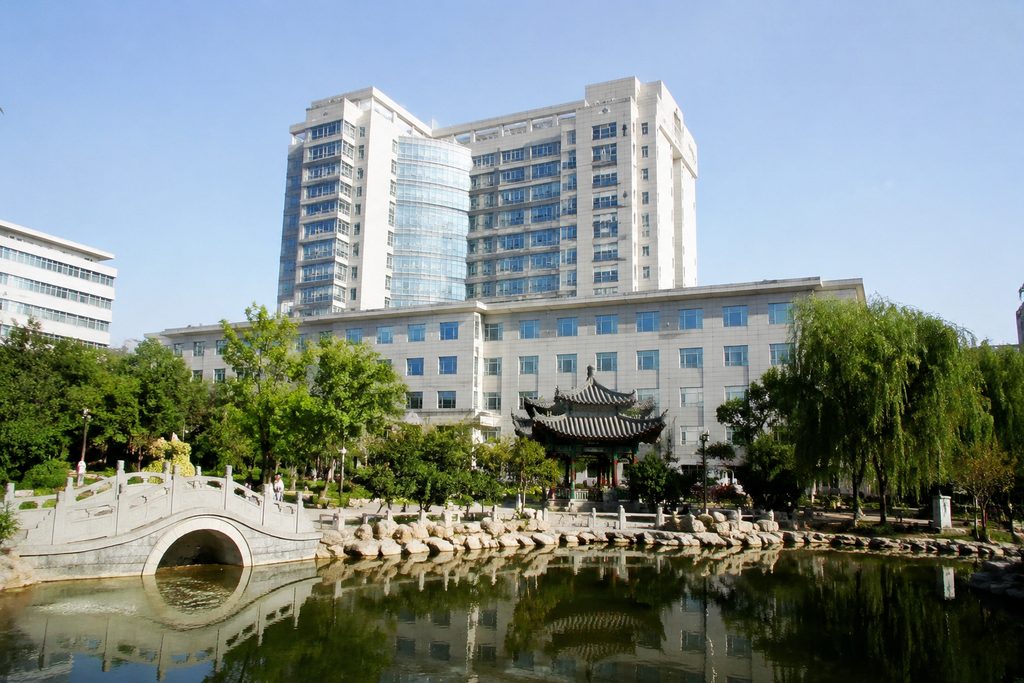
Key Takeaways
- Peking University Stomatology Hospital handles over 1.7 million outpatient visits annually — a clinical volume that dwarfs most Western dental centers and drives specialized expertise in complex procedures.
- The Peking University Stomatology Hospital cost for major procedures like full-mouth dental implants can run 60-70% below US prices, but the total expense depends heavily on implant brand selection and bone grafting needs.
- Language barriers and a completely domestic digital registration system make independent appointment booking nearly impossible for non-Mandarin speakers — this is not a walk-in friendly facility.
- Clinical outcomes for maxillofacial surgery and implantology match or exceed international benchmarks, but the patient experience is clinical and efficient, not concierge-style — expect a high-volume Chinese public hospital, not a private dental spa.
The Problem: Dental Costs Are Breaking People — And Wait Times Aren’t Helping
A full-arch dental implant restoration in the United States now averages between $24,000 and $50,000 per arch. In Australia, the figure hovers around $25,000 to $35,000 AUD. For patients without comprehensive insurance — or those facing exclusions for “major dental” — these numbers are not just high. They are disqualifying. The American Dental Association reports that cost remains the single largest barrier to dental care, with roughly 1 in 5 adults skipping needed treatment because they simply cannot afford it.
And then there is the waiting. In Canada’s public system, non-emergency oral surgery can mean months on a waitlist. The UK’s NHS dental access crisis has left entire regions classified as “dental deserts.” Patients with real pain and deteriorating oral health are stuck. They start searching for alternatives. That search increasingly leads to one name.
Who We Are
We are not a hospital. We do not provide medical treatment, clinical diagnoses, or dental care. Our team functions as a logistical bridge between international patients and China’s most advanced medical institutions. We handle the architecture of your trip — visa guidance, hospital selection based on your specific clinical needs, document translation, and post-procedure recovery coordination. Think of us as your advance team. We make sure you arrive at the right department, with the right records, speaking to the right specialist, without losing weeks to administrative chaos.
Why Peking University Stomatology Hospital Delivers Results
The hospital consistently ranks first in dental specialties in the Fudan University Hospital Rankings, China’s most authoritative hospital evaluation system. That ranking is not based on reputation alone. It reflects case volume, clinical research output, and peer assessment from specialists across the country. When you walk into this facility, you are entering a system that sees more complex oral pathology in a month than many national referral centers see in a year.
Clinical Volume Drives Surgical Precision
Consider the numbers. The Department of Oral and Maxillofacial Surgery alone performs over 6,000 inpatient surgeries annually. That includes tumor resections, orthognathic surgery, cleft lip and palate repairs, and complex trauma reconstruction. A senior surgeon here may complete more orthognathic cases in one year than a typical Western oral surgeon handles in a decade. Volume is not just a statistic. It means the surgical team has seen your exact anatomical challenge before — many times. They have managed the rare complications. They know what bleeding patterns to expect, which nerve variations demand caution, and how to adjust the surgical plan intraoperatively when things deviate from the textbook.
This matters enormously for procedures like All-on-4 implant rehabilitation. Precise implant angulation in compromised bone requires a surgeon who has done thousands, not dozens. The implantology department here places over 10,000 implants per year. That scale creates a feedback loop: more cases → better pattern recognition → fewer complications → more referrals → even more cases.
Technology Infrastructure That Rivals Any Western Center
Walk through the digital dentistry wing and you will see equipment that matches what you would find at NYU College of Dentistry or the University of Zurich. Intraoral scanners from 3Shape. Cone-beam CT machines for 3D bone mapping. Computer-aided design and manufacturing (CAD/CAM) systems that produce same-day ceramic restorations. The hospital operates its own central digital laboratory, which means the technician fabricating your crown or surgical guide is in the same building — not shipping files to an offshore milling center.
One telling detail: the hospital was an early adopter of dynamic navigation for implant surgery. This technology allows real-time tracking of drill position relative to the planned implant trajectory, displayed on a screen during surgery. It is particularly valuable for patients with severely atrophic jawbones where anatomical landmarks are distorted. Fewer than 15% of US dental practices use dynamic navigation. At Peking University Stomatology Hospital, it is standard for complex cases.
Cost Advantage Without Quality Compromise
Let us address the obvious question directly: is Peking University dental hospital good enough to justify traveling across the world? The clinical answer is yes — with important caveats about the patient experience we will address shortly.
The dental implant price China vs USA comparison is stark. A single titanium implant with a porcelain crown that costs $4,000-$6,000 in the US typically runs 8,000-15,000 RMB ($1,100-$2,100) here. Full-arch restoration using premium Swiss implants (Straumann or Nobel Biocare) might total $18,000-$25,000 — compared to $50,000-$80,000 stateside. These are not inferior materials. The hospital uses the same implant brands, the same bone graft materials, and the same prosthetic components you would receive in New York or London.
Why the difference? Structural economics. Chinese hospital salaries, while rising, remain lower than Western counterparts. The hospital operates at enormous scale, spreading fixed equipment costs across vastly more patients. And there is no multi-layered insurance billing apparatus inflating administrative overhead. Lower cost reflects different economics — not different standards.
What You Need to Know Before Going Alone
The clinical excellence is real. So are the barriers. Anyone telling you this is simple has never tried to book an appointment at the best dental hospital in Beijing for foreigners without local help.
- Registration Is Entirely Digital — and Entirely Chinese: The hospital uses a WeChat-based booking system. Appointments for top specialists release at specific times and disappear within minutes. The interface has no English option. Payment requires a Chinese bank card or WeChat Pay linked to a mainland account. If you cannot read Chinese characters and do not have local payment infrastructure, you cannot book.
- Language Barrier Extends Beyond Front Desk: While senior professors often speak functional English from international conference experience, the residents, nurses, and administrative staff generally do not. Treatment plans, consent forms, and post-operative instructions are in Chinese. Google Translate will not reliably handle medical terminology about “zygomatic implant anchorage” or “inferior alveolar nerve repositioning.”
- Medical Records Must Be Properly Prepared: The hospital requires translated and notarized medical history summaries, recent imaging in DICOM format, and sometimes a referral letter. Showing up with a CD of your dental CT and a handwritten note from your hometown dentist will not work. The triage system is strict. Incomplete documentation means being turned away or scheduled for unnecessary repeat imaging.
How We Help You Navigate This
These barriers exist for structural reasons — the hospital serves 1.7 million domestic patients annually and has little operational incentive to build English-language intake systems. That is where we step in.
Before you travel, we translate and format your dental records to meet the hospital’s specific intake requirements. We know which implant brands each department stocks, which surgeons specialize in complex bone grafting, and how to time your appointment to align with the specialist’s surgery schedule. We handle the WeChat registration battle on your behalf. During treatment, we provide interpretation support that goes beyond vocabulary — we ensure you understand the clinical reasoning behind the treatment plan, the risks being disclosed, and the post-operative protocol. After you return home, we coordinate follow-up communication with your surgeon and help your local dentist receive the proper clinical notes and implant passport documentation.
We do not mark up hospital fees. We do not receive commissions from surgeons. Our service cost is transparent and separate. We exist because the system is hard to navigate without local expertise — and the clinical reward for navigating it successfully is world-class dental care at a fraction of Western prices.
Frequently Asked Questions
A molar root canal at Peking University Stomatology Hospital typically costs between 2,000-4,000 RMB ($275-$550), depending on the number of canals and whether a specialist endodontist performs the procedure. In the US, the same treatment averages $1,200-$1,800. The Chinese price includes the final filling but not the crown, which is billed separately — same as Western practice. The microscope-assisted technique used here is identical to Western endodontic standards.
Full-arch restoration using four to six implants per jaw (All-on-4 or All-on-6 protocol) with a fixed hybrid prosthesis typically ranges from 120,000-180,000 RMB per arch ($16,500-$25,000). This includes implant placement, temporary prosthesis, and final prosthesis. Premium implant brands like Straumann or Nobel Biocare sit at the higher end. The lower end uses domestic or Korean implant systems that are CE-approved and clinically validated but less recognized internationally. Bone grafting, if needed, adds 5,000-15,000 RMB per site.
Yes — this is arguably where the hospital most clearly outperforms many Western centers. The maxillofacial surgery department handles complex tumor resections with free flap reconstruction, severe craniofacial anomalies, and temporomandibular joint replacements. For orthognathic surgery (corrective jaw surgery), the volume is so high that the surgical team’s efficiency measurably reduces operating time and hospital stay compared to lower-volume centers. International patients seeking this level of care should expect a 7-14 day inpatient stay and a recovery period in Beijing before flying home.
Not practically. The hospital’s official appointment system operates through WeChat and a Chinese-language website. International credit cards are not accepted for registration deposits. Specialist appointments — particularly for implantology and maxillofacial surgery — require domestic identification numbers for the booking. Some patients attempt to book through hotel concierges or local acquaintances, but this often results in scheduling errors, wrong department assignments, or missed appointments due to payment failures. Working with a service that has established hospital relationships avoids these failures.
This is the hardest question, and the answer requires honesty. Implant complications — peri-implantitis, prosthesis fracture, abutment screw loosening — can occur months or years after treatment. Your local dentist may be reluctant to touch another surgeon’s work, especially if the implant system is less common in your country. We strongly recommend selecting implant brands with global warranty coverage (Straumann, Nobel Biocare) and obtaining complete surgical and prosthetic records before leaving China. Some complications can be managed remotely through teleconsultation with your Chinese surgeon. Others will require local revision. We help facilitate the records transfer and communication — but the reality is that cross-border dental care carries a follow-up burden that patients must understand before proceeding.
Your Next Step
Peking University Stomatology Hospital represents a genuine intersection of clinical excellence and cost accessibility that does not exist in most Western dental markets. The surgeons are world-class. The technology is current. The savings are substantial. But the path to accessing it is genuinely difficult without local knowledge — and the follow-up logistics demand planning, not optimism.
We help you assess whether your specific case is suitable for treatment here, what the realistic total cost will be, and how to manage the entire journey from first contact to final recovery. If you want to explore whether this option fits your situation, tell us what you need — we will help you find the right option at no charge.
For more medical information and treatment options in China, visit tochinamed.com (ToChinaMed).