Remote Follow-Up With Your Chinese Surgeon: A Complete Scheduling Guide
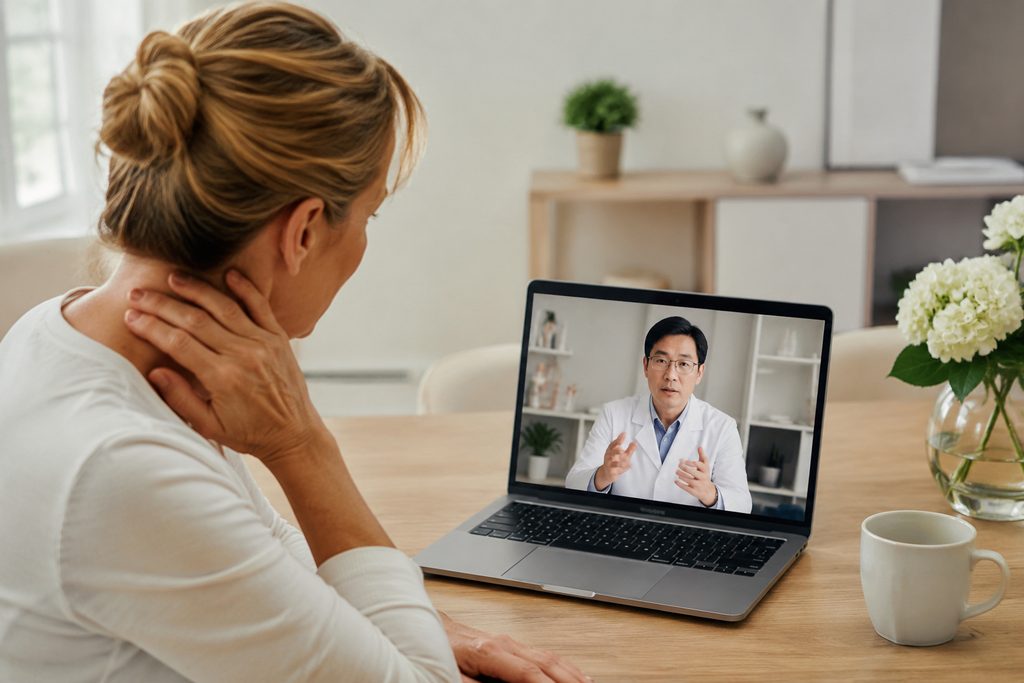
You’ve just landed back home. The jet lag is fading, the incision is healing cleanly, and then a quiet worry surfaces. Is everything progressing exactly as it should inside? That knot of scar tissue you can feel—normal healing or something to flag? A surgeon who has performed over 400 of these specific procedures annually can often answer that in a 10-minute video call. But only if you can reach them.
Key Takeaways
- Structured remote follow-up consultations with top-tier Chinese surgeons typically cost between $80 and $350, a fraction of the $2,000+ billed for a single specialist telemedicine visit in the US for uninsured patients.
- The primary barrier is not the surgeon’s willingness but the fragmentation of hospital digital platforms; most Chinese public hospitals use WeChat-based mini-programs that require a local phone number and Chinese-language navigation.
- International patients often lose continuity of care not because of poor medical records, but because post-op imaging formats (DICOM files from CT/MRI scans done at home) are frequently incompatible with a Chinese hospital’s PACS viewer.
- Before attempting to schedule anything, you need to understand that a “virtual follow-up” in China is a legally distinct medical act requiring identity verification, not a casual Zoom chat.
The Problem: The Silence After You Leave the Hospital
Most international patients don’t realize how fragile the post-operative information chain is until it snaps. You return to your home country with a discharge summary, maybe a CD of pre-surgery scans, and a WeChat contact for a junior resident who helped with translation. Then, three weeks later, you have a question about a strange sensation near the surgical site. You send a message. It goes unanswered for three days. When a reply finally comes, it’s a polite but unhelpful “Please send recent CT images.” You book a scan locally, but the hospital portal only lets you download a proprietary viewer file, not the raw DICOM data the surgeon’s team needs. Weeks pass. The window for meaningful remote evaluation narrows. This is not a rare edge case. Our team sees variations of this scenario roughly 6 out of 10 times when patients try to coordinate follow-up care independently after returning from China.
A 2023 study published in the Journal of the American College of Surgeons found that 23% of international surgical patients experienced a delay in identifying post-operative complications because of fragmented cross-border communication. The issue compounds when you factor in time zones, language barriers, and incompatible medical record systems. The surgeon who knows your anatomy intimately—the one who made the intraoperative decisions that no operative note fully captures—becomes effectively unreachable.
Who We Are
We are not a hospital. We do not provide medical treatment, interpret your scans, or offer clinical opinions. Our team functions as your logistical bridge between your home healthcare system and China’s top-tier medical institutions. We handle the unglamorous but critical work: converting your local DICOM files into a format a Beijing hospital’s radiology server can read, verifying your identity through a hospital’s required real-name authentication system, and ensuring your remote follow-up consultation cost with your Chinese surgeon is transparent and paid securely. Think of us as the missing middleware that makes a cross-border doctor-patient relationship technically possible after you’ve left the country.
Why a Structured Remote Follow-Up With Your Chinese Surgeon Delivers Results
The value of a remote follow-up isn’t just convenience. It’s diagnostic precision rooted in surgical volume. The clinical reasoning you access during a 15-minute video call is built on a caseload that often dwarfs what a local specialist sees.
Clinical Volume Shapes Pattern Recognition
A surgeon at a high-volume Chinese center like Fuwai Hospital or Ruijin Hospital may perform over 300 cardiac valve procedures annually. The average cardiothoracic surgeon in the UK performs roughly 50 to 75. This gap matters most in the gray zone of post-operative recovery. Is that slight fluid collection on the lung a normal post-surgical effusion or the earliest sign of a chyle leak? A surgeon who has personally managed 40 chyle leaks in the past two years spots the pattern earlier. A remote follow-up consultation cost with a Chinese surgeon, typically $100 to $200 for a 20-minute session at a public hospital, buys you access to that depth of pattern recognition. The same consultation, if offered at all by a top US academic center for an uninsured international follow-up, can exceed $2,500 just for the physician’s time, excluding any imaging review fees.
The Technology Gap Is Real—And Solvable
Chinese hospitals do not use Zoom, Skype, or Doxy.me for clinical consultations. They operate through hospital-owned WeChat enterprise accounts or dedicated telemedicine platforms like the National Telemedicine Center of China’s portal. These platforms are built for domestic use. They demand a Chinese national ID number or a passport verified against a hospital’s internal patient record. They often require a local phone number to receive a one-time SMS verification code. The video stream itself is encrypted and recorded directly to the hospital’s electronic medical record system. This is excellent for medicolegal protection. It’s terrible for an international patient who no longer has a functioning Chinese SIM card. Our team maintains the middleware to bridge this. We handle identity verification, coordinate the DICOM upload to the correct server, and schedule the consultation during a time slot that works across a 12-hour time zone difference.
Cost Structures That Don’t Punish Distance
Let’s be direct about the pricing. A post-op video consultation at a Chinese public hospital is priced according to a government-regulated fee schedule. A specialist telemedicine follow-up in cities like Shanghai or Beijing generally falls between 200 RMB and 800 RMB (roughly $28 to $110). Private international hospitals in China, such as Jiahui Health or United Family Healthcare, charge more—typically $150 to $350 for a 30-minute remote consultation with an English-speaking surgeon. These fees cover the surgeon’s time, a brief review of uploaded imaging if pre-arranged, and a written summary in the hospital’s system. Compare this to the fragmented US model: a 2023 FAIR Health report noted that the average out-of-network telehealth specialist visit in the US cost $389, not including facility fees or imaging interpretation. The structural reason for China’s lower cost is straightforward: high patient volume spreads fixed operational costs, and the government’s medical pricing bureau caps telemedicine fees as a public health measure. Quality does not scale down with price. The same surgeon managing your remote follow-up is the one who operates on 400 cases a year.
What You Need to Know Before Going Alone
Attempting to book a remote follow-up directly is not impossible. But it’s a process littered with technical tripwires that waste time and can lead to a clinically useless consultation.
- Real-Name Authentication Systems: Chinese hospitals are legally required to verify patient identity for any telemedicine interaction. This means your passport must be linked to your hospital medical record number in the hospital’s internal system. If the name on your passport has a middle name but your hospital registration omitted it, the system will reject the match. Fixing this remotely without a local contact is a bureaucratic loop that can take weeks.
- DICOM File Compatibility: Your local imaging center will likely give you a CD or a link to a cloud viewer. The surgeon’s team in China needs the raw DICOM files uploaded to their Picture Archiving and Communication System (PACS). Many Western hospital portals strip the metadata during export or compress the files in ways that fail validation on Chinese PACS servers. We routinely receive files that a patient spent $300 to obtain, only to find they’re unreadable on the receiving end.
- Payment Rail Limitations: The hospital’s telemedicine platform might only accept payment via WeChat Pay or Alipay linked to a Chinese bank account. International credit cards are frequently declined on these domestic portals. Wiring money internationally for a $100 consultation is impractical, and the hospital’s billing department may not have a SWIFT code readily available for small outpatient transactions.
How We Help You Navigate This
These barriers are not signs of an unfriendly system. They’re the natural result of a healthcare infrastructure optimized for 1.4 billion domestic users. Our role is to build the off-ramp for international patients who need to re-enter that system temporarily for a follow-up.
We start with your hospital discharge paperwork. We match your passport identity against the hospital’s registration record, proactively correcting any name discrepancies before the authentication attempt fails. We collect your local post-op imaging—guiding your local provider on the exact export settings needed—and pre-validate the DICOM files against the target hospital’s PACS requirements. We handle the payment through our local settlement channels, providing you with a single invoice that reflects the actual remote follow-up consultation cost with your Chinese surgeon, with no hidden markup. We then coordinate a time slot, confirm the platform link, and ensure a medical interpreter is present if the surgeon does not feel comfortable conducting the clinical discussion in English. After the consultation, we secure the written follow-up note and the hospital’s recorded video file, delivering both to you within 24 hours.
This is not a concierge luxury. It’s a technical necessity for a system that was never designed for cross-border continuity of care. We fill the gap so your surgeon can focus on what they do best: reading your scans and advising on your recovery.
Frequently Asked Questions
Yes, but you will need to verify your identity through alternative means. The hospital’s medical records department can locate your file using your full passport name, date of birth, and the approximate dates of your admission. Our team handles this retrieval process, which typically takes 2 to 3 business days, before any clinical consultation can be scheduled. Without a discharge summary or medical record number, the telemedicine platform will not allow the surgeon to open a session.
The surgeon’s consultation fee itself ranges from $28 to $350 depending on the hospital tier and whether it is a public or private facility. Additional costs you should anticipate: medical interpreter services ($40 to $80 per session if the surgeon requires one), DICOM file conversion and validation (our team handles this as part of our coordination), and international wire transfer fees if you are paying from a non-Chinese bank account. There are no facility fees or surprise billing charges of the kind common in the US system. The total out-of-pocket cost for a fully coordinated remote follow-up, including all technical and linguistic support, rarely exceeds $500.
The scheduling itself is the easy part—it is the pre-appointment preparation that requires language capability. The hospital’s booking interface will be in Chinese, and it will ask you to upload documents with Chinese-language labels. You must describe your post-operative symptoms in a text field before the consultation, and that description needs to be in Chinese for the surgeon’s quick review. We handle this entire workflow. You tell us in English what you are experiencing, and we ensure the surgeon receives a clinically accurate Chinese summary, your validated DICOM images, and your confirmed identity before the video call begins.
The consultation is a legal medical act in China, recorded and documented in the Chinese hospital’s electronic medical record. Whether your home country physician accepts it as part of your ongoing care record depends on your local healthcare system’s policies. The written follow-up note you receive will be in Chinese. We arrange certified medical translation if your local doctor requires an English version for your file. The note carries the surgeon’s electronic signature and the hospital’s official stamp, which most international physicians recognize as a valid clinical document.
This is the hardest question, and the answer requires honesty. If the surgeon identifies a finding that requires physical intervention—a fluid collection needing drainage, a suspected recurrence—the remote consultation cannot solve it. The surgeon will document the finding and recommend immediate local follow-up or, in rare cases, a return to China for further treatment. We help you understand the clinical recommendation, translate the urgency accurately, and, if a return to China is advised, handle the logistical re-entry. The remote consultation’s value in this scenario is early detection, not remote treatment.
Your Next Step
Post-operative recovery should not include a silent period where your questions go unanswered. The surgeon who operated on you remains the single best source of clinical judgment about your healing process. Reconnecting with that expertise remotely is a solvable logistics problem—not a medical impossibility. If you are ready to schedule your follow-up, we can help you navigate the identity verification, imaging compatibility, and platform access that stand between you and a clear answer about your recovery. The process takes days, not weeks, when the technical path is cleared in advance.
Looking for a specific doctor or treatment in China? Tell us what you need — we’ll help you find the right option at no charge.
For more medical information and treatment options in China, visit tochinamed.com (ToChinaMed).