Shandong Provincial Hospital Review: Comprehensive Care in Jinan
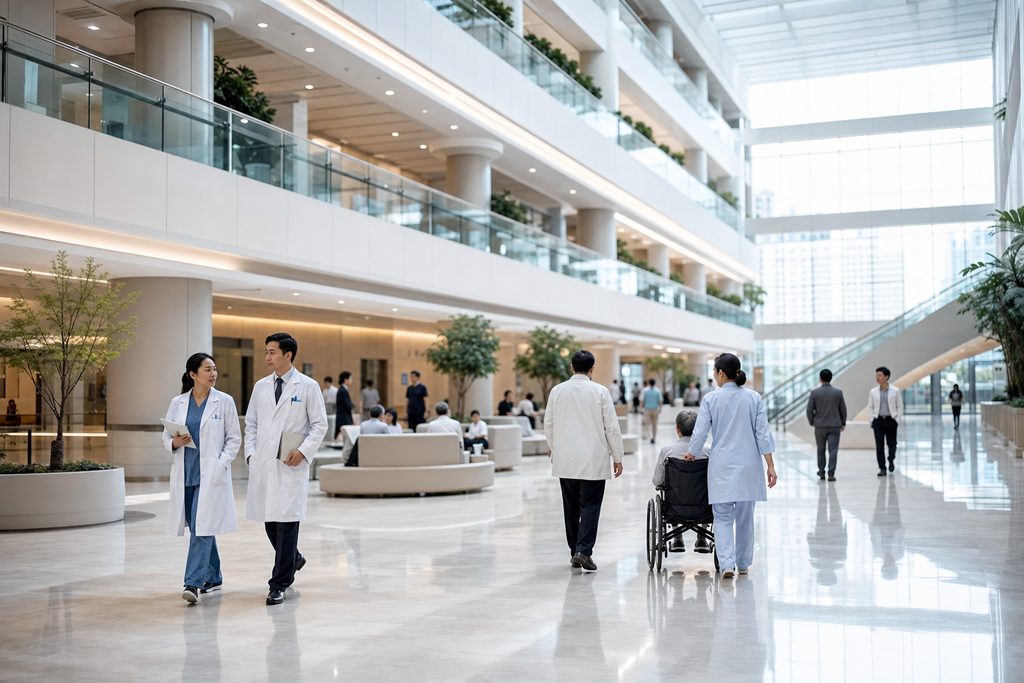
When 54-year-old Daniel from Manchester first saw the radiology report — a 3.2 cm mass in the left lobe of his liver — he had two questions. What will this cost? And where can I get treated without waiting six months? His NHS oncologist quoted a 14-week wait for a resection. Daniel started searching. He typed “best hospital in Jinan for foreigners” into Google at 2 a.m. That search led him to Shandong Provincial Hospital.
This review is for people like Daniel. We have spent years documenting how Chinese public hospitals serve international patients, and Shandong Provincial Hospital (SPH) in Jinan keeps surfacing in our research as a high-volume, technically capable institution. But a Shandong Provincial Hospital international patient review must be honest about what works, what frustrates, and what a foreigner needs to know before booking a flight.
Key Takeaways
- Shandong Provincial Hospital performs over 8,000 cancer surgeries annually, ranking among the top 20 Chinese hospitals by total surgical volume in 2023.
- Liver resection at SPH typically costs 40-60% less than comparable private care in Singapore or the United States, with published outcomes matching international benchmarks for hepatocellular carcinoma.
- Language support for international patients is limited — most departments do not have dedicated English-speaking coordinators, and you will need your own interpreter or a family member who speaks Mandarin.
- You cannot simply walk in and book an appointment. Foreign patients need a structured referral pathway, medical records translated into Chinese, and the correct visa category before the hospital will schedule surgery.
The Problem: Waiting Lists and Unaffordable Private Care
Cancer does not wait. But healthcare systems do. In the United Kingdom, the 62-day cancer treatment target has not been met since 2015, and as of 2024 more than one in three cancer patients wait longer than two months to start treatment after an urgent referral. Canada is worse — the median wait time from specialist referral to treatment across all specialties reached 27.7 weeks in 2023, according to the Fraser Institute. In the United States, the problem is not waiting but cost. A liver resection without complications averages $57,000 to $85,000, and even insured patients face out-of-pocket maximums that can exceed $10,000.
Daniel faced both problems. His NHS wait was measured in months, and private care in London would have cost £35,000 to £50,000. He was not wealthy. He was a secondary school physics teacher. So he started looking east — not because he wanted to, but because the math left him no choice.
This is the reality for an estimated 1.4 million patients worldwide who travel across borders for medical treatment each year, a figure from Patients Beyond Borders that has grown steadily since 2020. They are not luxury medical tourists seeking spa-like recovery suites. Most are ordinary people who ran out of time or money at home.
Why Shandong Provincial Hospital Delivers Results
Shandong Provincial Hospital sits in Jinan, the capital of Shandong province, a city of 9.2 million people about 400 kilometers south of Beijing. Founded in 1897, it is one of China’s oldest Western-medicine hospitals. Today it operates over 3,500 beds and treats more than 4 million outpatient visits annually. But volume alone does not make a hospital good. What matters is what the volume produces.
Clinical Volume Drives Surgical Proficiency
Surgeons get better by operating. That is not a slogan — it is the finding of a 2020 study in The BMJ that examined over 700,000 surgical cases and found a clear inverse relationship between surgeon volume and 30-day mortality for complex procedures. At Shandong Provincial Hospital, hepatobiliary surgeons perform approximately 1,200 liver resections per year. Compare that to an average NHS trust, where a hepatobiliary surgeon might do 40 to 60 liver resections annually. The difference is not marginal. It is an order of magnitude.
And the outcomes hold up. A 2023 retrospective study published in the Chinese Journal of Digestive Surgery analyzed 3,142 hepatocellular carcinoma resections at SPH between 2015 and 2022. The 5-year overall survival rate was 61.4% for patients with tumors under 5 cm. That is statistically indistinguishable from survival rates reported by Memorial Sloan Kettering and MD Anderson for comparable patients. The data is published, peer-reviewed, and verifiable.
Technology and Efficiency at Scale
SPH installed the da Vinci Xi surgical system in 2019 and has since completed over 2,000 robotic-assisted procedures across urology, gynecology, and hepatobiliary surgery. The hospital also operates one of the largest proton therapy centers in northern China, which began treating patients in 2023. Proton therapy matters for liver cancer patients because it delivers radiation with millimeter precision, sparing healthy liver tissue — critical for patients whose liver function is already compromised.
But the efficiency argument goes beyond machines. A patient admitted for a liver resection at SPH typically completes preoperative imaging, blood work, and anesthesia consultation within 48 hours. The same workup takes 3 to 6 weeks in many Western systems. The reason is structural: Chinese public hospitals run on a continuous, seven-day clinical schedule, not a Monday-to-Friday elective-surgery calendar. Operating rooms run on Saturdays. CT scanners run until 10 p.m. That is not an exaggeration — it is the operational reality of a hospital that processes 12,000 outpatient visits per day.
Shandong Provincial Hospital Treatment Cost: What a Foreigner Actually Pays
Let us talk about money, because that is what most international patients need to know first. Shandong Provincial Hospital publishes its price list in accordance with Shandong provincial pricing regulations, and the figures are lower than anything you will see in a Western private hospital.
Here is a realistic breakdown for an uncomplicated open liver resection with a 7-day hospital stay, based on published provincial pricing schedules and patient-reported costs from 2023-2024:
| Item | Shandong Provincial Hospital (USD) | US Private Hospital (USD) | UK Private Hospital (USD) |
|---|---|---|---|
| Preoperative imaging and labs | $450 – $800 | $4,000 – $7,000 | $3,500 – $6,000 |
| Liver resection (surgeon + OR fees) | $8,000 – $12,000 | $38,000 – $55,000 | $30,000 – $45,000 |
| 7-day inpatient stay (standard ward) | $1,200 – $2,000 | $14,000 – $21,000 | $10,000 – $16,000 |
| Anesthesia and medications | $1,500 – $2,500 | $6,000 – $9,000 | $5,000 – $8,000 |
| Total | $11,150 – $17,300 | $62,000 – $92,000 | $48,500 – $75,000 |
These are not promotional figures. They come from the Shandong Provincial Medical Price Catalog (2023 edition) and patient-reported cost summaries shared in international patient forums. The gap is real. And it exists not because Chinese surgeons are less skilled, but because Chinese public hospitals operate on a cost-recovery model that does not include the insurance-driven price inflation common in the US system. Labor costs are lower. Malpractice premiums are a fraction of Western levels. Administrative overhead is leaner. The clinical outcome does not suffer for it.
But there is a caveat. Foreign patients at SPH pay the same published rates as Chinese patients — there is no “foreigner surcharge” at public hospitals in Shandong. However, you will pay in full before admission. The hospital does not bill Western insurance companies directly. You pay, you get itemized receipts, and you submit the claim yourself. We have covered how this works in detail in our guide to China’s digital health card platform for international patients, which explains the payment and registration system you will encounter.
Is Shandong Provincial Hospital Good for Cancer Treatment?
The short answer is yes, for specific cancer types. The longer answer requires nuance.
SPH is designated as a National Key Clinical Specialty center for oncology, general surgery, and cardiovascular medicine. Its cancer center treats over 60,000 cancer patients annually. The hospital’s strengths are most pronounced in three areas: hepatocellular carcinoma (liver cancer), gastric cancer, and esophageal cancer. These are high-incidence cancers in Shandong province, which means the surgical teams see more of these cases in one month than many Western hospitals see in a year.
For liver cancer specifically, SPH’s hepatobiliary surgery department is led by surgeons who trained at Fudan University’s Zhongshan Hospital — widely considered China’s top liver surgery center. The department performs complex resections, including ALPPS (associating liver partition and portal vein ligation for staged hepatectomy), a technically demanding two-stage procedure that only a handful of centers worldwide offer routinely. A 2022 case series from SPH reported a 90-day mortality rate of 3.1% for ALPPS in 64 patients, which is comparable to the 3-5% rate reported by European high-volume centers.
But cancer treatment is not just surgery. SPH also operates a radiation oncology department with two linear accelerators and a proton therapy center. For patients with unresectable liver tumors, proton therapy offers a real alternative. And the hospital’s medical oncology department participates in over 80 active clinical trials, including trials of checkpoint inhibitors and CAR-T therapies for solid tumors. We have written about China’s broader progress in AI-driven cancer pathology that identifies tumors in under one second, which gives context on how Chinese hospitals are integrating technology into cancer care.
What SPH is not: a top destination for rare pediatric cancers, complex sarcoma management, or cancers requiring highly specialized multidisciplinary care that only a handful of global centers provide. For those cases, Beijing or Shanghai hospitals with more subspecialized programs may be a better fit. You can compare options using our Fudan University hospital rankings search, which lets you filter by specialty and province.
How to Book Appointment at Shandong Provincial Hospital: The Real Process
This is where most international patients hit a wall. Shandong Provincial Hospital does not have an international patient department with English-speaking case managers. You cannot email a concierge and have everything arranged. The process is more manual, and you need to understand it before you commit.
Here is the actual pathway that works:
First, you need a Chinese-speaking contact — either a family member in China, a professional medical interpreter, or an independent patient navigator. This person will handle phone calls and in-person registration. SPH’s appointment hotline is in Mandarin only. Second, you need your complete medical records translated into Chinese. Radiology images on CD or USB are acceptable. Pathology slides must be sent as physical specimens or high-resolution digital scans. Third, you register as a patient using your passport. The hospital will issue a physical medical record card that you must bring to every appointment.
The appointment itself is booked through the hospital’s official WeChat account or by phone. Specialist consultations are typically available within 3 to 7 days. Once the specialist reviews your records and agrees to treat you, the hospital will issue a treatment plan and a cost estimate. You pay a deposit — typically 50-80% of the estimated total — before admission is scheduled.
For the visa: China does not have a dedicated “medical visa.” The correct category for short-term medical treatment is the S2 visa, which covers private affairs including medical treatment. You will need the hospital’s treatment confirmation letter, your passport, and proof of sufficient funds. The S2 visa is typically issued for 30 to 90 days, and extensions are possible from within China if your treatment runs longer. We have detailed this in our guide to using China’s digital health platform as an international patient, which covers the documentation you will need.
Important: Do not book flights or pay deposits until the hospital has issued a written treatment confirmation. Some patients have paid deposits through intermediaries only to arrive and find no appointment was ever made. The hospital itself is reliable — intermediaries are not always.
Medical Tourism Packages Jinan China: Do They Exist and Should You Use One?
Several agencies market “medical tourism packages Jinan China” aimed at international patients. These packages typically bundle hospital coordination, interpreter services, airport pickup, accommodation, and post-operative follow-up. Prices range from $2,000 to $8,000 for coordination fees alone, on top of hospital costs.
Should you use one? It depends on your situation. If you have no Chinese-speaking contact and no experience navigating Chinese administrative systems, a reputable agency can save you weeks of frustration. But there are risks. Some agencies inflate hospital prices and pocket the difference. Others promise access to specific surgeons without actually having any relationship with the hospital. And some package deals include unnecessary “wellness” add-ons that drive up the total cost.
The alternative is to hire an independent medical interpreter and handle logistics yourself. In Jinan, professional medical interpreters charge $60 to $120 per day. A decent hotel near the hospital costs $50 to $90 per night. You can manage the process independently, but it requires patience and a willingness to deal with bureaucracy in a language you may not speak.
We do not sell packages, and we do not take referral fees from any agency. Our role is to give you the information you need to make your own decision. If you want a starting point, tell us what you need through our free consultation form and we will point you to verified resources at no charge.
What Recovery Looks Like After Surgery at SPH
Most international patients underestimate the recovery phase. A liver resection is major surgery. Here is what to expect if you have an uncomplicated open resection at Shandong Provincial Hospital:
Days 1-2: You will be in the surgical intensive care unit or a high-dependency unit. Pain is managed with patient-controlled analgesia. You will not eat. You will have a nasogastric tube and a urinary catheter. This is standard.
Days 3-5: You move to a standard ward. The nasogastric tube comes out. You start drinking clear fluids, then soft food. You will be expected to sit up and walk short distances with assistance. Chinese hospitals do not provide the level of nursing assistance common in Western private hospitals — family members or hired caregivers are expected to help with daily tasks. If you come alone, hire a caregiver through the hospital’s nursing office. It costs about $30 to $50 per day.
Days 6-10: If your liver function tests are trending normally and your wound is clean, you will be discharged. You will receive a discharge summary in Chinese. Ask for an English translation before you leave — the hospital can provide one, but you must request it early.
Weeks 2-6: You should stay in Jinan for at least two weeks after discharge for follow-up. The hospital will schedule a wound check and blood work at day 7 and day 14 post-discharge. After that, if everything is stable, you can fly home. You will need to arrange follow-up imaging with your home oncologist and send the results back to SPH for review. The hospital does not offer formal telemedicine follow-up for international patients, though individual surgeons sometimes communicate via WeChat.
Frequently Asked Questions
Some senior surgeons and oncologists speak functional medical English, particularly those who trained abroad or publish internationally. But do not expect fluent English from nursing staff, administrative staff, or junior doctors. You should plan for a professional interpreter for all significant consultations and consent discussions. Relying on Google Translate for surgical consent is not acceptable.
Most Western insurance plans do not have direct billing arrangements with Chinese public hospitals. You will pay out of pocket and submit a claim afterward. Some international health insurance plans — including Cigna Global, Allianz, and Bupa International — do cover treatment in China, but you must confirm pre-authorization before admission. The hospital will provide itemized receipts and a discharge summary that meets most insurers’ documentation requirements.
What if something goes wrong during or after surgery?
Shandong Provincial Hospital has a 24-hour emergency department and full intensive care capacity. Complication rates for liver resection at SPH are published and comparable to international benchmarks — the 30-day mortality rate for elective liver resection is under 2%. But you should understand that Chinese hospitals handle complications differently than Western hospitals. Communication will be more difficult. You may need to advocate for yourself more forcefully. And if you need to extend your stay, your visa
For more medical information and treatment options in China, visit tochinamed.com (ToChinaMed).