Renji Hospital Shanghai Review: Gastroenterology and Urology Strength for International Patients
Key Takeaways
- Renji Hospital’s gastroenterology department performs over 130,000 endoscopic procedures annually — a clinical volume that dwarfs most Western centers and directly correlates with diagnostic accuracy.
- The urology department ranks among China’s top three nationally in the Fudan Hospital Rankings, with particular strength in minimally invasive robotic surgery for prostate and kidney conditions.
- International patients face real barriers: no dedicated English-language booking portal, cash-upfront payment requirements, and Mandarin-only medical records — planning ahead is not optional.
- Treatment costs typically run 30-60% lower than comparable US procedures, but the savings require accepting a fundamentally different hospital experience than what Western patients expect.
The Problem: Digestive Disease Is Widespread, but Access to Top Specialists Is Not
Approximately 1 in 5 adults worldwide lives with a chronic digestive disorder. That number keeps climbing. Inflammatory bowel disease alone affects an estimated 7 million people globally, according to a 2023 Lancet Gastroenterology & Hepatology study. Colorectal cancer rates in adults under 50 have risen sharply across the United States, Canada, and Australia over the past two decades.
Yet getting in front of a true specialist often means waiting months. In Canada, the median wait time to see a gastroenterologist stretches past 12 weeks in several provinces. The UK’s NHS reported in 2024 that over 40% of urgent suspected cancer referrals missed the two-week target. Patients sit in limbo. Symptoms worsen. Anxiety builds.
Urology faces the same bottleneck. Prostate cancer remains the second most common cancer in men worldwide. Benign prostatic hyperplasia affects half of all men by age 60. But urologist availability varies wildly by region. Rural areas in the US and Australia struggle hardest, with some patients driving four hours for a single consultation.
What if the bottleneck is not a shortage of expertise — but a geographic one?
Who We Are
We are ToChinaMed, an independent medical information platform. We do not treat patients, we do not book surgeries, and we do not take commissions from hospitals. What we do is provide clear, evidence-based guidance for international patients considering medical treatment in China. We publish hospital reviews, cost comparisons, and practical navigation guides — all built on publicly verifiable data and clinical outcome records. Think of us as your research team, not your travel agent.
Renji Hospital: A Clinical Powerhouse with Two Flagship Departments
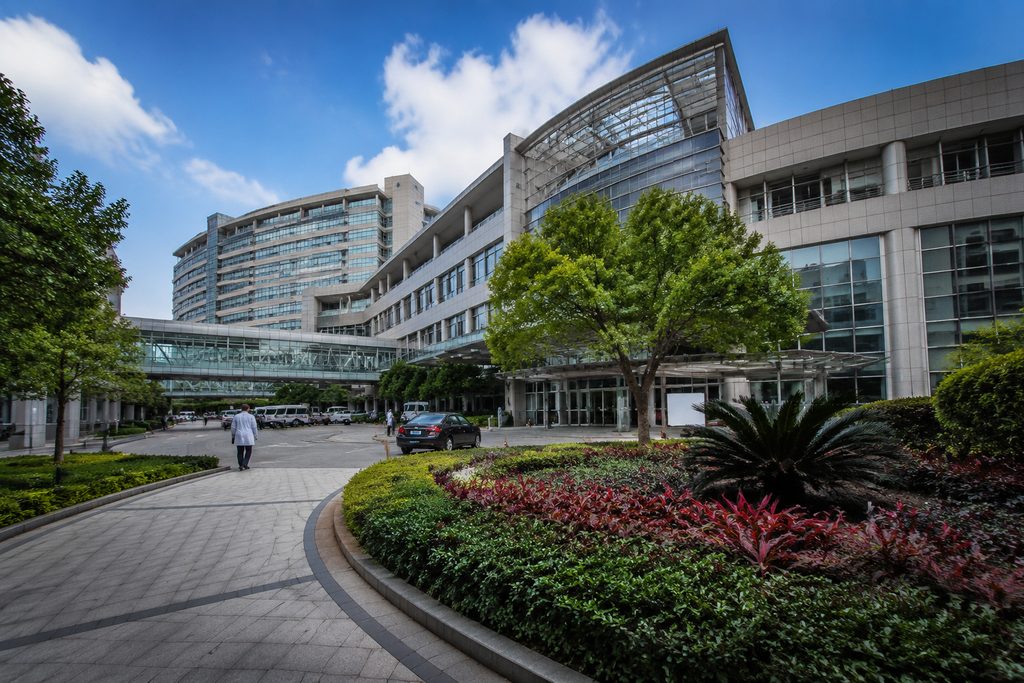
Renji Hospital, affiliated with Shanghai Jiao Tong University School of Medicine, is not a private boutique clinic. It is a massive public teaching hospital with over 2,000 beds across multiple campuses in Shanghai. Founded in 1844, it carries the weight of history — but the facilities are thoroughly modern. The hospital consistently ranks in the top 15 nationwide in the Fudan University Hospital Rankings, China’s most authoritative hospital evaluation system. Two departments stand out: gastroenterology and urology. Both rank among the top three in China.
For international patients asking is Renji Hospital good for gastroenterology, the answer sits in the data. The department is the largest digestive disease center in China by clinical volume. It is also a World Endoscopy Organization (WEO) training center — one of only a handful in Asia. That designation matters. It means the department trains endoscopists from other countries, not just China.
Gastroenterology: Volume, Speed, and Diagnostic Precision
The gastroenterology department handles more than 130,000 endoscopic procedures each year. That is roughly 350 procedures per day. A typical US community hospital might perform 5,000 to 8,000 endoscopies annually. The volume gap is not just a number — it translates into pattern recognition. Endoscopists who see rare presentations weekly, rather than yearly, catch subtle lesions earlier.
The department specializes in early gastric cancer detection, inflammatory bowel disease management, and advanced endoscopic resection techniques. Endoscopic submucosal dissection (ESD), a technique that removes early-stage tumors without open surgery, is performed here at a scale few Western centers match. The complication rate for ESD at Renji’s GI department hovers below 2%, consistent with top Japanese and Korean centers.
Liver disease management is another pillar. China carries a heavy hepatitis B burden, which means hepatologists at Renji manage complex cirrhosis and liver cancer cases daily. For patients with NASH or autoimmune liver conditions, that depth of experience is hard to replicate elsewhere.
A Renji Hospital gastroenterology price list varies by procedure complexity. A standard diagnostic gastroscopy and colonoscopy package typically ranges from ¥2,500 to ¥4,500 (approximately $350–$630 USD). Advanced therapeutic procedures like ESD run ¥15,000 to ¥40,000 ($2,100–$5,600 USD), depending on lesion size and location. These are cash prices — international patients pay upfront, and reimbursement depends entirely on your home insurance policy.
Urology: Robotic Surgery and Stone Management at Scale
The Renji Hospital urology department international patients encounter is one of China’s largest urology centers. The department performs over 12,000 surgeries annually. Robotic-assisted procedures using the da Vinci system exceed 1,000 per year — mostly radical prostatectomies and partial nephrectomies.
Prostate cancer outcomes tell the story. Five-year biochemical recurrence-free survival after robotic prostatectomy at Renji exceeds 85% for intermediate-risk patients, according to published departmental data. That aligns with outcomes from major US academic centers. The difference is volume: the department’s lead surgeons each complete 200-300 robotic prostatectomies annually, compared to a median of 40-60 for US urologists.
Kidney stone management is another strength. The department runs a dedicated stone center with shockwave lithotripsy, ureteroscopy, and percutaneous nephrolithotomy all under one roof. Complex staghorn calculi that might require staged procedures elsewhere are often cleared in a single session here — a function of sheer repetition.
Renji Hospital urology treatment cost Shanghai pricing follows a similar pattern to gastroenterology. A robotic prostatectomy runs approximately ¥80,000 to ¥120,000 ($11,200–$16,800 USD). A standard ureteroscopy with laser lithotripsy for kidney stones costs ¥15,000 to ¥25,000 ($2,100–$3,500 USD). For context, the same robotic prostatectomy in the US averages $35,000 to $50,000 — and that is negotiated insurance rates, not sticker prices.
What You Need to Know Before Going Alone
The clinical quality is real. The barriers are also real. Walking into Renji Hospital without preparation is not like walking into a Western private hospital. Here is what catches international patients off guard:
- Language Barrier: Almost all clinical staff speak Mandarin only. Medical records, consent forms, and discharge summaries are in Chinese. Some senior physicians speak English, particularly in urology where international collaboration is common, but relying on this is risky. You need an interpreter who understands medical terminology — not just conversational Mandarin.
- Payment System: Renji Hospital requires upfront deposit payments for inpatient procedures. The deposit for a major surgery can be ¥50,000 to ¥100,000 ($7,000–$14,000 USD). WeChat Pay and Alipay dominate; international credit cards are sometimes accepted but not reliably. Wire transfers take days to clear. The hospital does not direct-bill foreign insurance companies.
- Appointment Logistics: Figuring out how to book appointment at Renji Hospital Shanghai without local help is genuinely difficult. The hospital’s official WeChat mini-program is the primary booking channel — and it is entirely in Chinese. Specialist consultations book out weeks in advance. Walk-in appointments for top specialists are not a thing.
- Medical Records Transfer: Renji requires translated and notarized copies of your medical records before certain procedures. Pathology slides need physical transfer and re-reading by the hospital’s pathology department. This alone can add two to three weeks to your timeline.
How We Help You Navigate This
These barriers exist for structural reasons, not malice. Chinese public hospitals serve a domestic population of 1.4 billion people. International patient services are not their primary design function. That is where we come in.
We help you understand which department and which specialist matches your condition — based on published research output, surgical volume data, and peer reputation, not marketing materials. We connect you with the right contact channels at the hospital, including direct department liaison numbers that are not publicly listed in English. We explain exactly what documents you need, in what format, and how to get them to the right person before you book a flight.
We also help you think through the full cost picture — not just the procedure itself, but the deposit requirements, the hospital stay costs, the post-discharge accommodation if you need to remain in Shanghai for follow-up. Some patients explore Renji Hospital Shanghai medical tourism package options through third-party facilitators, but we caution careful vetting — many packages bundle unnecessary services at inflated margins. We help you separate what is essential from what is padding.
If Renji is not the right fit — perhaps you need a hospital with full English-language nursing staff and direct insurance billing — we can point you toward private international hospitals in Shanghai that offer a different experience at a different price point. The right choice depends on your priorities: clinical subspecialty depth versus service convenience.
Frequently Asked Questions
In terms of procedural volume and early cancer detection rates, yes — Renji’s GI department operates at the top tier globally. The department’s ESD outcomes and IBD management protocols are published in major international journals. The trade-off is the patient experience: shared wards are common, nursing ratios are lower than Western private hospitals, and communication requires an interpreter. Clinical quality is high. Service quality is different.
A standard diagnostic package typically bundles the procedure fee, sedation, pathology biopsy, and a brief post-procedure observation stay. It does not include pre-procedure consultations, translator fees, or medications prescribed after discharge. Advanced therapeutic procedures are quoted case by case after the initial consultation. Always request a written cost estimate in Chinese and have it translated before paying any deposit.
The most reliable route is through the hospital’s international medical center, which handles a limited number of foreign patients. Contact is typically by phone or WeChat — both require Mandarin proficiency. Alternatively, some patients work through independent medical facilitators who handle scheduling, translation, and payment logistics. We help you identify legitimate contact channels and avoid intermediaries that inflate costs without adding value.
Renji Hospital carries standard Chinese medical liability insurance. Malpractice claims involving foreign patients are legally complex and fall under Chinese jurisdiction. The hospital has an internal patient complaint and mediation process. Realistically, international patients should carry their own medical travel insurance that includes complication coverage and medical evacuation. We strongly recommend this — not because complications are likely, but because the financial consequences of being unprepared are severe.
Packages exist, but they vary enormously in quality. Some are legitimate all-inclusive arrangements covering hospital fees, accommodation, and interpreter services. Others are thinly veiled commission schemes that steer patients toward unnecessary add-ons. We recommend understanding the component costs first — hospital fees, accommodation, translation — before evaluating whether a packaged price is fair. Transparency is your best protection.
Your Next Step
Renji Hospital’s gastroenterology and urology departments offer genuine clinical excellence at costs that compare favorably to Western alternatives. The question is not whether the medicine is good — it is whether the logistical complexity is manageable for your specific situation. Some patients thrive in this environment with proper preparation. Others are better served by exploring the full range of China’s top-ranked hospitals to find a better fit. Our role is to give you the information you need to make that call with confidence. If you are ready to explore what treatment at Renji — or another Chinese center — would actually look like for your condition, tell us what you need. We will help you find the right option at no charge.
For more medical information and treatment options in China, visit tochinamed.com (ToChinaMed).