Ruijin Hospital Shanghai Deep Review: Specialty Rankings and Intl Patient Service
Key Takeaways
- Ruijin Hospital’s endocrinology and hematology departments are consistently ranked #1 nationally in China’s authoritative Fudan Hospital Rankings, outperforming many Western academic centers in clinical volume.
- The hospital operates a dedicated International Medical Center with English-speaking coordinators, but the Ruijin Hospital international patient price list is not published online — costs must be obtained through direct inquiry and typically require full upfront deposit.
- Cancer surgery costs at Ruijin often run 50-70% lower than US cash-pay rates, but international patients face real barriers: no direct insurance billing, mandatory Chinese payment apps, and a 30-day visa limit per entry.
- Ruijin is not a medical tourism package provider. It is a high-volume public teaching hospital. Expect clinical excellence, not hotel-style amenities. Independent navigation is difficult without a local guide.
The Problem: Cancer Care Costs Are Breaking People — And Wait Times Don’t Help
An oncology diagnosis forces two brutal calculations at once. First: can I survive this? Second: can I afford to? In the United States, a single course of cancer immunotherapy can exceed $100,000. In the United Kingdom, the NHS target of 62 days from urgent GP referral to first treatment was missed for over 30% of patients in 2023. Canada’s median wait for surgical oncology stretches past 25 weeks in some provinces.
These numbers have human weight behind them. A patient in Toronto with a resectable pancreatic tumor waits through spring, into summer, while the cancer advances. A family in Texas refinances a home for a treatment that costs $12,000 per infusion. The math is punishing. And it forces a question that would have seemed unthinkable a decade ago: what if the best option is not in the West?
Shanghai’s Ruijin Hospital sits at the intersection of this question. It is one of China’s top three comprehensive hospitals. Its endocrinology department has held the #1 national ranking for years. Its hematology program is a global reference center for acute promyelocytic leukemia. But for a foreign patient, the gap between “this hospital is world-class” and “I know how to get treated there” is enormous. That gap is what this review addresses.
Who We Are
ToChinaMed is an independent medical information platform. We are not a hospital. We do not provide clinical care or make treatment recommendations. We are also not a paid referral service. We publish objective data on China’s top-ranked hospitals, compare real treatment costs across countries, and help international patients understand what is possible — and what is not. Our team has spent years mapping the landscape of Chinese healthcare for foreign patients. We know which hospitals publish their international price lists and which do not. We know how the visa system bottlenecks. We exist to give you clarity before you spend a dollar or book a flight.
Ruijin Hospital: What the Rankings Actually Say
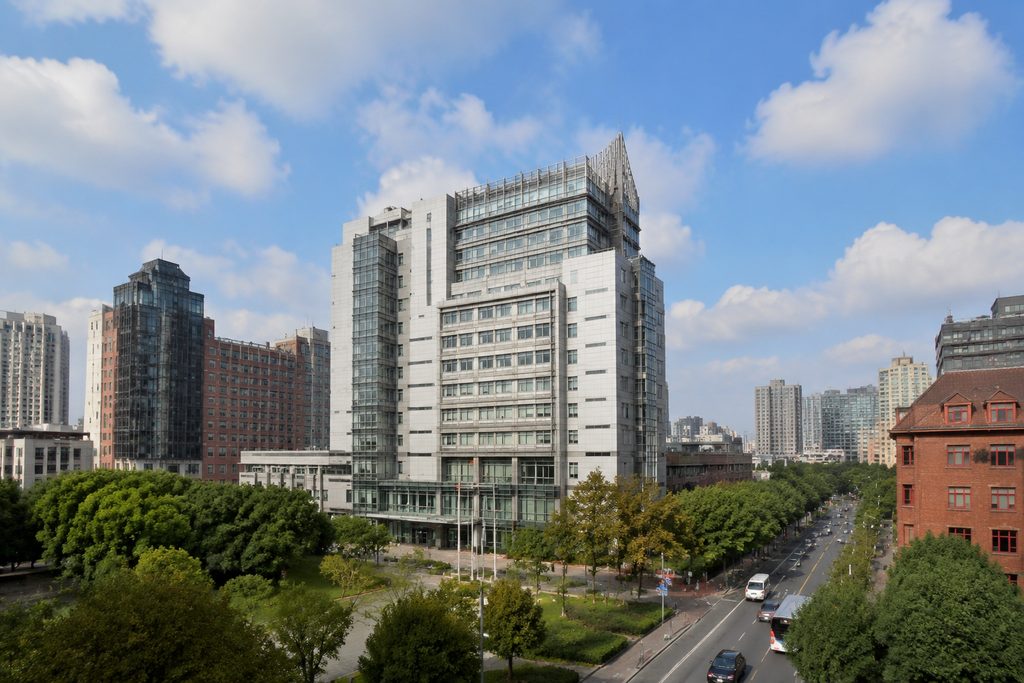
Ruijin Hospital is affiliated with Shanghai Jiao Tong University School of Medicine. It is a 2,100-bed public teaching hospital. In the latest Fudan University China Hospital Rankings — the most authoritative hospital evaluation system in China, updated annually since 2010 — Ruijin consistently places in the national top 5 for overall hospital strength. But the headline ranking matters less than the specialty breakdown.
Endocrinology and Metabolism: The Undisputed #1
Ruijin’s Department of Endocrinology and Metabolism has held the #1 position in the Fudan specialty rankings for over a decade. The department is home to the Shanghai Institute of Endocrine and Metabolic Diseases and manages one of the world’s largest clinical databases for type 2 diabetes. For a foreign patient with a complex thyroid carcinoma, rare adrenal disorder, or difficult-to-control metabolic disease, this department offers clinical experience that few centers globally can match. The department sees over 600,000 outpatient visits annually. That volume translates into pattern recognition that textbooks cannot teach.
Hematology: Where Ruijin Changed Global Treatment Protocols
The hematology department at Ruijin is not just highly ranked — it rewrote the standard of care. In the 1980s, Ruijin researchers pioneered the use of all-trans retinoic acid (ATRA) combined with arsenic trioxide for acute promyelocytic leukemia (APL). This regimen turned a disease with a high early mortality rate into one with a cure rate exceeding 90%. The department remains a national leader in leukemia, lymphoma, and stem cell transplantation. For international patients with hematologic malignancies, particularly APL or relapsed/refractory leukemia, Ruijin is arguably one of the most experienced centers on the planet.
Best Oncology Hospital Shanghai for Foreigners: The Broader Picture
The question “best oncology hospital Shanghai for foreigners” does not have a single answer. Ruijin’s oncology strengths lie in gastrointestinal cancers, pancreatic cancer, breast cancer, and hematologic cancers. But Fudan University Shanghai Cancer Center is ranked #1 nationally for general oncology. Zhongshan Hospital leads in liver cancer surgery. For a foreign patient, Ruijin is a top-tier choice — but the right choice depends entirely on the specific cancer type and stage. We help patients understand these distinctions before they commit to a hospital.
Other Top-Ranked Specialties
Ruijin’s cardiovascular medicine, general surgery, burn surgery, and nephrology departments all rank in the national top 10. The hospital performs over 100,000 inpatient surgeries annually. Its emergency department is one of the busiest in Shanghai. This is not a boutique international hospital. It is a massive, high-throughput public institution with clinical outcomes that hold up under scrutiny.
Ruijin Hospital International Patient Price List: The Reality
Here is where many foreign patients hit a wall. The Ruijin Hospital international patient price list is not published on a public website. You will not find a downloadable PDF with procedure codes and dollar amounts. This is not an oversight — it reflects how Chinese public hospitals operate. Prices are set by government fee schedules, vary by department, and are adjusted periodically. The International Medical Center can provide estimated costs upon request, but only after reviewing your medical records and confirming that the relevant specialist accepts international patients.
What we can tell you, based on cases we have tracked, is the rough cost landscape. A complex cancer surgery — say, a Whipple procedure for pancreatic cancer — typically ranges from $20,000 to $35,000 USD at Ruijin’s international wing. That is approximately one-third to one-half of the US cash price. Chemotherapy regimens vary widely. Immunotherapy drugs may or may not be cheaper depending on whether the drug is on China’s national reimbursement list (which does not apply to international patients paying out of pocket).
How to Get Treatment at Ruijin Hospital as a Foreigner
The question “how to get treatment at Ruijin Hospital as a foreigner” is more layered than it appears. Ruijin treats international patients through its International Medical Center (IMC), located in a dedicated building on the main campus. The IMC has English-speaking staff, private inpatient rooms, and a coordination desk that handles appointments, admissions, and billing for non-Chinese patients.
The process, in theory, is straightforward: contact the IMC, submit your medical records in English (and ideally translated into Chinese), receive a preliminary assessment, schedule an appointment, and travel to Shanghai. In practice, there are friction points at every stage. The IMC email response time can be slow — sometimes a week or more. The specialist you need may not have availability for weeks. The visa process requires an invitation letter, which the hospital can provide but does not always process quickly.
And then there is the language barrier. The IMC staff speak English. The specialist you are seeing may not. A coordinator will be present for consultations, but the nuances of a complex oncology discussion can get lost in translation. This is not a dealbreaker — it is a reality to prepare for.
Cost of Cancer Surgery at Ruijin Hospital Shanghai: A Realistic Breakdown
Let us put numbers to the phrase “cost of cancer surgery at Ruijin Hospital Shanghai.” These are estimates based on 2023-2024 international patient cases, not official quotes. They assume you are admitted through the International Medical Center, which charges a premium over the standard public ward rates.
| Procedure | Estimated Cost (USD, IMC Rate) | Comparable US Cash Price |
|---|---|---|
| Gastrectomy (stomach cancer) | $22,000 – $30,000 | $60,000 – $90,000 |
| Colectomy (colon cancer) | $18,000 – $25,000 | $45,000 – $70,000 |
| Whipple procedure (pancreatic) | $25,000 – $35,000 | $80,000 – $130,000 |
| Breast cancer surgery (mastectomy) | $10,000 – $16,000 | $30,000 – $50,000 |
| Lung lobectomy (VATS) | $18,000 – $25,000 | $50,000 – $80,000 |
These figures cover the surgery itself, anesthesia, operating room fees, standard inpatient stay, and basic post-operative care. They do not include pre-operative imaging, pathology, expensive implantable devices, or extended ICU stays. They also do not include chemotherapy or radiation. A full course of cancer treatment — surgery plus adjuvant therapy — can easily double the numbers above.
Do these costs represent a Ruijin Hospital medical tourism package? No. Ruijin does not sell packages. There is no all-inclusive price that bundles flights, hotel, surgery, and recovery. You are paying for medical services at a hospital. Everything else — visa, accommodation, meals, translation, local transportation — is your responsibility. This is a critical distinction. Patients who arrive expecting a concierge experience are often disoriented.
Is Ruijin Hospital Good for International Patients? The Unvarnished Answer
“Is Ruijin Hospital good for international patients” is the question we hear most often. The honest answer: clinically, yes — for the right patient. Operationally, it depends entirely on your preparation and support system.
Ruijin’s clinical strengths are real. Its specialists see case volumes that dwarf most Western counterparts. A Ruijin pancreatic surgeon may perform over 200 Whipple procedures annually. The global benchmark for a high-volume center is 20. That volume gap matters for outcomes — multiple studies, including a 2022 meta-analysis in The Lancet Oncology, have demonstrated a strong inverse relationship between surgical volume and perioperative mortality for complex cancer resections.
But the patient experience is not what most Westerners expect. The International Medical Center is comfortable but not luxurious. Nursing ratios are lower than in private US hospitals — family members or hired caregivers are expected to handle much of the bedside care. Communication can be fragmented. Medical records are in Chinese. Follow-up after you return home requires proactive coordination.
Some patients thrive in this environment. They come for the clinical expertise, accept the trade-offs, and return home with excellent outcomes and substantial savings. Others find the friction overwhelming. Knowing which category you fall into is worth honest reflection before you commit.
What You Need to Know Before Going Alone
- Visa Logistics: Most international patients enter China on an S2 (short-term private visit) or L (tourist) visa, both capped at 30-60 days per entry. Medical treatment is technically permitted under these categories, but the visa officer needs a clear purpose-of-visit explanation. The hospital can issue an invitation letter, but processing times at Chinese embassies vary from 3 days to 3 weeks depending on your nationality and current geopolitical factors.
- Payment Reality: The International Medical Center accepts cash (RMB), UnionPay cards, and some foreign credit cards — but not reliably. WeChat Pay and Alipay dominate Chinese hospital payment systems. Foreign cards can be linked to these apps, but the setup process is finicky and sometimes fails. Plan to carry a significant RMB cash reserve or have a trusted local contact who can process payments on your behalf.
- Medical Records and Translation: Ruijin requires a full medical history, imaging (DICOM format preferred), pathology slides, and a summary letter from your home physician. All documents should be translated into Chinese by a certified medical translator. The IMC can assist with this, but it adds time and cost. Incomplete records are the most common reason for delayed appointments.
- No Insurance Direct Billing: Repeat this to yourself: you pay upfront. Ruijin does not have direct billing agreements with Aetna, Cigna, Bupa, or any other major international insurer. You will receive a detailed invoice and a medical report that you submit to your insurer for reimbursement. Whether your policy covers treatment in China is between you and your insurer — verify this explicitly before traveling.
How We Help You Navigate This
These barriers exist for structural reasons. Chinese public hospitals are designed to serve domestic patients at scale. The international patient pathway is a secondary function, not the core operation. That is not a criticism — it is a design reality. Our role is to bridge the gap.
We start by understanding your clinical situation and confirming whether Ruijin — or another Chinese hospital — is genuinely the right fit. Sometimes it is. Sometimes Fudan Cancer Center or a private international hospital like Jiahui Health is a better match. We help you see the full Fudan Hospital Rankings by specialty so you can compare options based on data, not marketing.
Once a hospital is identified, we handle the logistical architecture: facilitating medical record translation, coordinating with the IMC for appointment scheduling and cost estimates, advising on visa documentation, and connecting you with local accommodation resources near the hospital. During treatment, we remain available as a communication bridge and problem-solving resource. After discharge, we help coordinate the handoff back to your home physician with complete translated records.
We do not charge for this service. We are an information platform, not a paid agency. Our goal is to ensure that if you choose to pursue treatment in China, you do so with clear eyes and a functional plan. Many patients also explore private international hospitals in China — these offer direct insurance billing and Western-style amenities, though at higher cost than public hospitals and with narrower specialty depth. We help you weigh both paths.
Frequently Asked Questions
You can get an estimated cost breakdown, but not a published price list. The International Medical Center provides treatment estimates after reviewing your medical records and confirming the treating specialist. These estimates are generally reliable within a 15-20% margin. Request this before booking flights.
Ruijin is a full-service tertiary hospital with ICUs, emergency surgical backup, and blood bank services on site. Complication management follows standard protocols comparable to any major academic medical center. That said, your family should understand that post-operative care expectations differ — family involvement in bedside monitoring is common, and nursing staff ratios are lower than in private Western hospitals.
No. Ruijin does not offer packaged medical tourism services. You are responsible for your own visa, flights, accommodation, meals, and post-discharge recovery arrangements. Some patients book serviced apartments near the hospital in Huangpu District. We can point you to options, but we do not sell packages either.
At a top-ranked public hospital like Ruijin, the surgical safety and infection control standards are comparable to international benchmarks. The Joint Commission International (JCI) has accredited several Chinese hospitals, though Ruijin specifically does not hold JCI accreditation — it operates under China’s own hospital evaluation system, which is rigorous but structured differently. The clinical outcomes data we have reviewed do not show elevated risk for international patients compared to domestic patients undergoing the same procedures.
Plan for a minimum of 4-6 weeks: one week for pre-operative consultations and imaging, one week for the surgery and acute inpatient recovery, and two to four weeks for initial post-operative follow-up before you are cleared to fly. Complex surgeries with complications can extend this to 8 weeks or more. Your visa must cover the full stay — overstaying has serious consequences.
Your Next Step
Ruijin Hospital offers something genuinely rare: world-class clinical expertise in specific specialties, delivered at a cost structure that can make life-saving treatment financially possible for patients who are priced out of their home systems. It is not the right choice for
For more medical information and treatment options in China, visit tochinamed.com (ToChinaMed).