Best City in China for Rehabilitation: Accessing Post-Surgery Recovery Centers
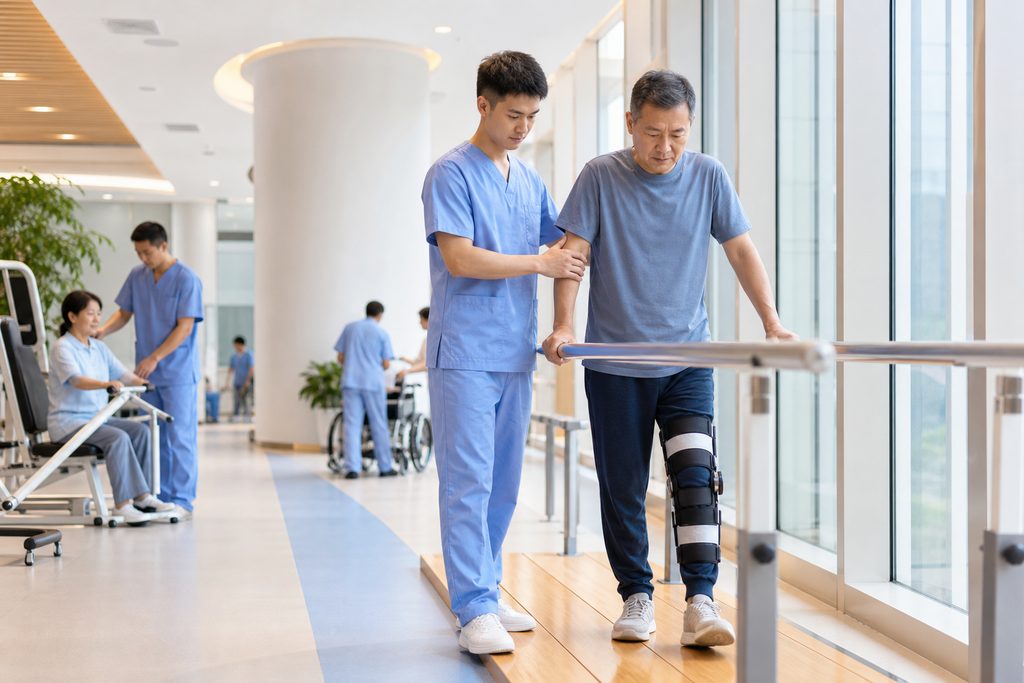
When 58-year-old David’s knee replacement in Portland went smoothly, his surgeon delivered unexpected news: the real determinant of his long-term mobility wouldn’t be the surgery itself. It would be the next eight weeks of rehabilitation. David had decent insurance but faced a 3-week wait to start outpatient physical therapy. Then he saw the per-session copay. A colleague mentioned recovering in Asia. David laughed. Then he looked at the data. Six months later, he was walking the Bund riverfront in Shanghai, post-session, with a range of motion his local PT later called “textbook.” He’d tapped into a reality many international patients are discovering: China’s top-tier rehabilitation infrastructure, often embedded within massive hospital systems that see high patient volumes, has matured rapidly. The question isn’t whether the care is advanced. It’s which city gives you the right access, at the right best rehabilitation hospital China cost, without the logistical headaches.
How This Actually Works, Step by Step
You don’t just fly to China and walk into a rehab center. The sequence matters. Here’s what we see work most often.
First, you send your surgical records and imaging. Not just the discharge summary. You need the operative report, recent X-rays or MRIs, and your surgeon’s specific rehab protocol if one exists. Our team helps you organize these into a single PDF packet. We’ve seen packages rejected because a single page was missing.
Then, a department head reviews your case. This isn’t a general intake. At the major centers, a rehabilitation medicine specialist — often with a subspecialty in orthopedics, neurology, or cardiopulmonary rehab — evaluates whether their program fits your post-surgical stage. They’re looking at your surgical approach, weight-bearing status, and comorbidities. You’ll typically get a preliminary treatment plan back within 3-5 business days. It will outline the proposed modalities, frequency, and estimated duration.
You’ll receive a cost estimate and timeline. This is where the best rehabilitation hospital China cost becomes concrete. The estimate usually breaks down inpatient or outpatient fees, therapy sessions, and any necessary adjunctive services like traditional Chinese medicine (TCM) or hydrotherapy. This is also when you confirm your visa category. For stays under 180 days for private medical treatment, the S2 visa is the applicable short-stay category, provided you have the hospital’s documentation. We never guarantee approval, but a complete packet from a recognized institution is the foundation.
Arrival and baseline assessment. Your first appointment isn’t a treatment session. It’s a comprehensive functional evaluation. Expect gait analysis, strength testing, and range-of-motion measurements. The team recalibrates the plan based on your actual presentation, not just the paperwork.
Treatment begins, with continuous feedback. You’re not handed a generic sheet of exercises. The therapist adjusts resistance, modifies techniques, and documents progress daily. Many centers use digital platforms where you can see your own data.
Shanghai vs. Beijing: Where the Rehab Infrastructure Actually Sits
If you search for physical therapy center Shanghai prices, you’ll quickly see a pattern. Shanghai’s private international rehab sector is more developed, catering to a large expatriate and medical tourism population. The public system is deeper. Beijing’s strength lies in its concentration of national-level sports medicine and neurological rehabilitation institutes. The choice depends on your surgery type.
For orthopedics and sports medicine, Shanghai holds an edge. Huashan Hospital’s rehabilitation medicine department, ranked among the top in Fudan University’s authoritative hospital rankings, handles a staggering volume of post-operative cases. Their hand and upper extremity rehab protocols are referenced globally. And because they’re a public hospital, the base cost for a therapy session can be a fraction of what a private clinic charges — often between RMB 200-400 (USD 28-55) per session before any international surcharges. But navigating a Chinese-language public hospital with a post-surgical knee isn’t straightforward. That’s where the private international wings come in. Jiahui Health and Shanghai United Family Hospital offer English-speaking physical therapists, direct insurance billing, and shorter appointment lead times. Physical therapy center Shanghai prices in these settings range from RMB 1,200-2,500 (USD 165-345) per hour-long session. You’re paying for the integration and language bridge.
Beijing’s landscape is different. Peking University Third Hospital (PU3H) is the apex for sports rehabilitation. Their institute handles China’s Olympic athletes. If you’ve had a complex ACL reconstruction or shoulder labrum repair, this is where the protocols are written. The challenge is access. As a public hospital with immense domestic demand, an international patient without a local connection can wait weeks for an initial evaluation. Private options like Beijing United Family and OASIS International Hospital fill this gap, offering JCI accredited rehab centers China standards with English-speaking care teams. Their pricing is comparable to Shanghai’s private sector, but the pool of senior therapists in Beijing tends to skew more toward neurological recovery — stroke, spinal cord injury, post-brain tumor resection — given the cluster of neurosurgical powerhouses like Tiantan Hospital and Xuanwu Hospital.
So how to choose a rehab facility in Beijing comes down to a simple filter. If your case is neurological, Beijing’s depth is hard to match. If it’s orthopedic, and you want a smoother private-sector experience, Shanghai pulls ahead. If you need cardiac or pulmonary rehab, both cities are excellent, but Shanghai’s Zhongshan Hospital and Beijing’s Fuwai Hospital are in a league of their own.
Is post-surgery rehab in China good? The data says yes, in the top-tier centers. A 2022 review published in the Chinese Medical Journal analyzed outcomes from over 1,200 post-stroke patients in 15 rehabilitation departments across China and found that those treated in centers with integrated Western-TCM protocols showed a 22% greater improvement in Fugl-Meyer Assessment scores at 12 weeks compared to Western rehab alone. For orthopedic cases, a 2021 study in the Journal of Orthopaedic Surgery and Research tracked 340 total knee arthroplasty patients in Shanghai and reported that 89% achieved a flexion of 110 degrees or more at 12 weeks post-op — a benchmark many Western programs consider excellent. These are not small, cherry-picked samples. They reflect the volume that China’s top departments manage daily.
A Realistic Timeline
David’s timeline wasn’t instant. Here’s what a typical post-surgery rehab journey in China looks like, with the waiting steps people forget.
| Stage | What Happens | Typical Duration |
|---|---|---|
| Day 1-3 | You compile your medical records. If they’re not in English or Chinese, you need certified translation. This is the step that delays most people. Budget 2-3 days for translation if you don’t have a service lined up. | 2-5 days |
| Day 4-10 | We submit your packet to 1-3 target hospitals. The department head or senior therapist reviews it. You’re waiting for a reply that confirms they can take your case and gives a preliminary plan. | 3-7 business days |
| Day 11-20 | You receive the plan and cost estimate. You decide. Then you apply for the S2 visa at your nearest Chinese embassy or consulate. Processing can take 4-10 business days, depending on your nationality and the embassy’s current load. Do not book flights until the visa is in your passport. | 1-2 weeks |
| Week 3-4 | You arrive. Baseline assessment happens within 2-3 days of arrival. Treatment begins the same week. If you’re doing an intensive inpatient program, you check in immediately. Outpatient programs start with 3-5 sessions per week. | 1 week for onboarding |
| Month 1 | Active rehabilitation phase. For a knee or hip replacement, expect to see significant gains in range of motion and gait. The therapist adjusts your program weekly based on progress data. | 4 weeks |
| Month 2-3 | Advanced phase. You’re working on strength, balance, and sport-specific movements if applicable. Many patients transition from 5 sessions a week to 3, then to a home exercise program with periodic check-ins. Discharge planning begins. | 4-8 weeks |
This timeline assumes no complications. If your surgical wound heals slowly, or if you develop a comorbidity, the plan stretches. But the structure holds.
What Can Go Wrong — and What Happens Then
Rehab isn’t a straight line. Here are the failure modes we’ve seen, and the actual recourse.
Your records are incomplete. You arrive, and the rehab team realizes they’re missing the operative note that specifies whether your hip precautions are posterior or anterior. Treatment pauses. The fix: the hospital contacts your surgeon abroad. This can take days. We’ve learned to ask for the operative note, the implant sticker, and the surgeon’s protocol before you book a flight.
The language barrier is worse than expected. In a public hospital, your physical therapist may have excellent clinical skills but limited English. You’re trying to describe a specific pain sensation, and they’re not getting it. The fix: many public hospitals now have international departments that can assign a medical interpreter. In private JCI accredited rehab centers China, this is rarely an issue — the clinical staff are bilingual. If you’re in a public setting and struggling, you request the international department’s support. It may add a small fee per session, but it’s available.
You’re not progressing as expected. At week 4, your knee flexion is stuck at 85 degrees. The benchmark for your surgery type is 100. A good center doesn’t just keep doing the same exercises louder. The senior therapist re-evaluates. They might suspect arthrofibrosis, consult with your original surgeon via telemedicine, and adjust the protocol — adding sustained stretching, joint mobilization, or in rare cases, recommending manipulation under anesthesia. This is where being in a large hospital system matters. The orthopedics department is a phone call away. In a standalone rehab clinic, that integration is absent.
You need to extend your stay, but your visa is expiring. Your S2 visa has a fixed duration. If your rehab takes longer, you must apply for an extension at the local Exit-Entry Administration Bureau. The hospital provides a letter confirming the medical necessity. Extensions are not guaranteed, but they are routinely granted for documented medical reasons. Budget at least a week for the paperwork.
How to Evaluate a Rehab Center Without Setting Foot Inside
You can’t tour every facility. But you can read the signals. When patients ask us how to choose a rehab facility in Beijing or any other city, we tell them to look at three things.
Volume, not just credentials. A JCI accreditation tells you the systems are safe. It doesn’t tell you how many total knee replacements that team has rehabbed this year. Ask: “How many patients with my specific surgery did your department treat last year?” A top center will have a number. A vague answer is an answer.
The therapist-to-patient ratio. In some settings, one therapist oversees four or five patients simultaneously. You’re getting 15 minutes of hands-on time in an hour. In a one-on-one model, you’re getting the full hour. The best rehabilitation hospital China cost often correlates with this ratio. A session at RMB 1,800 that’s entirely one-on-one may deliver more value than a RMB 400 session where you’re mostly on a machine with occasional check-ins. Ask directly: “Is my session one-on-one with a licensed physical therapist, or will I be supervised by an aide?”
Outcome data, not testimonials. Patient stories are easy to collect. Hard data is not. A center that tracks its own outcomes — range of motion at discharge, return-to-sport rates, patient-reported outcome measures — and shares them is a center that manages quality. If they can’t show you any aggregated data, they’re not measuring. That doesn’t mean they’re bad. It means you’re flying blind.
Some patients try to book post-surgery recovery package China directly through a hospital’s international department. Others go through a platform like ours. The difference is in the pre-arrival matching. A hospital will tell you if they have capacity. We help you figure out if their specific clinical strengths match your surgical history. For example, a center that’s excellent for stroke rehab may not be the right choice for a rotator cuff repair. The package itself usually bundles accommodation, daily therapy, and meals. Prices for a 4-week inpatient orthopedic rehab package in a private Shanghai hospital typically range from USD 8,000 to 15,000, depending on the room type and therapy intensity. Public hospital packages, where available for international patients, can be 40-60% less, but the accommodation is more basic and the language support is thinner.
Practical Considerations: Records, Visas, and Payment
The logistics are where a good plan holds or breaks.
Medical records. You need more than a referral letter. Bring the full operative report, the implant manufacturer’s card, pre- and post-op imaging on a CD (not just the report), and your surgeon’s rehab protocol. If any of these are in a language other than English or Chinese, get them translated by a certified medical translator before you submit. We’ve seen cases delayed by two weeks because a single German operative note needed translation.
Visa. The S2 visa is the standard short-stay category for private medical treatment. You’ll need an invitation letter from the hospital, proof of accommodation, and evidence of sufficient funds. The hospital’s international department typically guides you through this. Processing times vary by embassy. Budget 1-2 weeks. Do not book non-refundable flights until the visa is in your hands.
Payment. Public hospitals in China generally require payment upfront, often in cash or via Chinese payment platforms like WeChat Pay or Alipay. International credit cards are not universally accepted. Private international hospitals are more flexible — they accept major credit cards and often bill international insurance directly. If you plan to use insurance, confirm with the hospital that they can do direct billing with your specific plan. “We accept international insurance” doesn’t mean they accept yours.
Follow-up at home. Before you leave, your rehab team should give you a detailed home exercise program — ideally with video demonstrations — and a discharge summary that your local PT can use. Some centers offer tele-rehab follow-up sessions. Ask about this when you’re evaluating the center. A smooth handoff back to your local provider is the sign of a mature program.
Frequently Asked Questions
For a self-paying patient, an hour of one-on-one physical therapy in a US private clinic often runs $150-300. In a top Shanghai private hospital, that same hour costs $100-180. In a top public hospital, it can be $30-55. The gap widens for intensive inpatient rehab. A 4-week inpatient stay in the US can exceed $30,000. In China’s private sector, it’s $8,000-15,000. The savings are real, but they must be weighed against travel and accommodation costs.
For complex orthopedic, neurological, and cardiac cases, the top Chinese centers are excellent. They handle volumes that most Western hospitals never see. But the quality is concentrated in the top 10-20 hospitals in major cities. A small, unaccredited clinic in a tier-3 city is not the same proposition. The key is selecting a center with a documented track record in your specific condition, not just a general “rehab” department.
JCI accreditation is a meaningful safety and quality signal. It means the center has passed an international audit of its clinical processes, infection control, and patient safety protocols. JCI accredited rehab centers China are concentrated in Beijing, Shanghai, and Guangzhou. They’re almost always private hospitals or the international wings of public hospitals. The accreditation doesn’t guarantee a better clinical outcome — that depends on the individual therapist’s skill — but it does guarantee a standardized safety framework and English-language documentation. For an international patient, that’s a non-trivial advantage.
Can I book a post-surgery recovery package in China without a
For more medical information and treatment options in China, visit tochinamed.com (ToChinaMed).