Zhejiang University First vs Second Affiliated Hospital: Hangzhou Compared
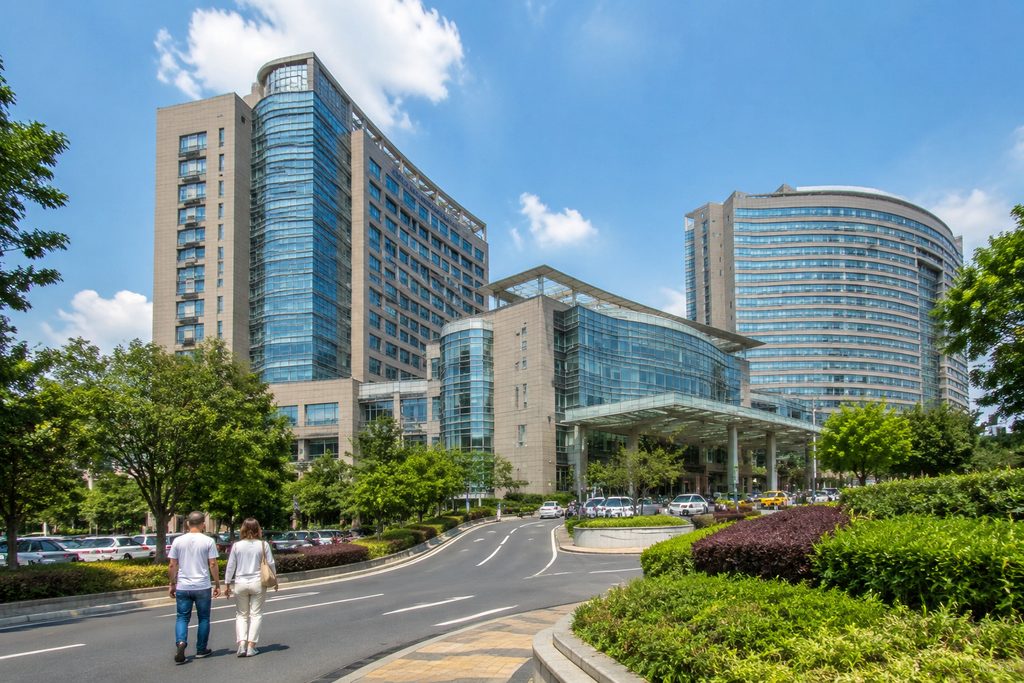
When 38-year-old software architect Daniel from Austin received a diagnosis of a complex liver lesion during a business trip to Hangzhou, his first reaction was confusion. Two hospitals kept appearing in every search: Zhejiang University First Affiliated Hospital and Zhejiang University Second Affiliated Hospital. Both carried the prestigious Zhejiang University name. Both claimed top-tier rankings. But which one should he trust with his care? For international patients unfamiliar with China’s hospital hierarchy, the distinction between these two institutions is rarely explained clearly. This comparison of Zhejiang University First Affiliated Hospital vs Second Affiliated international patient services breaks down what actually matters.
Key Takeaways
- First Affiliated (FAHZU) ranks consistently higher in the Fudan Hospital Rankings, placing in the national top 10 overall, while Second Affiliated (SAHZU) sits in the top 50.
- Both hospitals serve international patients, but First Affiliated has a dedicated International Medical Center with English-speaking coordinators and direct billing arrangements with major insurers.
- Neither hospital is JCI-accredited as of early 2025 — a fact that surprises many Western patients who assume JCI status is universal among top Chinese hospitals.
- Pricing at both institutions runs 60-80% below comparable US care, but First Affiliated’s international wing costs roughly 20-30% more than Second Affiliated’s standard international services.
The Problem: Choosing Between Two Names That Sound Nearly Identical
China’s affiliated hospital system confuses almost every foreign patient. A single medical university can operate a dozen hospitals, each with its own specialties, equipment, and service standards. The Zhejiang University system runs seven affiliated hospitals across Hangzhou. First and Second are the flagship institutions, but they are not interchangeable.
Data makes the stakes clear. China’s National Health Commission reports that foreign patients in Hangzhou grew by approximately 18% annually between 2019 and 2024. Many arrive with no referral, no understanding of the local system, and no way to evaluate which hospital fits their condition. A wrong choice can mean longer waits, language friction, or a specialist mismatch. Daniel’s case illustrates the problem: his liver lesion required hepatobiliary surgery, a specialty where First Affiliated holds a national top-5 ranking. Second Affiliated, while strong in cardiology and orthopedics, would not have been the optimal choice for his specific need.
Why Hospital Rankings Matter More Than Brand Recognition
Both hospitals carry the Zhejiang University name. That branding creates an illusion of parity. But the Fudan University Hospital Rankings — China’s most authoritative hospital assessment, published annually since 2010 — tells a different story.
Clinical Volume and Specialty Depth Drive Outcomes
First Affiliated Hospital of Zhejiang University School of Medicine (FAHZU) ranks in the national top 10 overall in the 2023 Fudan rankings. Its hepatobiliary and pancreatic surgery department ranks among the top 5 nationally. The hospital handles over 200,000 inpatient admissions and 4 million outpatient visits annually. Second Affiliated (SAHZU) manages approximately 150,000 inpatient admissions and 3 million outpatient visits. These volume differences translate directly into surgical experience. A surgeon at FAHZU performing 300 liver resections per year has encountered complications a surgeon performing 100 has never seen.
Volume is not everything. But for complex procedures, it correlates with outcomes. A 2022 study published in The Lancet Regional Health – Western Pacific analyzing 89 Chinese tertiary hospitals found that high-volume centers had 23% lower post-operative mortality for major abdominal surgery compared to low-volume centers. Both FAHZU and SAHZU qualify as high-volume. The gap between them is narrower than the gap between either and a typical Western community hospital.
International Patient Infrastructure: Where the Real Difference Lies
For foreigners asking how does Zhejiang University First Affiliated compare to Second Affiliated for foreigners, the answer comes down to infrastructure. FAHZU operates a standalone International Medical Center with 24/7 English-speaking coordinators, dedicated outpatient floors, and direct billing agreements with over 30 international insurers including Cigna, Aetna, and Allianz. SAHZU has an international clinic but operates it within its general outpatient department. Interpretation services at SAHZU rely more heavily on third-party agencies. Both hospitals offer English-speaking physicians in major departments, but FAHZU’s coordinator system is more mature.
That said, SAHZU has invested heavily in its international services since 2021. The hospital now offers WeChat-based English appointment booking and has expanded its international ward capacity by 40%. The gap is closing, though it has not closed.
Cost Advantage Without Quality Compromise
Many Western patients assume lower cost means lower quality. The structural reasons for China’s cost advantage contradict that assumption. Chinese hospitals operate on volume-based economics. A CT scan that costs $1,200 in the US costs approximately $150-200 at either FAHZU or SAHZU. An MRI runs $250-350. A complex liver resection that bills $80,000-120,000 in the US costs $15,000-25,000 at FAHZU. Labor costs explain much of the difference: Chinese surgeons earn a fraction of US surgeon salaries, and hospital administrative overhead is lower. Equipment is the same — both hospitals use Siemens, GE, and Philips imaging systems. The cost difference reflects economics, not inferior care.
Zhejiang University First Affiliated Hospital vs Second Affiliated: A Direct Comparison
For a patient asking is Zhejiang University Second Affiliated Hospital JCI accredited, the answer requires context. Neither SAHZU nor FAHZU holds JCI accreditation. JCI — Joint Commission International — is a US-based accreditation body. Chinese hospitals typically pursue accreditation from China’s National Health Commission hospital grading system instead. Both FAHZU and SAHZU hold the highest domestic grade: Class A Tertiary (三级甲等). That designation is the Chinese equivalent of a top-tier academic medical center. JCI accreditation is relatively rare in China; only about 100 Chinese hospitals hold it, mostly private international hospitals and a handful of public institutions. If JCI status is a hard requirement for your insurer or employer, neither hospital qualifies. You would need to look at private international hospitals in Shanghai or Beijing instead.
| Comparison Factor | First Affiliated (FAHZU) | Second Affiliated (SAHZU) |
|---|---|---|
| Fudan National Ranking (2023) | Top 10 overall | Top 50 overall |
| Annual Inpatient Admissions | 200,000+ | 150,000+ |
| Dedicated International Center | Yes — standalone building | Yes — within main outpatient |
| English Coordinator Team | 24/7, in-house | Business hours, in-house + third-party |
| Direct Billing Insurers | 30+ | 15+ |
| JCI Accreditation | No | No |
| Domestic Grade | Class A Tertiary | Class A Tertiary |
| Estimated MRI Cost (self-pay) | $250-350 | $200-300 |
| Estimated Complex Surgery Cost | $15,000-25,000 | $12,000-20,000 |
How to Book an Appointment at Zhejiang University First Affiliated Hospital Overseas
Patients outside China frequently ask how to book appointment Zhejiang University First Affiliated Hospital overseas. The process is straightforward but requires documentation. FAHZU’s International Medical Center accepts appointment requests via email or WeChat. You will need to submit a passport scan, a brief medical summary in English or Chinese, and any relevant imaging reports. The international coordinator reviews your case and typically responds within 2-3 business days with a proposed specialist and appointment window. For SAHZU, the process is similar but runs through the hospital’s international clinic email, with response times averaging 3-5 business days.
Neither hospital requires a local sponsor or referral letter from a Chinese physician. You do not need to be in China to book. However, both hospitals strongly recommend sending complete medical records before arrival so the specialist can review your case and determine whether an in-person visit is necessary. For second opinions, both hospitals offer remote consultation services, though FAHZU’s remote second opinion program is more established, with formal documentation and English-language reports.
What the Price List Actually Shows for Expats
Patients searching for a Zhejiang University hospital price list for expats often expect a fixed menu. That expectation is wrong. Chinese public hospitals do not publish standardized price lists for international patients. Instead, pricing follows a tiered system: Chinese citizens pay the domestic rate, while international patients pay an international rate that is typically 2-3 times the domestic rate but still far below Western prices. At FAHZU, an international outpatient consultation with a senior specialist costs approximately $80-150. At SAHZU, the same consultation runs $60-120. Blood tests, imaging, and procedures are priced separately and itemized on your bill.
One practical note: international patients at both hospitals must pay a deposit before admission. FAHZU’s standard deposit for surgical admission is approximately $5,000-10,000 depending on the procedure. SAHZU’s deposit ranges from $3,000-8,000. Unused funds are refunded at discharge. Payment methods include international credit cards, bank transfer, and WeChat Pay or Alipay linked to international cards. Cash is accepted but discouraged for large amounts.
Practical Considerations: Visas, Insurance, and Follow-Up
Medical travel to Hangzhou requires the right visa. China does not issue a specific “medical visa” for most patients. The S2 visa — a short-stay visa for private affairs — is the category typically used for medical treatment. You will need an invitation letter from the hospital confirming your appointment, along with your passport, visa application form, and a medical certificate from your home physician. Processing time varies by consulate but averages 5-10 business days. Neither FAHZU nor SAHZU guarantees visa approval; they provide the supporting documents you submit to the embassy or consulate.
Insurance is a separate matter. Both hospitals accept direct billing from major international insurers, but coverage depends on your specific plan. Some policies exclude treatment in China or require pre-authorization. Check with your insurer before booking. If your insurer does not have a direct billing agreement, you pay out of pocket and submit claims for reimbursement. Both hospitals provide itemized receipts and English-language medical reports suitable for insurance claims.
Follow-up after returning home is a real consideration. Both FAHZU and SAHZU offer remote follow-up consultations via video. Your Chinese physician will provide a discharge summary in English, including medication lists and recommended follow-up timelines. You share this with your home physician. The hospitals do not coordinate directly with foreign doctors; you act as the bridge. That is manageable but requires organization on your part.
Language is another factor. Hangzhou is not Shanghai. English proficiency among nurses and administrative staff is lower than at international hospitals in Shanghai or Beijing. FAHZU’s International Medical Center mitigates this with dedicated English-speaking staff. SAHZU’s international clinic has fewer English-speaking coordinators on duty at any given time. If you speak no Mandarin, FAHZU is the safer choice for day-to-day communication during a hospital stay.
Frequently Asked Questions
First Affiliated Hospital of Zhejiang University is the stronger choice for most cancers. Its oncology, hepatobiliary surgery, and hematology departments rank in the national top 10. Second Affiliated excels in cardiology, orthopedics, and emergency medicine. For a cancer diagnosis, FAHZU’s multidisciplinary tumor boards and higher clinical volume give it the edge.
Both accept major international insurers, but First Affiliated has direct billing agreements with more than 30 insurers compared to roughly 15 at Second Affiliated. If your insurer is not on the direct billing list, you pay upfront and file for reimbursement. Always confirm coverage with your insurer before traveling.
Both hospitals are Class A Tertiary institutions with full emergency, ICU, and surgical backup capacity. Complication rates at both are comparable to Western academic medical centers for common procedures. If a serious complication occurs, you will be treated within the same hospital system. Medical liability in China follows different legal pathways than in Western countries, and malpractice claims are rare and difficult for foreign patients to pursue. This is a real risk to weigh.
Yes. Both hospitals allow one family member to stay in the patient’s room or in nearby accommodation. FAHZU’s International Medical Center has dedicated family waiting areas and can recommend nearby hotels. SAHZU offers similar support through its international clinic. Your companion will need the same S2 visa category, with the hospital providing an invitation letter for both of you.
For non-urgent consultations, book 2-4 weeks ahead. For surgical procedures, allow 4-8 weeks to complete medical record review, visa processing, and scheduling. Both hospitals accommodate urgent cases faster, but international patients without Chinese medical records typically need more lead time than domestic patients.
Your Next Step
Choosing between Zhejiang University First and Second Affiliated Hospital comes down to your specific condition and your tolerance for logistical friction. First Affiliated offers stronger overall rankings, a more developed international patient infrastructure, and better English-language support. Second Affiliated is a solid institution with lower prices and shorter wait times for certain specialties, but its international services require more self-management. We are ToChinaMed, an independent information platform — not a hospital and not a referral service. We help international patients understand their options in the Chinese healthcare system. If you want to explore how these hospitals compare for your specific diagnosis, tell us what you need — we will help you find the right option at no charge.
The choice between these two hospitals is not about which is “better” in the abstract. It is about which is better for you. Daniel, the software architect, chose First Affiliated for his liver surgery. The decision came down to one factor: the hepatobiliary team’s volume and the availability of an English-speaking coordinator who handled everything from admission to discharge. He was back in Austin eight weeks after surgery, with a clean bill of health and a folder of English-language records his US physician could actually read. That is the standard to aim for.
For more medical information and treatment options in China, visit tochinamed.com (ToChinaMed).