Beijing Jishuitan Hospital Review: Orthopedic and Burn Center in Beijing
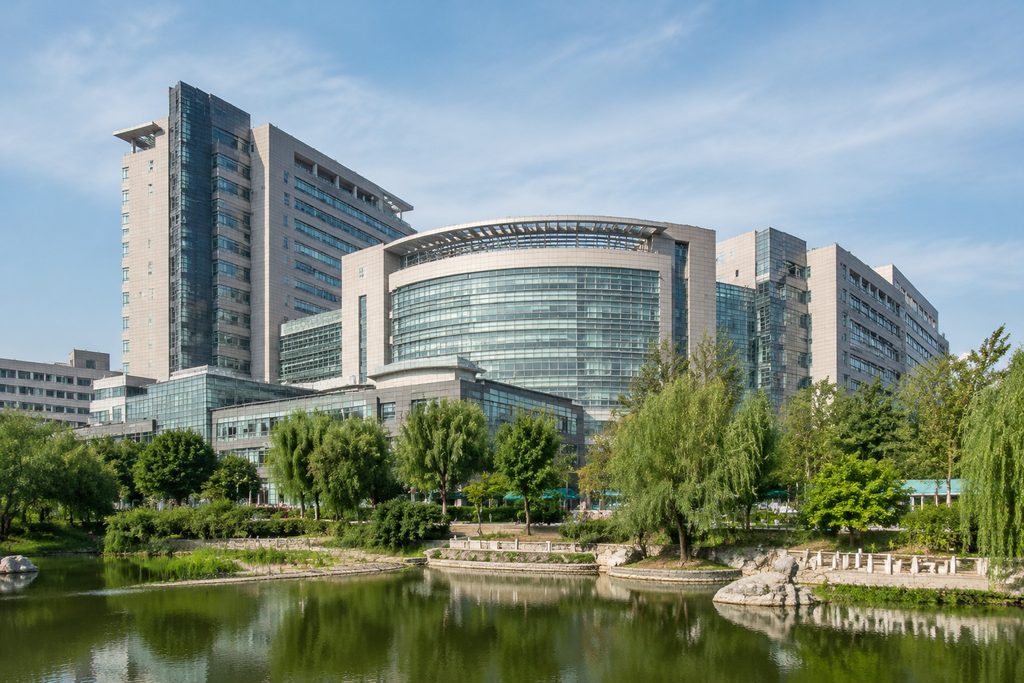
Jishuitan Hospital Orthopedic Review: The Short Answer
Beijing Jishuitan Hospital is widely regarded as China’s premier orthopedic and burn treatment center. For international patients, it offers world-class surgical volume and outcomes at a fraction of Western private costs. But it is not a concierge hospital. You will need Mandarin support or a local coordinator. That is the trade-off in one line.
The hospital performs over 50,000 orthopedic surgeries annually, including more than 3,000 joint replacements. Its burn center admits roughly 2,000 patients each year with survival rates for severe burns exceeding 95% — figures that rival dedicated burn units in the United States and Europe. But volume does not equal convenience. Navigating registration, imaging, and follow-up without Chinese language skills is genuinely hard. This review explains what that means in practice.
Who This Is Right For — and Who It Isn’t
Jishuitan suits a specific kind of patient. Knowing whether you fit that profile before booking a flight saves time and money.
Typically a good candidate:
- You need complex orthopedic revision surgery, and your home system says the wait is 12 months or more.
- You have a severe burn injury requiring skin grafting, and you are seeking a center with high-volume experience in pediatric or adult burn reconstruction.
- You already have a local contact in Beijing — a family member, employer, or medical coordinator — who can handle registration and translation.
- You are cost-sensitive. A total knee replacement at Jishuitan typically runs between $8,000 and $15,000 for international self-pay patients, compared to $35,000 to $70,000 in the US.
Who should not pursue this:
- You need urgent trauma surgery and are currently stable in a Western hospital. Transferring mid-treatment across borders carries real risk.
- You expect Western-style private rooms, English-speaking nurses on every shift, and same-day appointment scheduling. That is not how a 1,800-bed public hospital operates.
- You have complex multi-system trauma requiring coordinated care from cardiology, neurology, and orthopedics simultaneously. Jishuitan is excellent at bones and burns; it is not a full-service general hospital in the Western sense.
The Options, Compared
You are not choosing between Jishuitan and nothing. You are choosing between several genuine paths to orthopedic or burn care in China. Here is how they stack up.
| Factor | Beijing Jishuitan Hospital | Private International Hospital (e.g., Beijing United Family) | Public General Hospital (e.g., Peking Union Medical College Hospital) |
|---|---|---|---|
| Orthopedic surgical volume | 50,000+ per year | Under 1,000 per year | 3,000–5,000 per year |
| Burn unit beds | 80 dedicated beds | None — transfers out | 20–30 beds |
| Knee replacement cost (self-pay foreigner) | $8,000–$15,000 | $25,000–$45,000 | $10,000–$20,000 |
| English-speaking staff | Limited; translator recommended | Fluent; international standard | Moderate; some departments stronger than others |
| Wait time for elective joint replacement | 1–3 weeks after consultation | 3–7 days | 2–6 weeks |
| Follow-up after returning home | Limited telemedicine; mostly in-person | Structured international follow-up | Department-dependent |
If you need the highest-volume orthopedic surgeon in China and can bring a translator, Jishuitan wins on experience and price. If you need English-language end-to-end coordination and are willing to pay for it, a private international hospital is the better fit. The middle path — a top general public hospital — works if your case involves multiple organ systems, not just bones.
What Actually Happens at Jishuitan: A Walk-Through for International Patients
Here is the part most reviews skip. You land at Beijing Capital International Airport. You have your medical records translated into Chinese. You arrive at the orthopedic outpatient department on Xinjiekou East Street in Xicheng District. The building is older. The corridors are crowded. Registration happens at a self-service kiosk or a window where staff likely speak limited English.
You see the specialist. The consultation itself is efficient — often 10 to 15 minutes. Chinese orthopedic surgeons at this level read imaging fast. They will tell you what they can do. But they will not hold your hand through insurance paperwork or visa extensions. That part is on you or your coordinator.
And yet. The surgeon you see may do more knee replacements in one month than a typical Western orthopedic surgeon does in a year. That repetition matters. Studies consistently show that higher surgical volume correlates with lower complication rates for joint replacement. Jishuitan’s own published data reports a post-operative infection rate for primary total hip arthroplasty of under 0.5%, which is on par with the best centers in North America.
Beijing Orthopedic Surgery Cost for Foreigners: What You Actually Pay
Cost is the reason many international patients consider Jishuitan. But the sticker price is not the full picture.
A primary total knee replacement at Jishuitan for a self-pay foreign patient typically falls between $8,000 and $15,000. That usually covers the implant, surgeon fees, hospital bed for 5 to 7 days, basic medications, and standard post-operative X-rays. It does not include your flight, visa, accommodation for family, translator fees, or outpatient rehabilitation after discharge.
By comparison, the same procedure in the United States averages $35,000 to $70,000 without complications. In Singapore, expect $20,000 to $35,000. In Germany, $15,000 to $25,000. Jishuitan is on the lower end of global pricing, but it is not the cheapest option in Asia — some Indian hospitals quote $6,000 to $10,000 for the same surgery. The difference is that Jishuitan’s implant selection and surgical volume are both higher, which matters if you plan to keep the joint for 20 years.
What drives variance at Jishuitan? Implant choice. A domestic Chinese implant costs less than an imported Zimmer or DePuy component. Your surgeon will discuss this, but you need to ask directly. Also, a private or semi-private room adds $50 to $150 per night. And if you need an interpreter, independent medical translators in Beijing charge $50 to $100 per hour, with full-day hospital accompaniment running $200 to $400.
How Is Jishuitan Hospital for International Patients? The Honest Answer
Medically, it is excellent. Administratively, it is challenging. That is the honest balance.
Jishuitan has an international medical department, but it is smaller than what you would find at a private hospital. The department can help with appointment booking and basic coordination. It does not provide bedside translation around the clock. Nurses on orthopedic wards are skilled and efficient, but their English is often limited to basic medical terms. Bring a translator or hire one locally.
Payment is another friction point. Jishuitan accepts international credit cards at the main cashier, but daily limits on foreign cards can cause problems. Wire transfer is possible but slow. Many international patients open a Chinese bank account or use a local contact to manage payments. This is not a hospital that bills your insurance directly in most cases. You pay, then claim reimbursement.
For burn patients, the situation is slightly different. The burn ICU at Jishuitan is one of the few in China with dedicated international experience, partly because of its reputation and partly because severe burns do not wait for insurance pre-authorization. The clinical team is used to treating patients from Central Asia, Southeast Asia, and occasionally the Middle East. Still, the same language and payment barriers apply.
Best Burn Treatment Hospital in China: Where Jishuitan Fits
If you search for the best burn treatment hospital in China, Jishuitan appears at or near the top of every credible list. The hospital’s burn center was founded in 1958 and has been a national referral center since the 1980s. It treats thermal burns, chemical burns, electrical burns, and inhalation injuries. It also runs one of China’s largest pediatric burn programs.
The unit’s survival rate for patients with burns covering over 50% of total body surface area is above 90% — a benchmark that only a handful of centers worldwide can match. The center pioneered several skin grafting techniques now used across China, including microskin autografting for patients with limited donor sites.
But Jishuitan is not the only option. The burn center at Shanghai Changhai Hospital is comparable in volume and outcomes. The burn unit at the First Affiliated Hospital of Nanchang University is also highly regarded, particularly for pediatric cases. If you are in southern China, Changhai may be more accessible. If you are in Beijing or northern China, Jishuitan is the default choice for a reason.
For a broader look at how Jishuitan compares with other top-tier Chinese institutions, the Fudan University hospital rankings provide specialty-specific data that updates annually. If you are weighing public versus private options, our Top 50 private international hospitals in China page lists alternatives with stronger English-language support.
Book Orthopedic Surgery at Jishuitan Beijing: The Practical Path
You cannot simply email the hospital and book a surgery date. That is not how it works. The path is: consultation first, then surgical scheduling.
Step one is getting an appointment with the right specialist. The international medical department can help, but response times vary. Many patients use a local coordinator or a medical travel facilitator who knows the hospital’s internal processes. Expect to wait one to two weeks for an initial consultation slot with a senior orthopedic surgeon.
Step two is the in-person evaluation. Bring all imaging — X-rays, MRI, CT — on a CD or USB drive, plus printed reports. Chinese hospitals use their own PACS systems, and having digital files speeds things up. If you need new imaging, Jishuitan can do it same-day or next-day in most cases.
Step three is surgical scheduling. Once the surgeon agrees to operate, elective joint replacement is typically scheduled within one to three weeks. That is remarkably fast by Western standards. For burn reconstruction, timing depends on the nature of the injury and whether staged procedures are needed.
Visa is a separate track. For medical treatment in China, the S2 visa is the applicable short-stay category used for private affairs including medical treatment, subject to the latest embassy or consulate requirements. You will need supporting documents from the hospital — usually a treatment invitation letter or admission confirmation. The hospital’s international department can issue this after your consultation. Do not book flights before you have the visa in hand.
Jishuitan Hospital Knee Replacement Price: Implant Choices and Hidden Variables
The knee replacement price at Jishuitan varies more than most patients expect. The headline number is usually the domestic implant price. The final bill depends on what you choose.
A domestic knee implant at Jishuitan costs between $2,000 and $4,000. An imported implant — Zimmer, DePuy, Smith & Nephew — runs $5,000 to $9,000 for the component alone. Add surgeon fees, anesthesia, hospital stay, and medications, and you get the $8,000 to $15,000 range mentioned earlier. If you specifically request an imported implant, expect the higher end of that range or slightly above.
Does the implant brand matter? For most patients, the surgeon’s experience matters more than the implant manufacturer. Jishuitan’s senior surgeons have done thousands of replacements with both domestic and imported systems. Chinese domestic implants have improved dramatically over the past decade and now meet international ISO standards. But if you plan to return to a Western country for follow-up, an imported implant may make it easier for your home surgeon to source compatible revision components later. Discuss this explicitly before surgery.
Practical Considerations: Records, Visa, Payment, and Follow-Up
Here is what actually matters logistically when you pursue care at Jishuitan.
Medical records. Translate everything into Chinese before you arrive. Discharge summaries, imaging reports, lab results — all of it. A professional medical translation costs $30 to $80 per page depending on complexity. This is not optional. Chinese surgeons will not rely on English-language records.
Visa timing. The S2 visa application typically takes one to two weeks at your local Chinese embassy or consulate. You need the hospital’s invitation letter first. Apply early. Do not book non-refundable flights.
Payment. Jishuitan requires a deposit before admission, typically 50% to 100% of the estimated surgical cost. International credit cards work but daily limits can be a problem. Wire transfer is accepted but slow. Have a backup payment method.
Insurance. Most international health insurance plans will reimburse care at Jishuitan, but you pay upfront and claim later. Some insurers have direct billing arrangements with private hospitals in China, not with public ones like Jishuitan. Check your policy’s out-of-network coverage before you commit.
Follow-up after returning home. This is the weak point. Jishuitan does not have a structured international telemedicine follow-up program. Your surgeon may provide a WeChat contact for basic questions, but formal follow-up imaging will need to be done at home and sent back for review. If you need revision surgery later, you will likely need to return to Beijing. Plan for that possibility.
Frequently Asked Questions
In the Fudan University hospital rankings, Jishuitan has held the top spot for orthopedics in China for over a decade. Its burn center is consistently ranked first nationally. Volume and outcomes back up the ranking. But “best” depends on your specific case — for complex spinal deformity, other centers like Peking University Third Hospital are stronger. For joint replacement and trauma, Jishuitan is the reference standard.
Yes, but it will be difficult without support. The international medical department can help with scheduling, but bedside communication, billing, and discharge instructions are largely in Chinese. Hire a medical translator or work with a coordinator who knows the hospital. Expect to pay $200 to $400 per day for full accompaniment.
Jishuitan has a dedicated orthopedic trauma and revision team that handles complications from other hospitals across China. Its post-operative infection rates are low by international standards. But if you return home and develop a complication, your local surgeon may not be familiar with the specific implant or technique used. This is a real risk of cross-border surgery. Discuss the follow-up plan with your Jishuitan surgeon before you leave.
For a total knee replacement, you might pay $10,000 at Jishuitan versus $50,000 in the US. That is an 80% difference. But subtract flights, accommodation, translator fees, and the cost of returning for follow-up if needed, and the effective savings shrink. For a single procedure with a smooth recovery, the savings are substantial. For complex multi-stage care, the gap narrows.
Mostly no, not for direct billing. You pay upfront and submit a claim to your insurer. Some international insurers will issue a guarantee of payment for specific procedures, but this requires advance negotiation with the hospital’s billing department. Do not assume your insurance will cover care at a Chinese public hospital. Verify before you travel.
Your Next Step
Jishuitan offers world-class orthopedic and burn care at prices that make sense for many international patients. The trade-off is administrative friction and language barriers that you must plan around. If you are prepared for that, the clinical quality is real and measurable.
ToChinaMed is an independent information platform — we are not a hospital, we do not
For more medical information and treatment options in China, visit tochinamed.com (ToChinaMed).