Gallbladder Surgery in China: A Day-by-Day Laparoscopic Recovery Guide
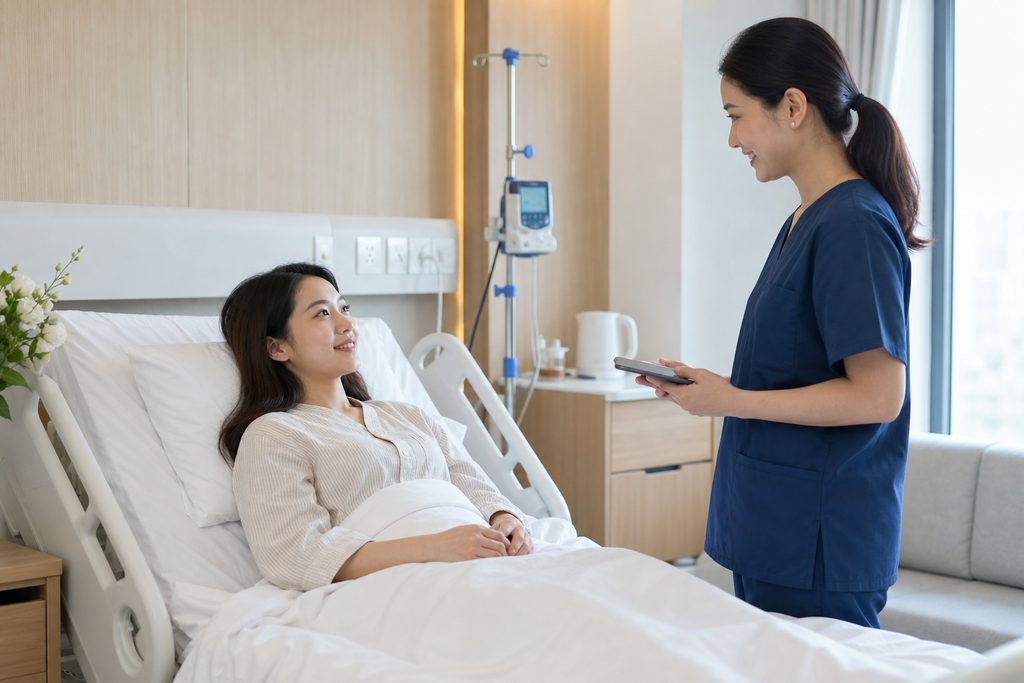
What if you could walk out of a hospital 24 hours after surgery and sip a clear broth the same evening? That’s the reality for thousands of patients undergoing laparoscopic cholecystectomy every year. But when you’re 7,000 miles from home, the idea of navigating this process can feel overwhelming. We understand that fear. The clinical decision to remove a gallbladder is straightforward enough. The logistics of doing it safely, affordably, and with peace of mind in a foreign country? That’s where the real work begins.
Key Takeaways
- Laparoscopic cholecystectomy in China is typically completed as a 24- to 48-hour inpatient procedure, with most patients walking within 6 hours post-op.
- The all-inclusive gallbladder removal surgery cost China often ranges from $3,000 to $7,000 USD—a fraction of the $15,000 to $20,000 charged in the United States.
- Language barriers and non-standardized medical visa processes remain the biggest hurdles for independent travelers.
- You should verify that your chosen hospital performs a high volume of laparoscopic procedures annually; volume directly correlates with lower complication rates.
The Problem: The Staggering Price of Relief in the West
A malfunctioning gallbladder doesn’t negotiate. The attacks—often triggered by a fatty meal—come with a nauseating, gripping pain that radiates through the back and right shoulder. For the uninsured or underinsured patient in the United States, the diagnosis of symptomatic cholelithiasis brings a second wave of pain: the bill. Without complications, a straightforward laparoscopic cholecystectomy in a U.S. hospital averages between $15,000 and $20,000. If the procedure converts to an open surgery, that figure can easily exceed $30,000.
This financial burden forces many to delay care. And delaying gallbladder removal surgery isn’t a neutral choice. It risks infection, a ruptured gallbladder, or pancreatitis—conditions that transform a simple elective procedure into a life-threatening emergency. We’ve spoken to patients who waited years, managing attacks with painkillers and restrictive diets, simply because the cost of surgery was insurmountable. That’s no way to live.
Who We Are
We are not a hospital. We do not hold a scalpel, nor do we make clinical diagnoses. We are your logistical architects. Our team functions as a bridge between your medical needs and China’s most sophisticated hospital systems. We handle the opaque tasks—translating medical records into clinical Chinese, verifying surgeon credentials through the Fudan Hospital Rankings, and structuring a clear day-by-day recovery plan before you ever board a plane. We connect you with the expertise; you remain in control of your healthcare decisions.
Why a Laparoscopic Journey in China Delivers Results
High-Volume Centers Produce Better Outcomes
There is a hard truth in surgery: practice makes perfect. A study published in The New England Journal of Medicine established that surgeons who perform a high volume of laparoscopic cholecystectomies have significantly lower rates of bile duct injury—the most feared complication of this surgery. In major Chinese metropolitan centers like Shanghai and Beijing, a specialized general surgeon frequently performs 300 to 500 gallbladder removals annually. Compare this to a general surgeon in a Western community hospital, who might perform 50 to 80. This isn’t a difference in skill; it’s a difference in focused repetition. When you ask us “is laparoscopic gallbladder removal safe in China,” we point to that volume. Safety isn’t an abstract promise. It’s a statistical outcome of daily practice.
Technology Without the Wait
The public perception of medical tourism sometimes lags behind reality. The private international wings of hospitals in Beijing are not makeshift clinics. They routinely utilize the same high-definition 3D laparoscopic towers and indocyanine green (ICG) fluorescence imaging found in the best operating rooms globally. ICG imaging allows the surgeon to visualize the biliary anatomy in real-time, drastically reducing the risk of cutting the common bile duct by mistake. What changes the equation isn’t the machine, but the queue. A patient requiring a cholecystectomy can often be scheduled within a week of arrival, a timeline unheard of in socialized systems where elective surgeries face months-long backlogs.
Structural Cost Advantage Without Quality Compromise
Let’s address the elephant in the room. Why is the gallbladder removal surgery cost China so much lower? It’s not because of inferior sterilization or outdated sutures. The cost differential is structural. Labor costs for anesthesiologists, nurses, and support staff are lower, while the sterile consumables—the trocars, clips, and staplers—are often locally manufactured by subsidiaries of the same multinational companies supplying Western hospitals. A laparoscopic cholecystectomy package price Shanghai typically bundles the surgeon’s fee, anesthesia, operating theater, a private recovery room, and nursing care into a single transparent quote. This eliminates the chaotic “surprise billing” that plagues the American system, where a separate anesthesiologist bill arrives weeks after you’ve gone home.
What You Need to Know Before Going Alone
The path is clear, but it’s not paved. Attempting to arrange a cholecystectomy independently introduces friction that can stall your treatment entirely. We believe in full transparency about these barriers.
- Visa Complexity: There is no standardized “medical visa” for short-term treatment. Patients typically apply for an S2 visa (short-term private affairs), which requires an invitation letter from the admitting hospital. Obtaining this letter without a local contact or a verified hospital relationship is the number one reason independent plans fail.
- Payment Gateways: Chinese hospital systems largely operate on domestic digital payment rails like WeChat Pay and Alipay. International credit cards are often rejected at the cashier, and wire transfers can take days to clear, delaying discharge. You need a local payment mechanism or a liaison to handle the deposit.
- Medical Record Translation: A Google-translated ultrasound report won’t suffice. Surgeons require a precise clinical summary detailing stone size, wall thickness, and common bile duct diameter. A mistranslation here can lead to a wrong surgical plan.
How We Help You Navigate This
These barriers exist for structural reasons. We dismantle them, one by one. Our process begins weeks before your travel, with our team converting your abdominal ultrasound and lab results into a format a Chinese surgical team can act on immediately. We don’t just send files; we ensure they are reviewed.
Once you land, a bilingual coordinator meets you. You’re not fumbling for a taxi. You’re taken directly to a pre-arranged consultation. On the day of surgery, we verify that the pre-operative checklist—the prophylactic antibiotics, the correct marking of the surgical site—is complete. But our most critical work starts post-op. We sit with you during the discharge briefing, translating the surgeon’s instructions into plain English. We make sure you have the right herbal-free bland meals delivered to your hotel and that your follow-up wound check is scheduled before you fly out. We are the continuity in a foreign system.
Day by Day: The Laparoscopic Recovery Journey
Understanding how long is recovery after gallbladder surgery day by day removes the fear of the unknown. This is the rhythm we help you expect.
Day 0 – Surgery Day: You arrive at the hospital in the morning. After a final ultrasound to map the anatomy, you’re wheeled into the operating room. The procedure takes roughly 60 to 90 minutes. You’ll wake up in the recovery bay with four small bandages on your abdomen. The nausea from the anesthesia fades within hours. By dinner, you’re encouraged to sit up and sip water or clear broth. Pain is managed with oral analgesics, not a heavy morphine drip. You’ll walk to the bathroom with a nurse’s assistance.
Day 1 – Discharge: The surgeon checks your incisions. You’ll eat a light breakfast—congee, perhaps, or steamed bread. If you can tolerate food, pass urine, and your pain is controlled, you are discharged by midday. You return to a hotel, not a hospital bed. You’ll feel sore, as if you’ve done a hundred sit-ups. Shoulder pain from the carbon dioxide gas used to inflate the abdomen is common; walking helps dissipate it.
Days 2-4 – The Hotel Recovery: This is the “waiting out the fatigue” phase. You’re mobile, taking short walks to prevent blood clots. You’re eating a low-fat diet. The bandages stay dry. You might feel a bit of bloating or irregularity as the digestive system adapts to a constant slow drip of bile instead of a stored surge. This is normal. By Day 4, the surgical fog has cleared for most patients.
Day 5-7 – Final Check and Flight Clearance: We accompany you for a final wound check. The dressings are changed. The surgeon confirms there is no sign of infection or bile leak. The dissolvable stitches beneath the skin are healing well. You’re cleared to fly home. We provide a digital copy of your operative report and a dietary guide for the next month.
Frequently Asked Questions
The safety profile depends on the hospital, not the country. When you select a Joint Commission International (JCI) accredited facility or a top-tier public hospital listed in the Fudan rankings, you are selecting a center with infection rates and complication profiles comparable to any major Western teaching hospital. The key is ensuring the surgeon performs this specific operation frequently. We verify this data before connecting you.
Typically, a comprehensive package covers the pre-operative blood work and ECG, the anesthesia, the operating room costs, the surgeon’s fee, the laparoscopic equipment, a private inpatient room, nursing care, and simple post-operative medications. It usually does not cover the treatment of unexpected complications or the pathology report on the removed gallbladder. Always request an itemized breakdown, which we help you secure and translate before any deposit is paid.
This requires a careful pre-operative clearance. We do not simply take a booking. If you have a complex cardiac history, we facilitate a cardiology consult first. The anesthesiologist will need to see a recent echocardiogram and stress test. Chinese hospitals are generally conservative with high-risk patients, which is a good thing. If the risk is deemed too high for a standalone trip, the surgery will not proceed, and we help you understand why.
This occurs in roughly 2-5% of cases, usually due to severe inflammation or unclear anatomy. If conversion happens, the surgeon makes a larger subcostal incision. The hospital stay extends from 1 day to 3-5 days. The recovery at home extends to 4-6 weeks. This changes the cost structure, and we ensure you are informed of the revised billing immediately. It’s a rare outcome, but you must be mentally prepared for the possibility.
Your Next Step
Living with a diseased gallbladder is a gamble that rarely pays off. The relief of having it removed laparoscopically is immediate and liberating. The challenge isn’t finding a capable surgeon—it’s finding the right pathway through the administrative maze of a foreign country. We exist to make that pathway invisible to you, so all you see is a smooth, well-coordinated recovery. If you are weighing the gallbladder removal surgery cost China against your local options, consider the value of speed, safety, and a partner who handles the hard parts.
Looking for a specific doctor or treatment in China? Tell us what you need — we’ll help you find the right option at no charge.
For more medical information and treatment options in China, visit tochinamed.com (ToChinaMed).