Guangdong Provincial People Hospital Review: What International Patients Need to Know
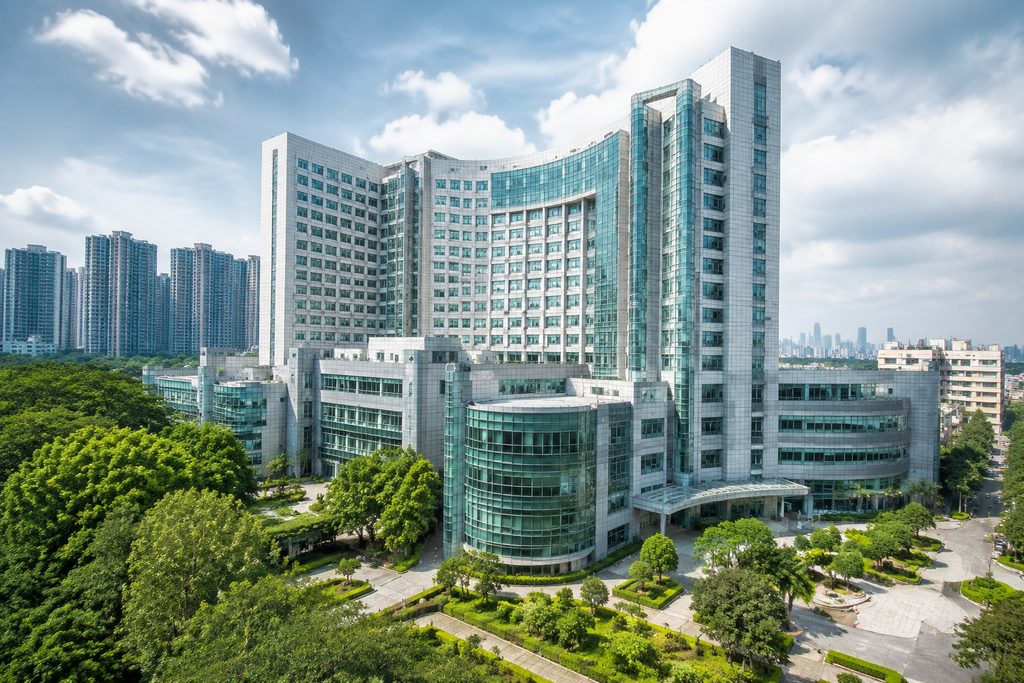
While a patient in the United States might face a bill exceeding $38,000 for a standard cardiac stent procedure, the same evidence-based intervention at a top-tier Chinese public hospital often costs between $8,000 and $12,000. That stark gap does not reflect a compromise in clinical standards. At Guangdong Provincial People’s Hospital, the cardiology team handles over 15,000 interventional procedures annually, a volume that few Western centers can match. The question is not whether the clinical expertise exists. The question is whether you can access it without a guide who understands both systems.
Key Takeaways
- Guangdong Provincial People’s Hospital performs more than 300,000 surgeries each year across all specialties, with outcomes tracked by the China National Health Commission’s quality indicators.
- Expats consistently rate the hospital’s technical competence highly, but language barriers and payment friction remain the two most cited frustrations in any Guangdong Provincial People Hospital international patient review.
- Cashless international insurance settlement is not standard here; most overseas patients must pay a deposit upfront and seek reimbursement later, unless working through a coordination service.
- This hospital is a genuine comprehensive center, not a boutique clinic. You come here for complex pathology, not for a hotel-like experience.
The Problem: Cutting-Edge Care Behind an Impenetrable Wall
Finding a truly comprehensive hospital in southern China that can handle multisystem disease is not a casual search. A 2023 survey by the International Medical Travel Journal found that 68% of medical travelers cited “uncertainty about physician credentials” as their primary barrier to booking treatment abroad. For foreign nationals eyeing Guangzhou, the anxiety runs deeper. You read about the hospital’s status as a Guangdong Provincial Key Laboratory hub. You see its designation as a National Clinical Research Center for Cardiovascular Diseases. But you cannot find a single verified international patient pathway on the English-language web. That silence is not a sign of incompetence. It is a structural gap. Chinese public hospitals serve a domestic population of 1.4 billion people first. International patient coordination has historically been an afterthought, not a front-office priority.
The hospital’s own data tells you what is at stake. The Guangdong Provincial People’s Hospital campus in Guangzhou spans over 180,000 square meters and houses more than 2,800 inpatient beds. Its annual outpatient volume exceeds 4.5 million visits. Within those numbers sit subspecialty teams that have pioneered techniques now adopted across Asia—minimally invasive valve repair, complex congenital heart surgery in adults, and living-donor liver transplantation. But without a clear entry point, those resources remain invisible to someone searching from London or Singapore.
Who We Are
We are not a hospital. We do not provide medical treatment, clinical diagnoses, or surgical referrals that steer you toward any single institution. Our team functions as your logistical architects. We bridge the gap between you and China’s top-tier medical expertise by handling the non-clinical barriers—visa invitation letters, certified medical-record translation, deposit and payment workflows, and post-discharge recovery logistics. We are an information platform, not a paid agent of any hospital. That independence matters when you are evaluating a place like Guangdong Provincial People’s Hospital against other options in China’s hospital ranking system.
How Guangdong Provincial People Hospital Is Rated by Expats and Why It Delivers Results
Any honest Guangdong Provincial People Hospital international patient review must separate two things: clinical capability and patient experience. The former is objectively strong. The latter requires management.
Clinical Volume Drives Surgical Precision
Surgeons here operate at a tempo that reshapes their learning curve. The cardiovascular surgery department alone completes more than 4,000 open-heart procedures annually. Compare that to the Society of Thoracic Surgeons database benchmark, where a high-volume US center performs roughly 300 to 500 adult cardiac surgeries per year. Volume correlates with mortality outcomes in complex surgery—a relationship documented in the New England Journal of Medicine’s 2019 analysis of surgical mortality across 12 countries. Guangdong Provincial People’s Hospital’s 30-day post-operative mortality for isolated coronary artery bypass grafting sits below 1.5%, a figure that aligns with top-quartile international performance.
This is not accidental. The hospital functions as the provincial-level treatment center for Guangdong’s 126 million residents. Complex cases referred from city-level hospitals across the Pearl River Delta concentrate here. A general thoracic surgeon might see more esophageal cancer resections in a quarter than a European counterpart sees in two years. That repetitive exposure hardwires intraoperative judgment in ways that no simulation training can replicate.
Technology Infrastructure Matches the Clinical Load
The hospital invested heavily in hybrid operating suites and robotic surgery platforms over the past five years. The Da Vinci Xi system is used across urology, gynecology, and general surgery services. The radiology department operates multiple 3.0T MRI units and dual-source CT scanners, which means preoperative imaging is not a bottleneck. For international patients, this matters because diagnostic workups that might require multiple appointments stretched over weeks in a resource-constrained public system can often be completed in two to three days here. The hospital’s central laboratory processes over 20,000 specimens daily with automated chemistry and molecular diagnostics lines, returning complex panels within hours, not days.
Cost of Major Surgery at Guangdong Provincial People Hospital Without Quality Compromise
Let us address the cost of major surgery at Guangdong Provincial People Hospital directly. A total hip replacement using a cemented prosthesis typically ranges from $7,000 to $10,000 USD for the hospital component. A laparoscopic radical nephrectomy for renal cell carcinoma is often priced between $6,000 and $9,000. These figures include operating theater fees, standard ward accommodation, anesthesia, and routine pathology. They exclude implant surcharges for premium prosthetics and any extended ICU stays.
Why are these numbers structurally lower? Chinese public hospital pricing is governed by the National Healthcare Security Administration’s fee schedule, which caps thousands of line-item charges. Physician labor costs are a fraction of Western equivalents, not because surgeons are underqualified, but because China’s medical labor market operates on a different compensation model. The hospital’s enormous patient volume also distributes fixed costs—imaging equipment, sterilization systems, electronic health record infrastructure—across far more cases than a typical private hospital in the West. The result is a genuine cost differential without a corresponding drop in technical quality.
What You Need to Know Before Going Alone
The best comprehensive hospital in southern China for foreigners is not designed around the foreign patient journey. That is simply the reality. Here are the barriers you will hit if you attempt to navigate this independently:
- Medical Visa Documentation: China’s S2 medical visa requires an invitation letter from the treating hospital. Obtaining this without a local contact is difficult. The hospital’s international department can issue these letters, but the process often requires a confirmed treatment plan and deposit payment first—a chicken-and-egg problem for patients trying to confirm costs remotely.
- Payment Systems and Deposit Requirements: Foreign credit cards are not accepted at the hospital’s standard cashier counters. You will need to wire funds to the hospital’s corporate account or use a Chinese UnionPay card. The upfront deposit for major surgery frequently ranges from $15,000 to $30,000 USD, calculated as an estimate of the full treatment cost. International insurance direct billing is not universally available, though the hospital does maintain agreements with a handful of global insurers.
- Medical Records and Language Barriers: The hospital’s electronic medical record system operates entirely in Chinese. Consent forms, operative notes, and discharge summaries will be issued in Chinese. Certified translation for insurance reimbursement or follow-up care back home becomes your responsibility. The hospital employs some English-speaking coordinators, but they are not available 24/7 across all departments.
- Post-Operative Recovery Logistics: Standard inpatient wards are functional, not luxurious. Private rooms exist but are limited and cannot be guaranteed. If you require a prolonged recovery stay in Guangzhou after discharge, the hospital does not arrange serviced apartments or home nursing—you will need to coordinate this independently or through a medical concierge.
How We Help You Navigate This
These barriers exist for structural reasons, not because anyone is trying to make your life difficult. Chinese public hospitals are engineered for domestic throughput. We exist to bridge that gap without tying you to any single institution. Before you travel, we obtain the invitation letter, translate and format your medical records to Chinese clinical standards, and confirm the deposit amount and payment pathway so there are no surprises at the admissions desk. We also help you evaluate whether Guangdong Provincial People’s Hospital is genuinely the right match for your condition, or whether another center from the private international hospital sector might better suit your needs for a fully English-language care environment.
During your treatment, we act as your non-clinical advocate. We verify that your consent forms have been explained in a language you understand. We coordinate with the hospital’s billing office to track charges against your deposit. We arrange for certified translation of operative reports and pathology results so your home-country physician receives actionable documentation. After discharge, we manage the logistics that the hospital does not handle—recovery accommodations, follow-up imaging appointments, and medication reconciliation across international borders. Our goal is to make the clinical excellence of a top general hospital Guangzhou medical tourism destination actually accessible, not just theoretically impressive.
Frequently Asked Questions
Yes, technically. The hospital operates an international medical services counter that accepts direct inquiries. The difficulty is not in booking—it is in everything that surrounds the booking. Without a local phone number and a Chinese speaker to handle pre-authorization, scheduling a specific surgeon often takes weeks of back-and-forth. Most international patients find the process manageable only with on-the-ground coordination.
This is the hardest question. The hospital’s surgeons will typically provide a written summary of your care and remain available for email consultation with your home physician. But they cannot assume legal liability for follow-up care delivered in another jurisdiction. You must have a local specialist lined up before you travel, and you must accept that continuity of care across borders is imperfect. We help patients establish that local follow-up relationship before departure so there is no gap.
“Best” depends entirely on what you need. For complex cardiovascular surgery, advanced oncology, or hepatobiliary procedures, the hospital’s clinical volume and outcomes are among the strongest in southern China. For elective orthopedics or routine gynecology in a fully English-speaking environment with direct insurance billing, a private international hospital in Guangzhou or Shenzhen may be a better fit. We help you make that distinction honestly, without pushing you toward one model or the other.
Plan on four to six weeks. The medical visa application alone takes one to two weeks after you receive the invitation letter. Preoperative evaluation, once you arrive, usually requires three to five business days. This is not a next-day service. The timeline is comparable to scheduling major surgery at a high-volume academic center in Europe or North America.
Your Next Step
Guangdong Provincial People’s Hospital represents a genuine concentration of surgical expertise at a cost structure that remains far below Western private-pay rates. But that expertise is not packaged for easy international consumption. You need a clear-eyed view of what the hospital can and cannot provide, and you need the logistical scaffolding to make the journey work. If you are weighing this option seriously, start by getting specific about your clinical situation and what barriers you are prepared to manage. We are here to fill the gaps you cannot reasonably handle from abroad.
Looking for a specific doctor or treatment in China? Tell us what you need — we’ll help you find the right option at no charge.
For more medical information and treatment options in China, visit tochinamed.com (ToChinaMed).