Shanghai Sixth People Hospital Review: Orthopedic and Microsurgery Excellence
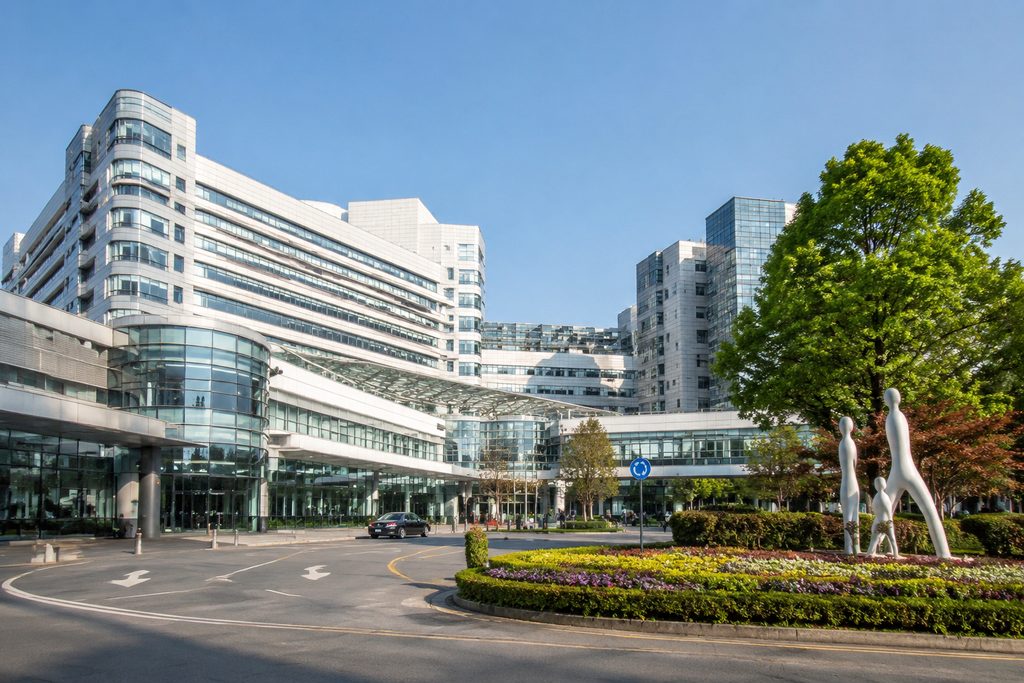
When 42-year-old Michael first heard the diagnosis—a complex hand injury requiring microsurgical reconstruction after a construction accident—his local surgeon in Manchester gave him a bleak outlook. The waiting list for a specialist who could perform the delicate nerve and vessel repair stretched past seven months. Michael, a self-employed carpenter, could not afford to wait. His livelihood depended on his hands. He started searching online and kept seeing references to a single institution: the Shanghai Sixth People’s Hospital. The volume of cases they handled. The techniques they had pioneered. Yet the question that stopped him cold was simple: could he trust a hospital halfway across the world with something as irreplaceable as his hands?
That question sits at the center of every decision an international patient makes. We understand it because we hear it every day. Our team does not perform surgery. We are not clinicians. We are the logistical bridge between patients like Michael and the specialized expertise concentrated in China’s top-tier medical institutions. We exist to answer the hard, practical questions before you ever board a plane.
Key Takeaways
- Shanghai Sixth People’s Hospital performs over 100,000 orthopedic surgeries annually, a surgical volume that dwarfs most Western centers and drives unparalleled subspecialty expertise in hand and microsurgery.
- The institution reattached the world’s first severed limb in 1963 and has since built a microsurgery program that trains surgeons globally, making it a destination for complex replantation and reconstruction cases.
- Navigating the patient journey independently—from securing a medical visa invitation to managing postoperative follow-up across time zones—presents genuine logistical hurdles that require advance planning.
- A realistic Shanghai Sixth People Hospital orthopedic surgery price often falls 50-70% below comparable US cash-pay rates, but understanding the full cost picture demands looking beyond the procedure fee alone.
The Problem: When Time and Expertise Are Not on Your Side
Orthopedic trauma does not wait. A mangled hand, a severed finger, a crushed limb—these injuries demand intervention within a narrow window. In the United States, the average wait time to see an orthopedic surgeon for a non-emergency condition stretches to 18 days in major metropolitan areas, according to a 2022 survey by Merritt Hawkins. For a subspecialist in hand surgery or microsurgery, the wait can extend to several weeks. In Canada and the United Kingdom, publicly funded systems report median waits for orthopedic surgery exceeding 20 weeks in some provinces and trusts.
For complex microsurgical procedures—replantation of amputated parts, free tissue transfers, nerve grafting—the problem compounds. These are not routine cases. A typical community hospital in North America might see a handful of traumatic amputations requiring microsurgical repair each year. A surgeon there may perform a dozen replantation attempts annually. That is simply not enough volume to maintain the technical sharpness these operations demand.
Michael’s situation was not unusual. His local NHS trust had one consultant hand surgeon qualified to attempt the reconstruction he needed. The wait was seven months. By then, muscle atrophy and fibrosis would have made a successful functional recovery nearly impossible. He needed a high-volume center. He needed a team that did this work every single day. That search led him to Shanghai.
Who We Are
We are an independent medical information platform. We do not charge patients for guidance, we do not take referral fees from hospitals, and we do not push anyone toward a particular institution. What we do is provide the data, the context, and the practical navigation support that helps international patients make clear-eyed decisions about traveling to China for medical care. We have mapped the landscape—the public hospital giants, the private international facilities, the visa requirements, the payment systems—so that you do not have to learn it all through trial and error.
Understanding Shanghai Sixth People’s Hospital: More Than a Century of Orthopedic Focus
Shanghai Sixth People’s Hospital, founded in 1904, has evolved into one of China’s most concentrated centers for orthopedic surgery and microsurgery. The hospital operates over 1,900 beds and handles an outpatient volume exceeding 4 million visits per year. Its orthopedic department alone accounts for a staggering proportion of that total. This is not a general hospital that happens to have a good orthopedics unit. Orthopedics is the gravitational center of the entire institution.
The hospital’s reputation rests on a singular historical achievement. In 1963, a team led by Dr. Chen Zhongwei successfully reattached the completely severed right hand of a factory worker named Wang Cunbai. This was the world’s first successful limb replantation. The case proved that microvascular anastomosis—suturing together tiny blood vessels under a microscope—could restore circulation to a severed body part. The procedure that surgeons now perform routinely in trauma centers worldwide began in an operating room in Shanghai.
That legacy is not just a museum piece. The hospital has built on it for six decades. Today, its Department of Orthopedic Surgery is designated a National Key Clinical Specialty. The microsurgery unit handles referrals from across China and from abroad. When we talk to patients about how successful is microsurgery in Shanghai Sixth Hospital, we point to the published data: a limb replantation survival rate consistently above 90% in recent case series, which aligns with or exceeds rates reported by major Western trauma centers. The difference is the volume. The Shanghai team performs hundreds of microsurgical procedures annually, giving them a depth of experience with rare and complex presentations that few centers can match.
Why Shanghai Sixth People’s Hospital Delivers Results
Surgical Volume Creates a Virtuous Cycle
There is a well-documented relationship between surgical volume and patient outcomes in orthopedics. A 2017 study in The Journal of Bone and Joint Surgery found that patients undergoing total hip arthroplasty at high-volume hospitals had significantly lower rates of complications and readmissions. The same principle applies with even greater force in microsurgery, where technical precision is everything.
Shanghai Sixth People’s Hospital performs over 100,000 orthopedic surgeries each year. To put that number in perspective, the Mayo Clinic—one of the largest orthopedic centers in the United States—reports roughly 10,000 orthopedic procedures annually across its main campuses. A busy US hand surgeon might perform 100-150 cases per year. At Shanghai Sixth, a dedicated hand and microsurgery team member may handle 300-400 cases annually. This is not a reflection of individual skill differences. It is a function of system design. The hospital is structured to concentrate cases, streamline preoperative workflows, and maximize operating room utilization. Surgeons here simply see more pathology, more variations, and more complications than their Western counterparts. That accumulated experience translates into clinical judgment that cannot be taught in a textbook.
Pioneering Techniques That Travel the World
The hospital’s microsurgery center has developed techniques that are now standard practice globally. The “Chinese method” of finger replantation—prioritizing artery repair before vein repair to minimize ischemia time—was refined here. Surgeons from the institution have trained visiting fellows from over 30 countries. When you ask is Shanghai Sixth People Hospital good for hand surgery, the answer is embedded in the fact that hand surgeons from Germany, Japan, and the United States have traveled to Shanghai specifically to learn techniques developed in these operating rooms.
The department covers the full spectrum: hand surgery, foot and ankle, joint replacement, spine, trauma, sports medicine, and pediatric orthopedics. But hand and microsurgery remains the flagship. The replantation center handles everything from single-digit amputations to complex multi-tissue injuries requiring composite tissue transfer. They perform toe-to-thumb transfers with functional outcomes that allow patients to return to precision work—surgeons, musicians, machinists. These are not fringe procedures. They are the core of what makes this hospital distinct.
Cost Structure: Why the Shanghai Sixth People Hospital Orthopedic Surgery Price Tells a Story
Let us address the question that every international patient asks, usually after they have processed the clinical arguments. What does it actually cost? The Shanghai Sixth People Hospital orthopedic surgery price for a complex microsurgical procedure—say, a multi-digit replantation or a free fibula flap for mandibular reconstruction—typically ranges from $15,000 to $40,000 USD as a cash-pay international patient. A comparable procedure in the United States, without insurance, can easily exceed $100,000. A single-digit replantation in the US often bills between $40,000 and $80,000. The differential is not marginal. It is transformative.
But the price tag alone does not tell the full story. The structural reasons for the cost gap matter. China’s lower labor costs for nursing and support staff, high patient throughput that spreads fixed costs across more cases, and a supply chain for implants and surgical instruments that is increasingly domestic all contribute. Importantly, lower cost does not signal lower quality. The implants used in joint replacements at Shanghai Sixth are often the same multinational brands—Zimmer Biomet, Stryker, DePuy Synthes—used in Western operating rooms. The difference is what the hospital charges for the total episode of care, not the hardware.
Patients searching for the best microsurgery hospital in China cost should understand that pricing is not published on a website. It requires a formal evaluation of medical records and imaging. We help patients obtain itemized estimates before they commit to travel. That transparency is essential. No one should board a plane without a clear financial picture.
What You Need to Know Before Going Alone
We have seen patients try to arrange treatment at Shanghai Sixth People’s Hospital independently. Some succeed. Many hit walls they did not anticipate. Here is what you face:
- Medical Visa Invitation: To obtain a Chinese medical visa (S2 or M category, depending on the consulate), you need a formal invitation letter from the hospital. Getting that letter as an individual patient—without a local contact, without Chinese language ability, without knowing which department secretary to call—can take weeks of back-and-forth. Some patients give up before they ever get scheduled.
- Registration and Payment Systems: The hospital’s registration system operates primarily in Mandarin. Outpatient queues form early. International patients cannot use foreign credit cards for hospital deposits, which can run to $10,000-$20,000 upfront. Alipay and WeChat Pay dominate. International wire transfers take days to clear. Cash is possible but cumbersome. You need a plan for moving money before you arrive.
- Medical Records Translation: The surgical team will review your imaging and records, but they need them in Chinese or with certified translation. A CT scan on a CD mailed to Shanghai is not enough. The images must be in DICOM format and accompanied by a translated clinical summary. This step alone can delay a case by two weeks if handled incorrectly.
- Postoperative Follow-Up Across Borders: Microsurgery patients require close monitoring in the first weeks. Flaps need to be checked. Sutures come out on a schedule. When you return home, your local surgeon may have never seen the specific reconstruction performed in Shanghai. Handoff communication between the surgical team and your home provider is not automatic. It must be orchestrated.
How We Help You Navigate This
These barriers are not insurmountable. They are logistical challenges with defined solutions. Our role is to solve them before they become problems that delay or derail your care.
We start with your medical records. You send us what you have—imaging, operative reports, referral letters. We work with certified medical translators to prepare a submission package that meets the hospital’s requirements. We contact the appropriate department coordinator directly, in Mandarin, to confirm that the relevant surgical team will review your case. We do not promise outcomes. We promise that your file will be seen by the right people.
Once the hospital confirms they can treat you and provides a preliminary treatment plan and cost estimate, we guide you through the visa process. We know which documents the Shanghai Exit-Entry Administration requires. We help you secure the hospital invitation letter with the correct stamp and signature. We advise on consulate-specific quirks—because the Chinese consulate in Los Angeles asks for different supporting materials than the one in London.
Before you travel, we connect you with practical resources: how to set up Alipay with an international card, where to find short-term accommodation near the hospital in the Xuhui District, what to expect from the inpatient ward environment. We do not book hotels or arrange flights. We provide the information that lets you make those arrangements confidently.
During your hospital stay, we remain available as a communication bridge. If there is a misunderstanding about the postoperative protocol, we help clarify it. When you are discharged and heading home, we facilitate the transfer of your Chinese medical records—translated back into English—to your local physician. The continuity of care does not end when you leave Shanghai. It ends when your home provider fully understands what was done and what comes next.
For those evaluating Shanghai Sixth People Hospital international patient reviews, we encourage looking beyond the clinical outcomes. Ask former patients about the logistics. How long did registration take? Was there an English-speaking coordinator on the ward? How were follow-up questions handled after discharge? These are the details that determine whether the experience is manageable or overwhelming. Our job is to shift as many of those details as possible into the manageable column.
Frequently Asked Questions
You can initiate the process independently, but book orthopedic surgery Shanghai Sixth People Hospital is not as simple as filling out an online form. The hospital does not operate a dedicated international patient booking portal in English. You will need to contact the relevant department by phone or through a Chinese-language intermediary, submit your medical records for review, receive a treatment acceptance, and then coordinate the visa and payment logistics. Our platform helps compress this timeline by handling the communication and documentation steps on your behalf, at no charge to you.
For a primary total hip or knee replacement, international patients typically pay between $12,000 and $18,000 USD, inclusive of the implant, hospital stay, and surgeon fees. This compares to a US cash price that often exceeds $40,000. The exact figure depends on the implant selected, the complexity of your case, and the length of stay. You will receive an itemized estimate after the surgical team reviews your imaging. We help patients understand every line on that estimate before they commit.
Shanghai Sixth People’s Hospital is a tertiary academic medical center with full intensive care capabilities and 24/7 surgical coverage. Complication rates for their high-volume procedures are published and comparable to international benchmarks. That said, every surgery carries risk. The hospital’s standard consent process outlines specific complications. Postoperative issues that arise after you return home will need to be managed by your local provider. We ensure that your local surgeon receives a complete operative report and discharge summary in English, along with direct contact information for the Shanghai team if clinical questions arise. The relationship does not vanish when you leave. But you must have a local provider willing to manage follow-up care—that is a prerequisite we discuss with every patient before travel.
Attending surgeons in the Department of Orthopedic Surgery at Shanghai Sixth People’s Hospital hold medical qualifications from accredited Chinese medical universities and have completed rigorous residency and fellowship training. Many have completed additional fellowships in Europe, Japan, or the United States. The department chief and senior consultants frequently publish in international peer-reviewed journals and present at global conferences. You can review their publication records through PubMed. We encourage patients to ask for the specific surgeon’s CV and case volume for the procedure they need. A reputable institution will provide this.
Your Next Step
The decision to travel to China for orthopedic or microsurgery care is not one to make lightly. It demands weighing clinical evidence against logistical complexity, cost savings against the friction of navigating an unfamiliar system. What we have seen, across hundreds of patient interactions, is that the clinical case for high-volume Chinese centers like Shanghai Sixth People’s Hospital is strong—strong enough that patients who do their homework often conclude the journey is worth it. The logistics are real but solvable. You do not need to solve them alone.
If you are considering treatment at Shanghai Sixth People’s Hospital and want to understand the process clearly—from how it compares to other top-ranked Chinese orthopedic centers to what your first practical step should be—tell us what you need. We will help you find the right option, with no charge and no pressure. The decision is yours. The information should be, too.
For more medical information and treatment options in China, visit tochinamed.com (ToChinaMed).