Changhai Hospital Shanghai Review: Can Foreigners Access Naval Medical University?
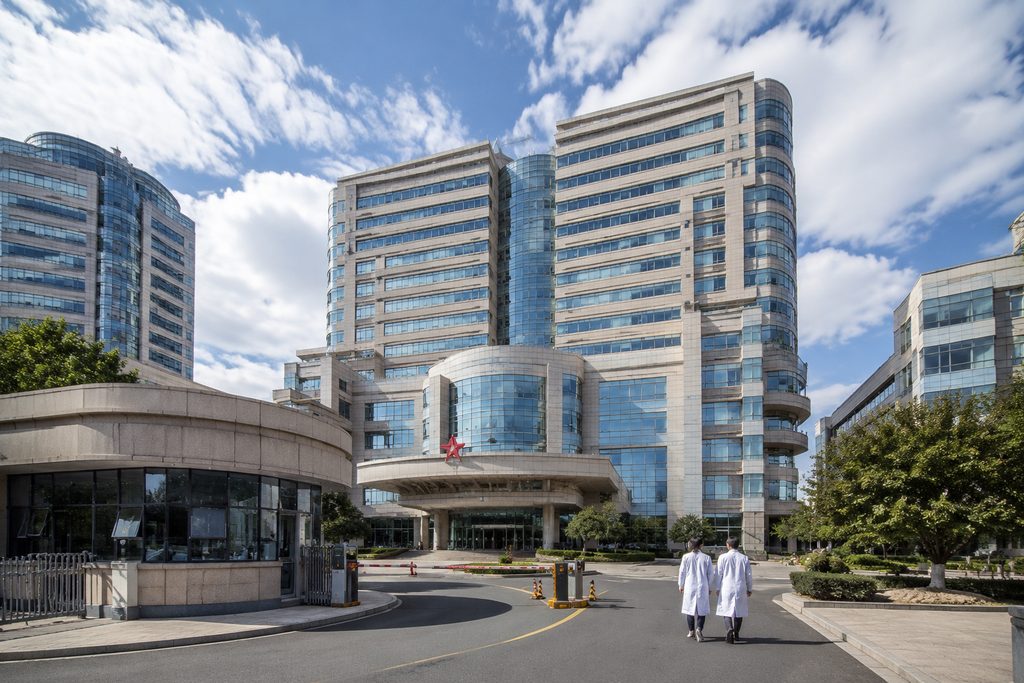
Have you ever wondered whether a military hospital in China would even open its doors to a foreign civilian? The answer is not a simple yes or no. It is a conditional, carefully managed yes — and that condition depends almost entirely on how you approach the gate.
Changhai Hospital sits in Shanghai’s Yangpu district, a sprawling complex that serves as the primary teaching hospital for the Naval Medical University. For decades, it was known internally as the First Affiliated Hospital of the Second Military Medical University. The rebranding to “Naval Medical University” signals something important: this is still very much a military institution. But it is also one of Shanghai’s most clinically powerful hospitals, handling over 2.9 million outpatient visits annually according to hospital-reported data. The tension between military identity and public accessibility is exactly what makes a Changhai Hospital Shanghai review for international patients so necessary. You cannot simply walk in and expect the same experience you would get at a private international hospital. But with the right preparation, the clinical resources here rival anything in the region.
Key Takeaways
- Changhai Hospital treats foreign civilians, but military hospital protocols create barriers that require advance planning — walk-in visits rarely work for complex care.
- The hospital performs over 63,000 surgeries annually and runs one of China’s largest burn treatment centers, a specialty that draws international referrals.
- Language support is limited outside the VIP clinic. Most departments operate in Mandarin, and medical records will not be automatically translated.
- Costs run 50-70% below equivalent US hospital rates, but payment is almost entirely out-of-pocket — international insurance direct billing is not standard.
The Problem: Shanghai Has World-Class Hospitals That Were Not Built for Foreigners
Shanghai’s healthcare infrastructure has expanded at a pace that shocks most Western observers. The city now hosts 36 tertiary hospitals, according to the Shanghai Municipal Health Commission. Some of these institutions — Huashan Hospital, Ruijin Hospital, Zhongshan Hospital — consistently rank among China’s top ten nationally in the Fudan University Hospital Rankings. The clinical volume is staggering. A single oncology department in a top Shanghai hospital may see more liver cancer cases in one month than an average US academic center sees in a year.
But here is the catch. These hospitals were designed for Chinese patients operating within a Chinese healthcare system. Registration requires a Chinese ID or a convoluted workaround. Payment runs through Alipay or WeChat Pay, platforms that foreign credit cards frequently reject. Medical records come in Mandarin. Discharge instructions come in Mandarin. The nurse who checks your vitals at 3 AM speaks only Mandarin. None of this is malicious. It is simply the structural reality of a system that never anticipated serving large numbers of international patients.
The frustration is real. We have heard from patients who flew to Shanghai expecting seamless care at a world-famous hospital, only to spend their first three days fighting with a registration kiosk that would not accept their passport. One patient described the experience as “standing outside a fortress made of paperwork.” That is not hyperbole. Military hospitals like Changhai add another layer — security protocols, restricted departments, and a bureaucracy that can feel actively hostile if you do not know which door to knock on.
So the question “is Changhai Hospital good for foreigners” is not really about clinical quality. The clinical quality is excellent. The question is about access. And access depends on understanding exactly what Changhai is, who it serves, and how to position yourself as a patient they can and will treat.
Who We Are
We are not a hospital. We do not provide medical treatment, make clinical diagnoses, or recommend specific doctors. Our team functions as a medical information platform — we map the Chinese healthcare landscape for international patients, explain how specific hospitals work, and help you understand what is possible before you commit time and money. Think of us as your advance reconnaissance. We tell you which hospitals accept foreigners, what documentation you need, how payment works, and where the real bottlenecks hide. The decisions are always yours.
What Changhai Hospital Actually Is — And Why That Matters for Your Treatment
Changhai Hospital is not a general hospital that happens to have a military affiliation. It is a military hospital that also treats civilians. The distinction matters enormously.
The institution traces its roots to 1949, when it was established as the teaching hospital for what was then the People’s Liberation Army’s Second Military Medical University. Today, as the primary affiliate of Naval Medical University, it operates 2,000 inpatient beds and runs more than 60 clinical departments. The hospital reports performing over 63,000 surgeries per year. That volume places it among the busiest surgical centers in East Asia.
But volume alone does not tell the full story. Changhai has built particular depth in several specialties that draw international attention. Its burn and plastic surgery department is one of China’s largest, treating complex thermal injuries referred from across Asia. The urology department pioneered several minimally invasive techniques now used nationally. The gastroenterology unit handles a caseload of pancreatic and biliary diseases that few Western centers match — a direct function of Shanghai’s population density and the hospital’s referral network.
For a foreign patient considering treatment, the key question is not “can Changhai handle my case?” The key question is “can I access the specific department I need, and will the experience be navigable?” On both counts, the answer depends heavily on preparation.
Clinical Volume Drives Outcomes — And Changhai Has Volume
There is a well-documented relationship between surgical volume and patient outcomes, particularly in complex procedures. A 2017 analysis published in The Lancet examined over 900,000 surgical cases across 28 countries and found that high-volume hospitals consistently achieved lower mortality rates for major cancer resections. The effect was strongest for esophagectomy, pancreatic resection, and rectal cancer surgery — procedures where technical expertise compounds with each repetition.
Changhai operates at a scale that makes this volume-outcome relationship tangible. Its gastroenterology department alone performs thousands of endoscopic procedures annually. The urology department runs one of China’s highest-volume robotic surgery programs. These are not abstract numbers. They represent accumulated muscle memory across entire surgical teams — the scrub nurses, the anesthesiologists, the post-op monitoring staff — who have seen complications before and know how to respond.
For a Western patient accustomed to a system where a surgeon might perform 30 Whipple procedures in a busy year, the numbers here recalibrate expectations. Chinese surgeons at top centers routinely perform 100 or more. That gap is not a reflection of individual talent. It is a function of population scale and a referral system that funnels complex cases to tertiary centers aggressively. The result is a clinical environment where rare complications become routine management problems.
Military Structure Means Military Efficiency — And Military Bureaucracy
Naval Medical University operates under PLA command. That means Changhai Hospital follows protocols that civilian hospitals do not. Some of this is beneficial. The hospital runs on a disciplined schedule. Departments coordinate in ways that can feel remarkably efficient compared to the fragmented care pathways common in Western systems. When a patient needs a cross-specialty consultation, it often happens same-day — the orthopedic surgeon walks down the hall to the radiology reading room, pulls up the scan, and makes a decision.
But military structure also means military opacity. Certain departments conduct research or treat conditions related to naval operations — hyperbaric medicine, decompression illness, submarine-related environmental medicine. These units may not be open to civilian patients at all. The hospital’s administrative hierarchy can feel impenetrable if you do not understand who actually makes decisions. The person at the registration desk cannot override a department head’s policy. Knowing whom to ask — and how to ask — is the difference between a door opening and a door staying firmly shut.
What You Need to Know Before Going Alone
The barriers to receiving care at Changhai Hospital are real and specific. None are insurmountable. But underestimating any one of them can derail a treatment plan before it starts.
- Registration and Identity Verification: Changhai’s standard registration system requires a Chinese national ID number. Foreign passport holders must register through the hospital’s International Medical Center or VIP clinic, which operates on a different floor with different scheduling protocols. Walk-in registration with a foreign passport at the main outpatient hall often fails — the system simply does not recognize the document format. You need to know which entrance to use, which desk to approach, and what alternative identification pathway exists.
- Payment Infrastructure: The hospital’s standard payment terminals process transactions through China UnionPay or domestic digital wallets. International Visa and Mastercard transactions are not reliably accepted at most counters. The VIP clinic can process international cards, but standard departments may require cash or a Chinese bank card. This sounds minor. It is not minor when you are standing at a pharmacy counter holding a 12,000 RMB prescription and your only credit card gets declined. We have seen this happen.
- Medical Records and Language: Changhai’s electronic medical record system operates in Mandarin Chinese. Diagnostic reports, surgical notes, discharge summaries — all in Mandarin. The hospital does not provide routine translation services. If you need records for follow-up care in your home country, you will need independent translation and possibly notarization. Radiology images follow the DICOM standard and can be exported, but the accompanying reports will not be in English unless you arrange this specifically through the VIP clinic.
- Departmental Access Restrictions: As a military-affiliated institution, Changhai reserves certain clinical resources for PLA personnel and their dependents. This does not typically affect major departments like gastroenterology, urology, or general surgery, which maintain robust civilian patient volumes. But specialized units — particularly those with military research functions — may decline civilian referrals with little explanation. You need to confirm departmental access before booking travel.
How We Help You Navigate This
These barriers exist for structural reasons, not because anyone is trying to exclude foreign patients. Changhai treats thousands of international patients annually through its VIP clinic. The hospital is not hostile to foreigners. It is simply optimized for a different patient population, and the friction points emerge wherever that optimization meets an unexpected use case.
Our role is to eliminate those friction points before you encounter them. We map the specific department you need, confirm that it accepts foreign civilian patients, identify the correct registration pathway, and clarify exactly what documentation you must bring. We explain payment methods that actually work — which counters accept which card types, when to carry cash, how to set up a payment method that will not fail at the worst possible moment. We arrange interpreter services for consultations and ensure that medical records are properly translated for continuity of care when you return home.
The process spans three phases. Before travel, we verify departmental access, schedule initial consultations, and prepare a document packet that meets Chinese hospital requirements — these differ from Western standards in ways that can cause delays if unaddressed. During treatment, we provide on-ground logistical support: navigating the hospital campus, coordinating between departments, managing payment flows, and ensuring that communication gaps do not become clinical risks. After discharge, we handle record translation, follow-up scheduling, and any necessary coordination with your home-country physicians.
This is not concierge medicine in the luxury sense. It is operational logistics for a complex system that was not designed for you. The clinical expertise at Changhai is world-class. Getting to it should not require learning an entirely new healthcare language.
Frequently Asked Questions
Can foreign civilians actually receive treatment at Changhai Hospital, or is it restricted to military personnel?
Foreign civilians can receive treatment. Changhai operates a dedicated International Medical Center and VIP clinic that specifically serve non-military patients, including international visitors. Most major clinical departments accept civilian referrals. Restrictions apply primarily to specialized military research units, not to the departments handling common complex conditions like cancer, gastrointestinal disease, or orthopedic surgery. The key is accessing care through the correct channel — the VIP clinic rather than the general outpatient hall.
Is Changhai Hospital good for foreigners who do not speak Mandarin?
The clinical quality is strong. The language barrier is real and should not be minimized. Outside the VIP clinic, English-speaking staff are limited. Nurses, technicians, and administrative personnel in standard departments typically work in Mandarin. The VIP clinic provides English-language coordination and can arrange interpreter services for consultations and procedures. This adds cost — typically several hundred RMB per interpreter session — but transforms the experience from nearly impossible to fully manageable.
What does Naval Medical University civilian treatment cost compared to Western hospitals?
Costs at Changhai for civilian patients run approximately 50-70% below equivalent US hospital charges, though this varies significantly by procedure. A complex gastrointestinal surgery that might bill at $80,000-$120,000 in the United States could cost $25,000-$40,000 at Changhai’s VIP clinic. Outpatient specialist consultations typically range from 300-800 RMB ($40-$110). These are cash-pay prices. International insurance direct billing is not standard practice — most patients pay upfront and seek reimbursement from their insurer afterward. The hospital can provide detailed invoices and medical documentation to support insurance claims, but the payment flow is patient-initiated.
How do I book an appointment at Changhai Hospital as a foreigner?
Appointments for foreign patients are typically booked through the International Medical Center or VIP clinic rather than the standard online registration platform. The standard platform requires a Chinese ID number and domestic phone number — barriers that stop most international patients immediately. The VIP clinic accepts phone and email bookings and can coordinate across departments to schedule multiple consultations in a single visit. Advance booking is strongly recommended. Same-day or next-day appointments are sometimes possible for initial consultations, but complex cases requiring specific specialists may involve a one-to-two week scheduling window.
What happens if something goes wrong during treatment — what recourse do foreign patients have?
China’s medical liability system differs significantly from Western models. Hospitals carry liability insurance, and patients can file complaints through the hospital’s medical affairs department or escalate to the Shanghai Municipal Health Commission. The process is bureaucratic and operates in Mandarin. Foreign patients face additional complexity in documenting adverse events and pursuing claims across jurisdictions. This is not a reason to avoid treatment in China — serious adverse events are rare at top-tier hospitals — but it underscores why having local logistical support matters. If complications arise, navigating the response system requires Mandarin fluency and institutional knowledge that most international patients do not possess.
Your Next Step
Changhai Hospital represents something genuinely valuable: a high-volume, clinically excellent institution in central Shanghai that treats foreign civilians. The barriers are navigable. The clinical outcomes, particularly in high-volume surgical specialties, compare favorably with top Western centers. But access requires preparation — understanding which door to use, which department to contact, what documentation to bring, and how payment actually works on the ground.
If you are considering treatment at Changhai or any other Chinese hospital, start by understanding the landscape. Our hospital rankings database covers China’s top 100 institutions with specialty-level detail, including which departments accept international patients and what the practical access pathways look like. For those who need English-language service and direct insurance billing, our private international hospital rankings provide an alternative starting point. The right hospital depends on your specific condition, budget, and tolerance for navigating an unfamiliar system. We help you figure that out — at no charge, with no affiliation to any specific hospital.
Looking for a specific doctor or treatment in China? Tell us what you need — we’ll help you find the right option at no charge.
For more medical information and treatment options in China, visit tochinamed.com (ToChinaMed).