First Affiliated Hospital of Zhejiang University Infectious Disease Center: A Guide for International Patients
First Affiliated Hospital of Zhejiang University Infectious Disease Center: The Short Answer
The First Affiliated Hospital of Zhejiang University (FAHZU) runs one of China’s most advanced infectious disease centers, treating over 200,000 outpatient cases annually. For international patients, the center offers direct access to specialists in hepatitis B, tuberculosis, and emerging pathogens at infectious disease treatment cost China levels that typically run 40–70% below comparable care in the United States or Singapore. That is the headline. The reality behind it involves paperwork, timing, and knowing which conditions actually justify the trip.
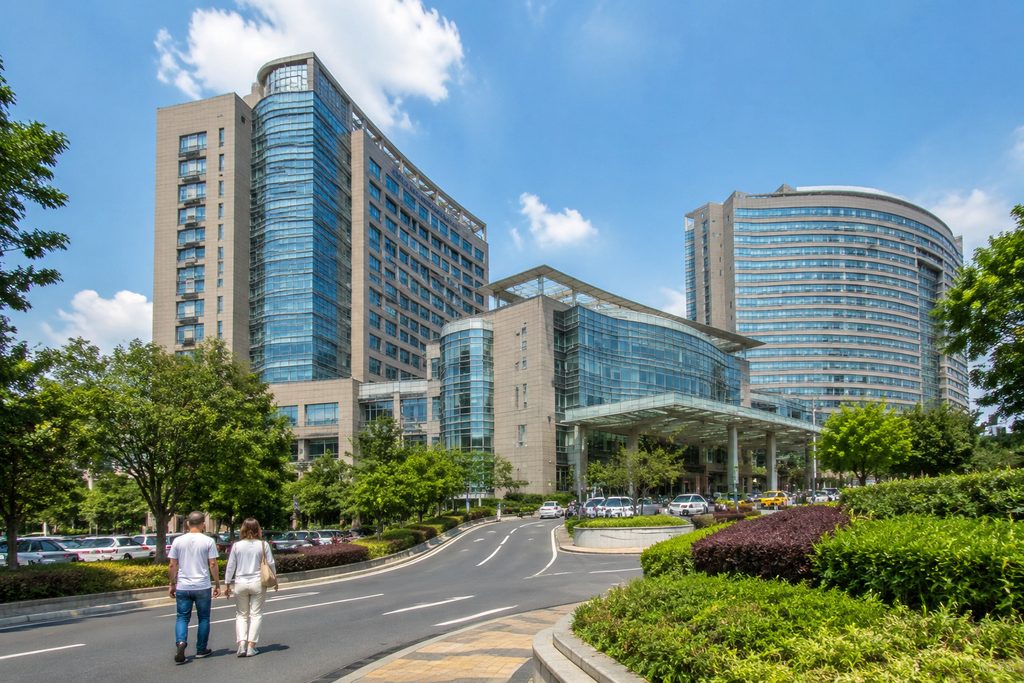
FAHZU’s infectious disease department is not a walk-in clinic. It sits inside a 3,000-bed academic medical center in Hangzhou, about 45 minutes by high-speed rail from Shanghai. The hospital ranks consistently in the top 15 nationally in the Fudan University hospital rankings, and its infectious disease unit holds a national clinical research center designation. For a patient with drug-resistant tuberculosis or chronic hepatitis B considering treatment abroad, that combination of volume and specialization matters. But volume alone does not make a decision.
Who This Is Right For — and Who It Isn’t
This center makes the most sense for a narrow set of patients. Not everyone with an infection should board a plane to Hangzhou. Here is the honest breakdown.
Typically a good candidate:
- Chronic hepatitis B or C patients who have failed first-line antiviral therapy at home and need access to newer regimens or clinical trial enrollment
- Multidrug-resistant tuberculosis (MDR-TB) patients facing 18–24 month treatment courses with limited drug options domestically
- Patients with complex fungal infections or parasitic diseases rarely encountered in Western clinical practice
- International students or expatriates already living in China who need continuity of care at a top-tier facility
- Patients seeking a second opinion from a high-volume center with published outcome data
Who should not pursue this:
- Patients with acute, rapidly progressing infections who cannot tolerate international travel
- Anyone whose condition is well-controlled on current therapy — switching providers mid-treatment introduces unnecessary risk
- Patients requiring solid-organ transplantation as part of infectious disease management
- Those without a confirmed diagnosis — traveling abroad with undifferentiated fever rarely ends well
Being explicit about this matters. A referral to Hangzhou is not a universal upgrade. For some patients, staying with their current specialist is genuinely the better call.
The Options, Compared
When international patients weigh infectious disease treatment cost China against other destinations, the comparison usually comes down to three paths: treatment at a Chinese public academic center like FAHZU, treatment at a private international hospital in China, or staying in a high-cost Western system. The table below lays out the real differences.
| Factor | FAHZU (Public Academic) | Private International Hospital in China | US / UK / Australia |
|---|---|---|---|
| Hepatitis B consultation | $80–$150 | $200–$400 | $350–$700 |
| MDR-TB treatment (full course) | $8,000–$20,000 | $25,000+ | $100,000–$250,000 |
| English-speaking staff | Limited; interpreters available | Fluent | Fluent |
| Wait time for specialist | 1–2 weeks | 3–7 days | 4–12 weeks (public) |
| Clinical trial access | High | Low | Moderate |
| Insurance direct billing | Rare | Common | Standard |
Which column fits you depends on what you are optimizing for. If cost and clinical trial access dominate your decision, the public academic route wins. If you need seamless English communication and direct insurance billing, a private international hospital is worth the premium. And if your condition is complex but stable, staying home and requesting a remote second opinion from FAHZU may be the smartest move of all.
What the FAHZU Infectious Disease Center Actually Treats
This is the section that only applies to this specific institution. FAHZU’s infectious disease department is not a general infectious disease ward. It has a defined clinical footprint, and international patients should know exactly what that includes before booking a consultation.
The center operates dedicated units for viral hepatitis, tuberculosis (including MDR-TB), HIV/AIDS, and emerging infectious diseases. Its hepatitis B program alone follows more than 15,000 registered patients, making it one of the largest single-center cohorts in Asia. That scale translates into something concrete: the department has published extensively on antiviral resistance patterns and treatment optimization for chronic HBV, including data on entecavir and tenofovir in Chinese populations. For a patient whose hepatitis B has stopped responding to first-line drugs, that repository of clinical experience is difficult to replicate elsewhere.
What the center does not do as a primary service is treat routine community-acquired infections in otherwise healthy travelers. A case of uncomplicated pneumonia or a urinary tract infection is better handled at a local clinic or a private international hospital. FAHZU’s infectious disease specialists focus on complex, chronic, or resistant pathogens — the cases that require the kind of laboratory infrastructure and subspecialty collaboration that only a major academic center can provide.
And the center’s diagnostic capabilities are worth naming. It houses a biosafety level 3 (BSL-3) laboratory, metagenomic next-generation sequencing for pathogen identification, and a tuberculosis reference laboratory that performs phenotypic drug susceptibility testing. For a patient with an undiagnosed febrile illness that has stumped multiple providers, that diagnostic depth is the real value proposition.
What It Costs: Infectious Disease Treatment Cost China in Real Numbers
Let’s put concrete figures on the table. These are ranges based on published hospital price schedules and patient-reported data, not guarantees. Costs vary by condition severity, drug regimen, and length of stay.
A new patient consultation with an infectious disease specialist at FAHZU runs between ¥500 and ¥1,000 (roughly $70–$140). A full hepatitis B workup — liver function panel, HBV DNA quantification, hepatitis B e-antigen testing, and transient elastography for liver fibrosis — typically totals $300–$500. Compare that to $1,500–$2,500 for the identical battery of tests at a major US academic center.
For tuberculosis, the numbers shift dramatically. A standard six-month drug-sensitive TB regimen costs under $500 in China for the medications alone. MDR-TB is a different story: the all-oral shorter regimens using bedaquiline and linezolid run $8,000–$20,000 for the full course, depending on whether newer drugs are sourced domestically or imported. In the United States, the same MDR-TB treatment course frequently exceeds $100,000, with some published cases reaching $250,000 when hospitalization is required.
What drives the variance? Three factors. First, drug source: domestically manufactured generics in China are significantly cheaper than branded imports. Second, regimen length: shorter all-oral MDR-TB regimens cost more per month but less overall than 18-month injectable-based protocols. Third, hospitalization: most hepatitis B and TB management at FAHZU is outpatient-based, but complications requiring admission will add $100–$300 per day for a standard ward bed.
What is not included in these figures: international travel, visa fees, accommodation in Hangzhou, interpreter services if needed, and follow-up care after returning home. Budget for those separately.
Practical Considerations: Records, Visa, and Follow-Up
If you decide to pursue treatment at FAHZU, the logistics are manageable but not trivial. Here is what actually matters.
Medical records. Bring everything. Complete treatment history, all prior drug regimens with dates, resistance testing results, imaging studies on CD or USB, and a referral letter from your current physician. Chinese academic centers place heavy weight on prior documentation. Incomplete records will slow your consultation or force repeat testing.
Visa category. For medical travel to China, the S2 visa is the applicable short-stay category used for private affairs including medical treatment. You will need supporting documents from the hospital — typically an invitation letter or treatment confirmation. Requirements change, so check with the nearest Chinese embassy or consulate before booking flights. No visa category is guaranteed, and approval timelines vary.
Payment methods. FAHZU is a public hospital. Most international patients pay out of pocket via cash, UnionPay, or international credit cards at the hospital’s international medical services desk. Direct insurance billing is uncommon at public academic centers. If your insurer requires direct billing, a private international hospital in China may be a better fit — you can compare options through private hospital rankings for international patients.
Language. The infectious disease center’s senior physicians generally read English medical literature but may not speak conversational English fluently. The hospital’s international medical services office can arrange interpreters. For complex cases, bring a bilingual medical advocate or request a telemedicine interpreter.
Follow-up after returning home. This is the most commonly underestimated challenge. Infectious disease treatment is rarely a one-and-done visit. Hepatitis B requires lifelong monitoring. Tuberculosis requires monthly follow-up during treatment and quarterly checks for a year after completion. Before you leave for Hangzhou, confirm that your home physician is willing to co-manage your care and receive treatment summaries from FAHZU. If not, the cost savings evaporate quickly.
Frequently Asked Questions
At a top-tier academic center like FAHZU, infection control standards are comparable to major Western teaching hospitals. The hospital’s infectious disease unit operates under national clinical research center protocols, and its BSL-3 laboratory meets international biosafety standards. The gap, where it exists, is more about communication and patient experience than clinical safety. Expect less hand-holding, more crowded outpatient halls, and a system that assumes you will advocate for yourself or bring someone who can.
Yes, but the process is not as streamlined as booking at a private international hospital. FAHZU’s international medical services office accepts inquiries from overseas patients and can help schedule appointments with infectious disease specialists. Response times range from a few days to two weeks. You will need to submit medical records for review before a consultation is confirmed. For a faster, more English-friendly booking experience, private international hospitals in Shanghai or Hangzhou are alternatives — but you lose the academic center’s depth for complex cases.
There is no single “best” — the honest answer is that several Chinese academic centers run world-class hepatitis B programs. FAHZU is one of them, alongside Beijing Ditan Hospital, Shanghai’s Ruijin Hospital, and Guangzhou’s Nanfang Hospital. Each has strengths: FAHZU’s hepatitis B cohort is among the largest in Asia, Beijing Ditan specializes in infectious diseases exclusively, and Ruijin has deep research ties. The right choice depends on your specific resistance profile, treatment history, and whether you need access to a particular clinical trial. Use China hospital rankings by specialty to compare options before committing.
This is the question that keeps patients up at night, and it deserves a straight answer. If complications arise during treatment at FAHZU, you are already inside a 3,000-bed tertiary hospital with intensive care, interventional radiology, and surgical backup on site. That is a genuine advantage over smaller private clinics. However, if a complication requires prolonged hospitalization, costs will rise, and your return home may be delayed. Medical evacuation insurance is strongly recommended for any international treatment, including in China. And if you are too unstable to travel home after treatment, you will need a plan for extended stay in Hangzhou — budget for that possibility, even if the odds are low.
China is consistently the lowest-cost option for tuberculosis treatment among destinations with high-quality academic infrastructure. A full MDR-TB course in India runs $5,000–$15,000, comparable to China but with more variable quality control. South Africa offers lower prices but less advanced diagnostic infrastructure. Thailand and Singapore are significantly more expensive than China, typically 2–3 times the cost for equivalent regimens. The trade-off is language and patient experience: India and Thailand have more established medical tourism industries with English-speaking staff throughout, while Chinese public hospitals require more navigation. For drug-sensitive TB, the cost difference between countries is small enough that convenience should drive the decision. For MDR-TB, the savings in China are substantial enough to justify the logistical friction.
Your Next Step
The First Affiliated Hospital of Zhejiang University Infectious Disease Center is a serious option for international patients with complex hepatitis B, drug-resistant tuberculosis, or undiagnosed infectious conditions. It is not the right fit for everyone, and the logistics require more effort than a private international hospital. But if your condition demands high-volume subspecialty expertise and access to clinical trials, the center’s combination of scale, diagnostic infrastructure, and cost is difficult to match.
We are ToChinaMed, an independent information platform for international patients considering treatment in China. We do not operate as a hospital, we do not provide diagnoses, and we do not charge patients for guidance. If you are weighing your options and want help understanding which Chinese institution fits your specific situation, tell us what you need — we will point you toward the right information at no charge.
For more medical information and treatment options in China, visit tochinamed.com (ToChinaMed).